During a trip to Canada I planned to drive from Calgary to Vancouver (7-25 Oct. 2026), stopping in several different Fairmont Hotels on the way, namely Calgary, Banff, Lake Louise, Jasper, Whistler, and Vancouver.
The Fairmont name itself originated in the United States, with the Fairmont San Francisco, which opened in 1907. In 1999, Canadian Pacific Hotels acquired a controlling interest in Fairmont Hotels, and in 2001 the combined hotel business adopted the Fairmont Hotels & Resorts name. It subsequently became independent of Canadian Pacific.
Ownership changed again in 2006, when the business was acquired by investors led by Colony Capital and Kingdom Hotels International, associated with Saudi Arabian investor Prince Alwaleed bin Talal. Fairmont was combined with Rafflesand Swissôtel under Fairmont Raffles Hotels International. In July 2016, the French hotel group Accor acquired the business, bringing all three brands into its international portfolio. Fairmont remains part of Accor today, although individual hotel buildings can have separate property owners.
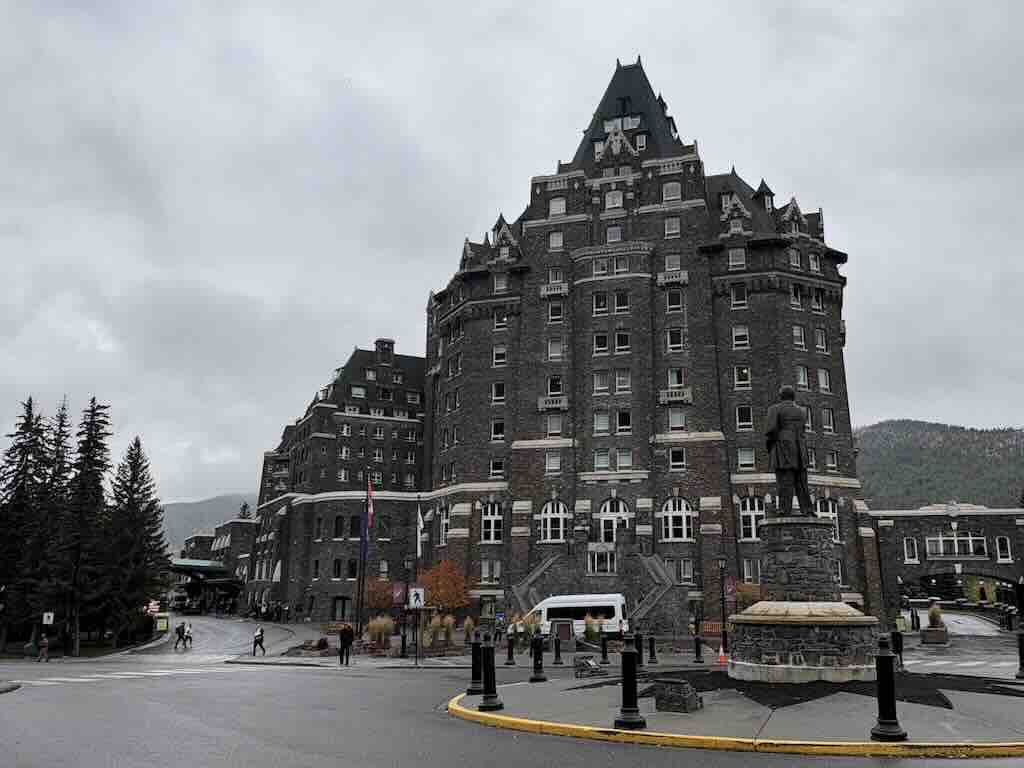
The Fairmont Banff Springs is one of Canada’s most historically important luxury hotels, situated on a wooded terrace overlooking the confluence of the Bow and Spray rivers, close to Bow Falls, within Banff National Park in Alberta. The hotel stands approximately 1.5 km south of central Banff, at an altitude of about 1,400 metres, with Sulphur Mountain rising behind it and views across the Bow Valley towards Mount Rundle.
Known as the Castle in the Rockies, the hotel was established by the Canadian Pacific Railway (CPR) in 1888, making it the oldest of the four Fairmont mountain resorts at Banff, Lake Louise, Jasper and Whistler. Its present accommodation comprises approximately 724 rooms and suites, with numerous restaurants, lounges, conference facilities, a substantial spa and a 27-hole golf complex. Although its origins date from 1888, most of the historic building visible today was constructed between 1911 and 1928.
The hotel was conceived by William Cornelius Van Horne (1843–1915), general manager of the Canadian Pacific Railway, who had overseen the completion of Canada’s first transcontinental railway in November 1885. The railway represented an enormous capital investment, and Van Horne recognised that tourism could help generate passenger revenue. His strategy was to construct luxury hotels at particularly attractive locations along the route, encouraging wealthy Canadians, Americans and Europeans to travel west by train.
Banff was a logical choice. In 1883, railway construction workers had identified hot mineral springs on Sulphur Mountain. The Canadian government established a protected reserve around the springs in 1885, subsequently enlarged into Rocky Mountains Park in 1887, Canada’s first national park. The combination of hot springs, mountain scenery and railway access made the location particularly suitable for a luxury resort.
The original hotel was designed by the American architect Bruce Price (1845–1903), who subsequently designed the Château Frontenac in Québec City. Construction began in 1886, and the hotel opened on 1 June 1888, at an estimated cost of C$250,000. It was a substantial five-storey timber building, with a central octagonal section, verandas and more than 100 bedrooms.
The hotel quickly became commercially successful. The most important phase of expansion began in 1911, when Canadian Pacific commissioned its chief architect, Walter S. Painter, to replace the ageing timber hotel with a much larger and more permanent structure. Painter designed an eleven-storey central tower, constructed between 1911 and 1914 using reinforced concrete, steel and local stone. The tower remains one of the principal architectural features of the hotel.
The rebuilt hotel opened in 1928, forty years after the original establishment. Its architecture adopted the Canadian Château style, with steep copper roofs, towers, dormer windows, arched openings and extensive stone masonry. Much of the exterior was clad in dark local limestone, known as Rundle stone. The resulting building was intended to suggest the appearance of a historic European castle, although its underlying structure was modern steel and concrete.
The hotel closed between 1942 and 1945, but with the growth of private motoring, the completion of the Trans-Canada Highway through the Rockies in 1962 and the development of winter skiing gradually transformed Banff from a predominantly summer destination into a year-round resort.
The Banff Springs Hotel was designated a National Historic Site of Canada on 24 June 1988, its centenary year. Parks Canada recognised its importance as an outstanding example of a large railway resort hotel, its Château-style architecture and its contribution to the development of tourism in the Canadian Rockies.
Add Your Heading Text Here
Ut enim ad minim veniam, quis nostrud exercitation ullamco laboris nisi ut aliquip ex ea commodo consequat.
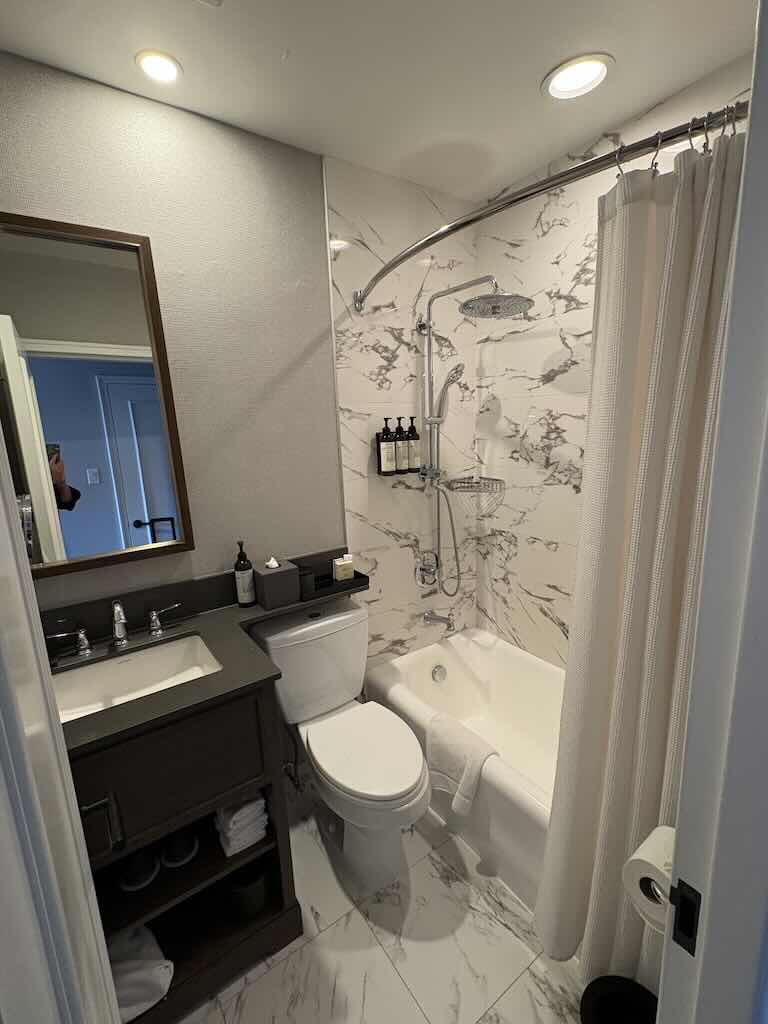
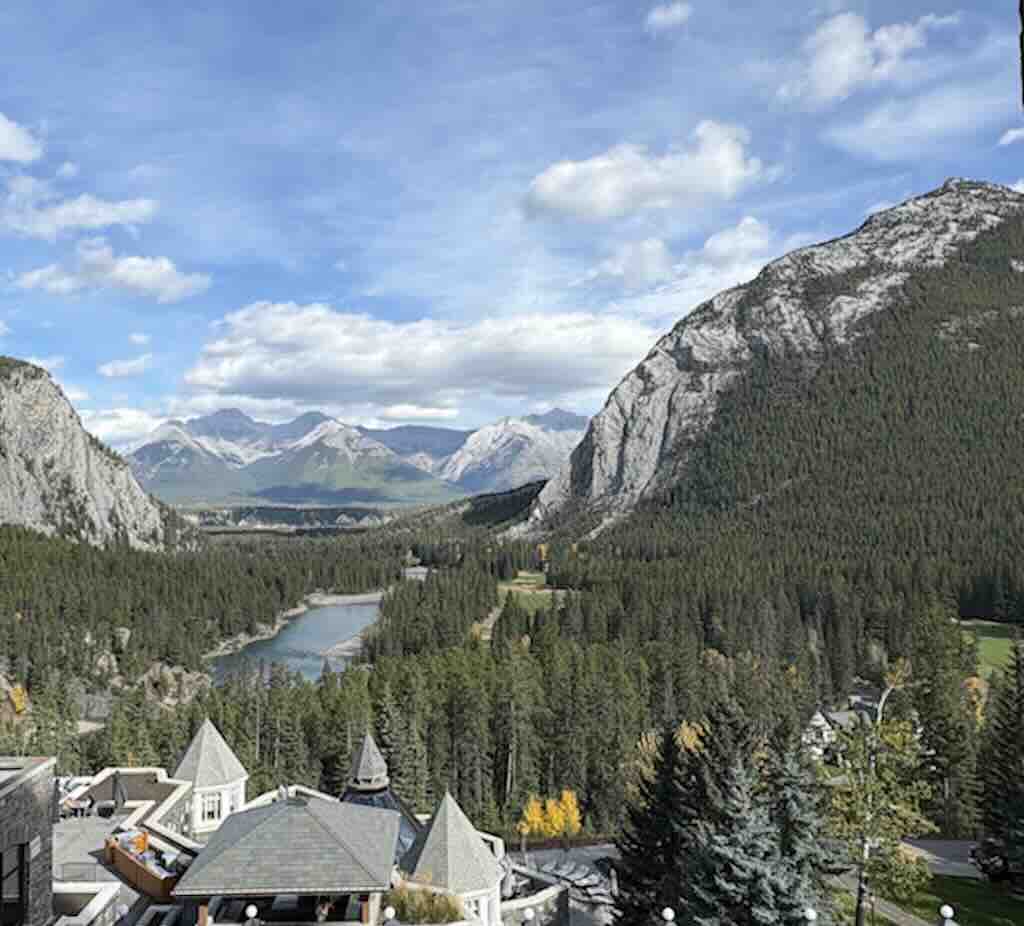
The Pool
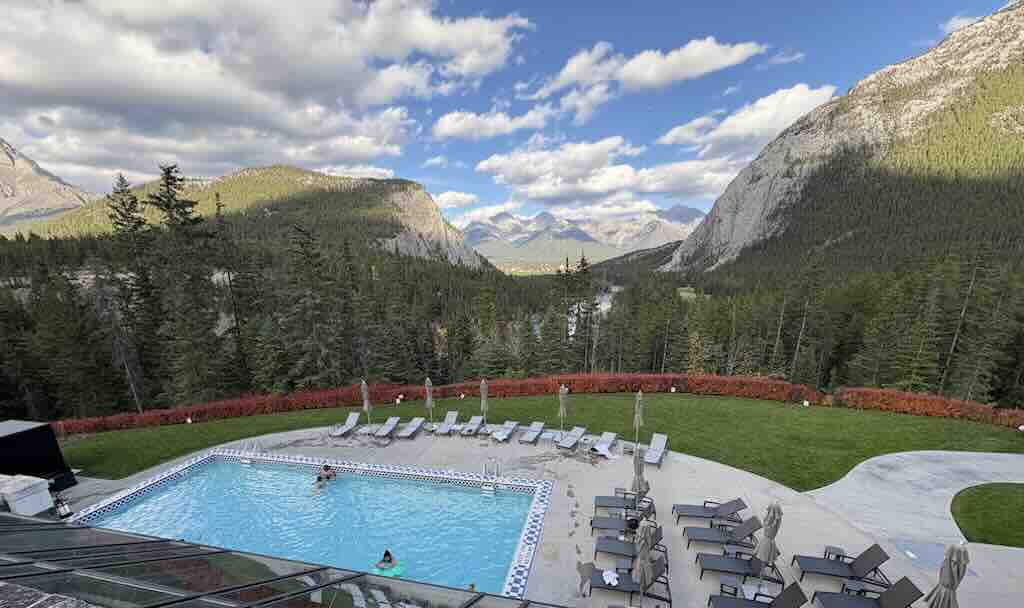
The outdoor pool was heated, and there was a large indoor pool as well. Outside there was a small sauna, running at just over 60°C (hardly worth the effort), but the indoor jacuzzi was perfect at well over 37°C. From what I could understand there was a steam-room, but reserved for those received a spa treatment.
Food
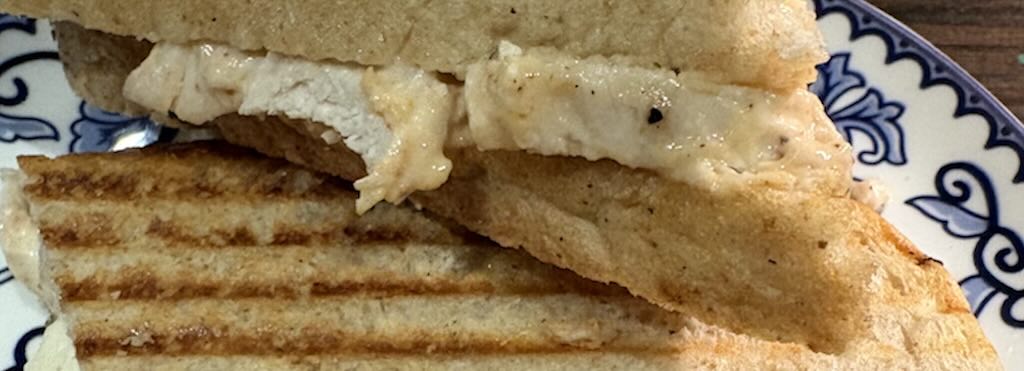
I was still not feeling perfect after a viral illness, so I targeted STOCK Food & Drink in the main lobby. They served coffee, pastries, sandwiches, salads and some simple prepared food, 24/24, and there was an informal sitting area nearby.
I did have to be careful with the menu. Above we can see a kind of sandwich, which I had read as pasta with chicken, and some toast. In fact there were a few strands of pasta hidden in there somewhere.