During a trip to Canada I planned to drive from Calgary to Vancouver (7-25 Oct. 2026), stopping in several different Fairmont Hotels on the way, namely Calgary, Banff, Lake Louise, Jasper, Whistler, and Vancouver.
The Fairmont name itself originated in the United States, with the Fairmont San Francisco, which opened in 1907. In 1999, Canadian Pacific Hotels acquired a controlling interest in Fairmont Hotels, and in 2001 the combined hotel business adopted the Fairmont Hotels & Resorts name. It subsequently became independent of Canadian Pacific.
Ownership changed again in 2006, when the business was acquired by investors led by Colony Capital and Kingdom Hotels International, associated with Saudi Arabian investor Prince Alwaleed bin Talal. Fairmont was combined with Raffles and Swissôtel under Fairmont Raffles Hotels International. In July 2016, the French hotel group Accor acquired the business, bringing all three brands into its international portfolio. Fairmont remains part of Accor today, although individual hotel buildings can have separate property owners.
The Fairmont Palliser
The Fairmont Palliser stands at 133 Ninth Avenue SW, in the centre of Calgary, immediately beside the Calgary Tower and close to the former Canadian Pacific railway station.
Calgary had developed rapidly following the arrival of the railway in 1883, becoming a commercial centre for southern Alberta‘s agricultural and ranching economy and an important stopping point for travellers continuing west towards the Rocky Mountains. Canadian Pacific wanted a prestigious hotel capable of accommodating wealthy tourists, businessmen and visiting dignitaries.
Construction began in 1911, and the Palliser opened on 1 June 1914, and cost C$1.5 million. It was named after Captain John Palliser (1817-1887), the Irish-born explorer who led a British expedition across western Canada between 1857 and 1860. The hotel originally had eight storeys, with another four added in 1929. Its architecture, designed by the Montreal firm associated with Edward and William Maxwell, was more restrained than the château-style railway hotels at Banff and Quebec, drawing instead on the large urban hotels of North America.
The hotel was inaugurated without the celebrations originally anticipated because, only three days earlier, the Canadian Pacific liner Empress of Ireland had sunk in the St Lawrence River on 29 May 1914, with the loss of more than 1,000 lives. Both the ship and the hotel belonged to Canadian Pacific.
When the Palliser opened it had 350 guest rooms, furnished with brass beds, mahogany doors and modern plumbing. The rooms had hot and cold running water, an important luxury at the time. The public areas were considerably more elaborate, with marble columns and floors, oak panelling, decorative plasterwork, chandeliers and handmade carpets. The principal entrance hall, originally called the Rotunda, was designed in a Renaissance Revival style, with marble imported from Tennessee and Italy. The hotel also contained a ticket office, telegraph and telephone facilities, reinforcing its close relationship with railway travel.
Queen Elizabeth II and Prince Philip stayed in this hotel in 1993. Since then, the building has undergone numerous renovations while retaining much of its original Edwardian character.
Today the Palliser is operated by Fairmont Hotels & Resorts, part of the French Accor group, while the property is owned by InnVest Hotels.
My impression was that the hotel operates principally as an upmarket business hotel rather than a holiday resort (i.e. lots of younger and middle-aged men in suits, and well dressed and groomed younger women).
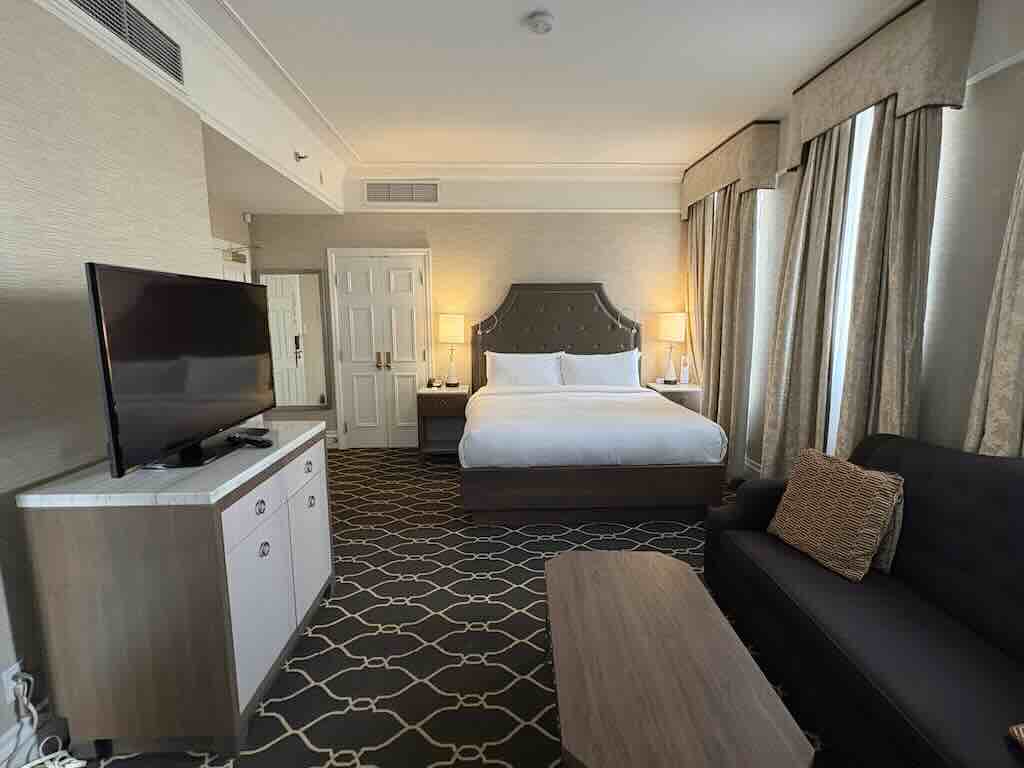
Bedroom
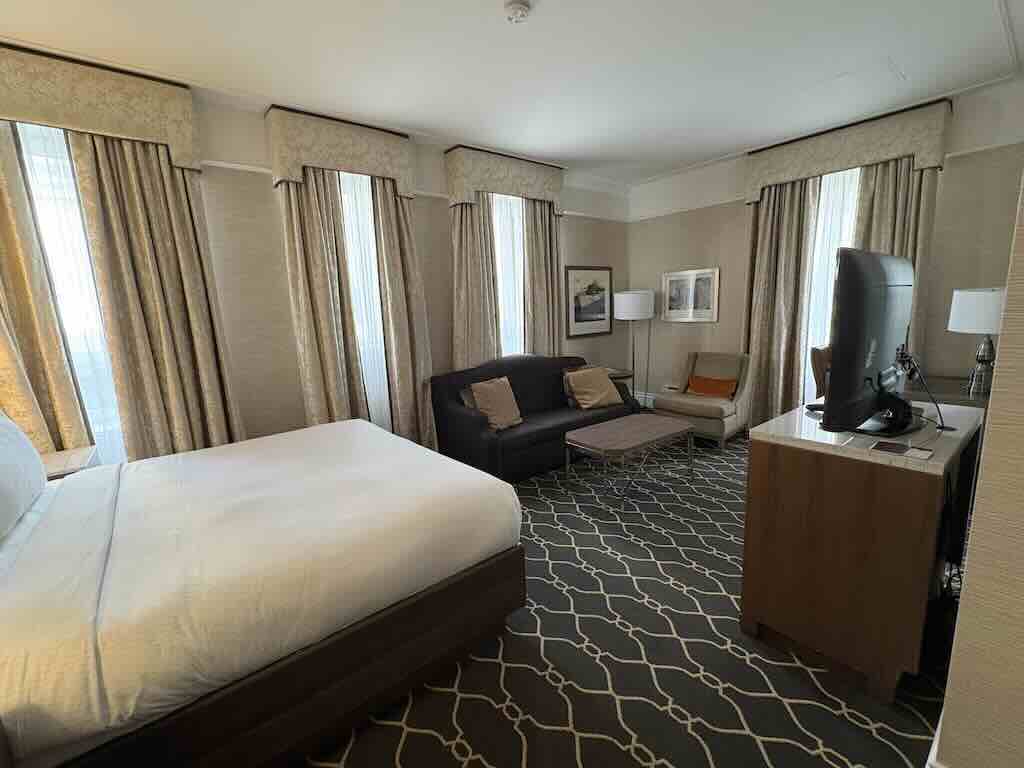
A very pleasant room to start my road-trip from Calgary to Vancouver. Excellent sheets and a firm mattress for a good nights sleep.
Bathroom
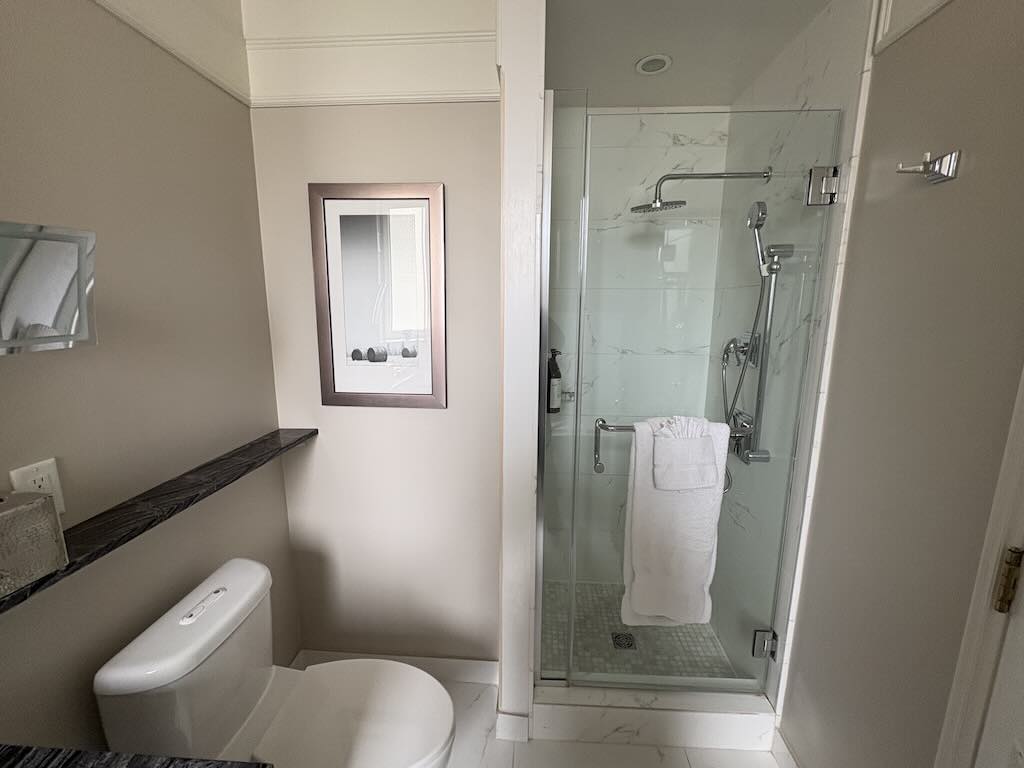
Very comfortable bathroom, with a great shower, great towels, and a separate bath.
View
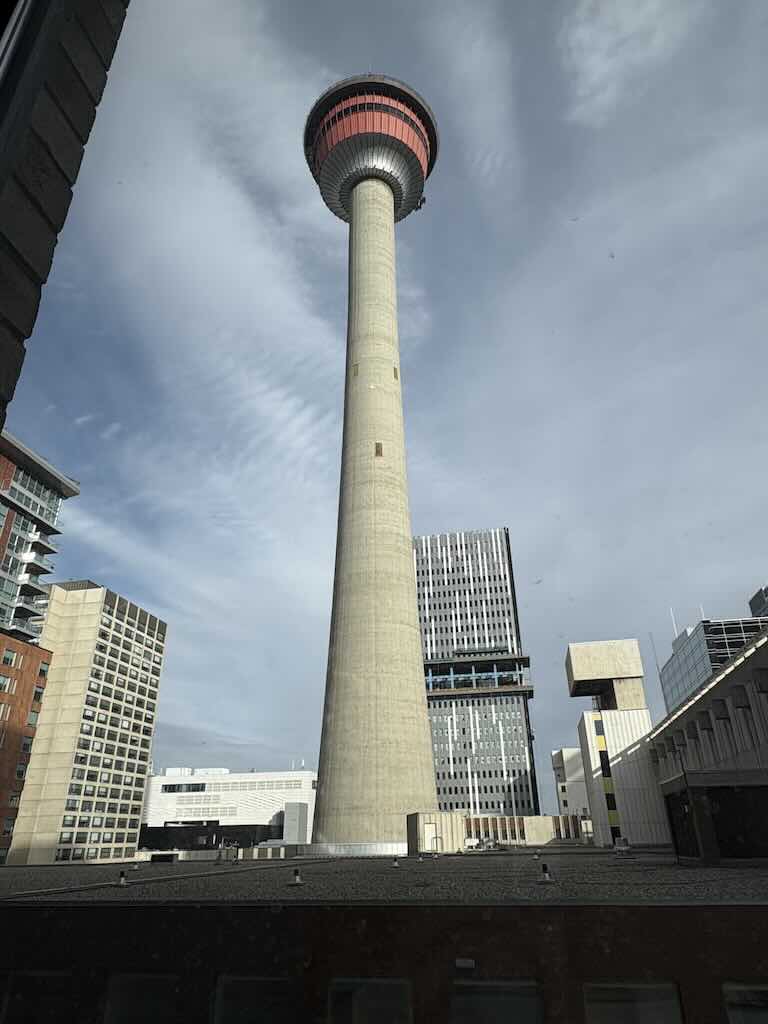
My travel agent had requested a “high floor”, but I ended up with a 2rd floor room at the back. However, from one of the side windows I had a private view of one of Calgary’s best-known landmarks, the 190.8 metres high Calgary Tower.
It was originally called the Husky Tower, after the petroleum company involved in its development. Construction began in 1967, and it opened on 30 June 1968, at a cost of approximately C$3.5 million. It was renamed Calgary Tower in 1971.
Breatfast
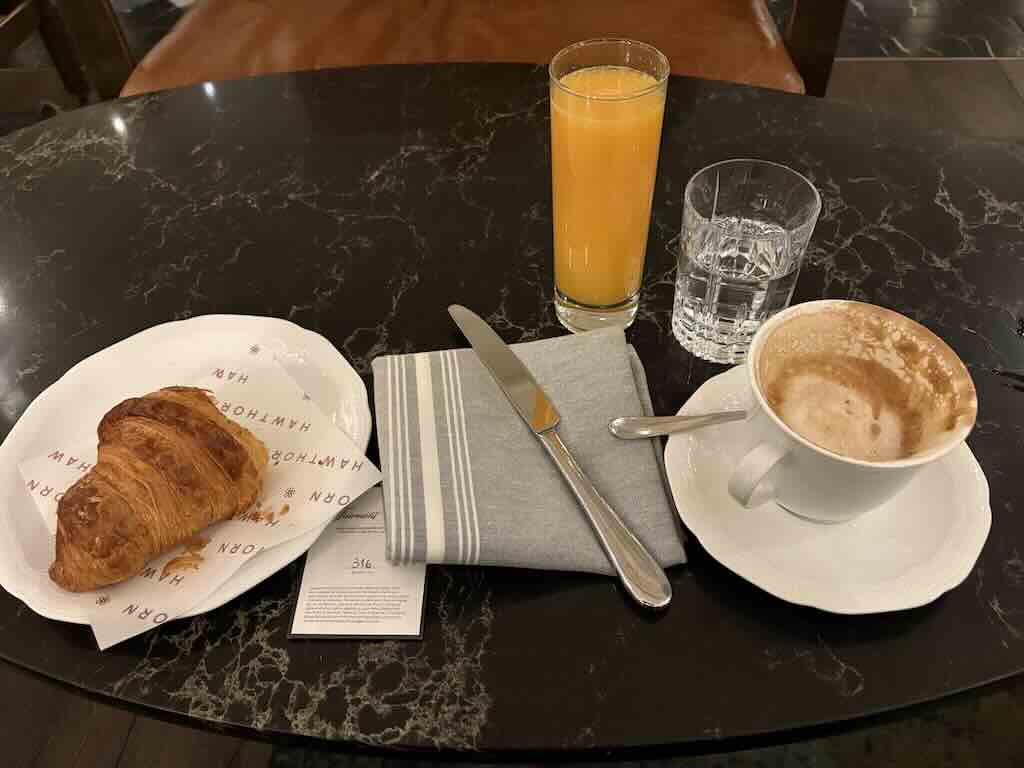
I did manage a “power breakfast” in the Fairmont Palliser. Hardly worth a comment (or two), but this was the only place I found freshly pressed orange juice.
And systematically when ordering a croissant, they arrive straight. What part of the word “croissant” do they not understand?
Jaume Plensa's Wonderland
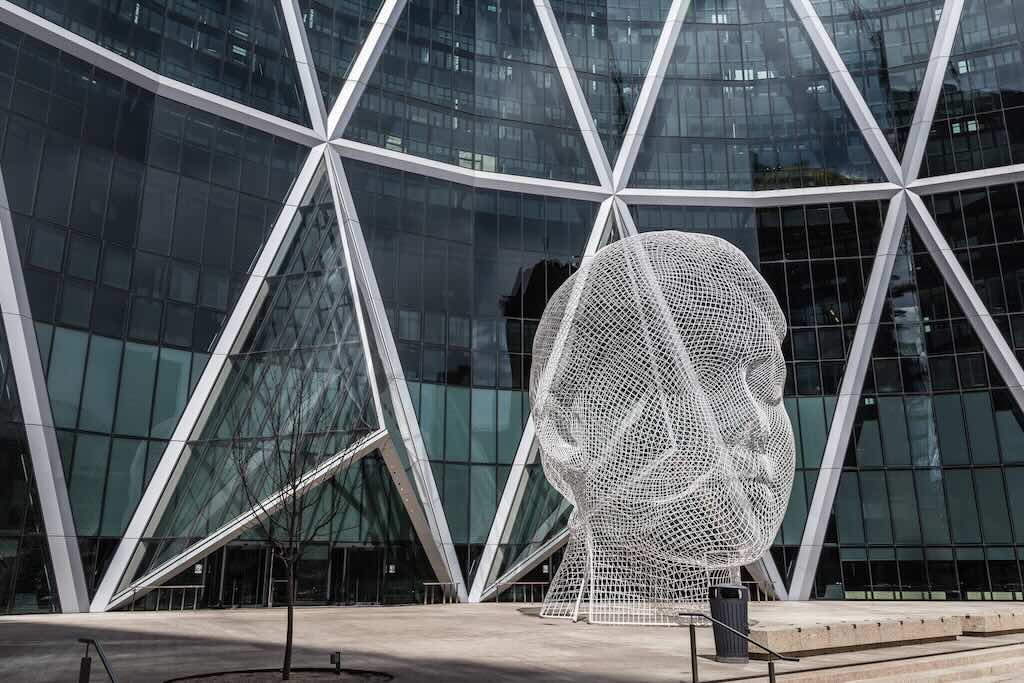
In addition to checking out the tower from the street, I did manage to go and see the Jaume Plensa’s “Wonderland”, in Plaza of The Bow.
I couldn’t get a good view, so I’ve picked a photo from the Web.
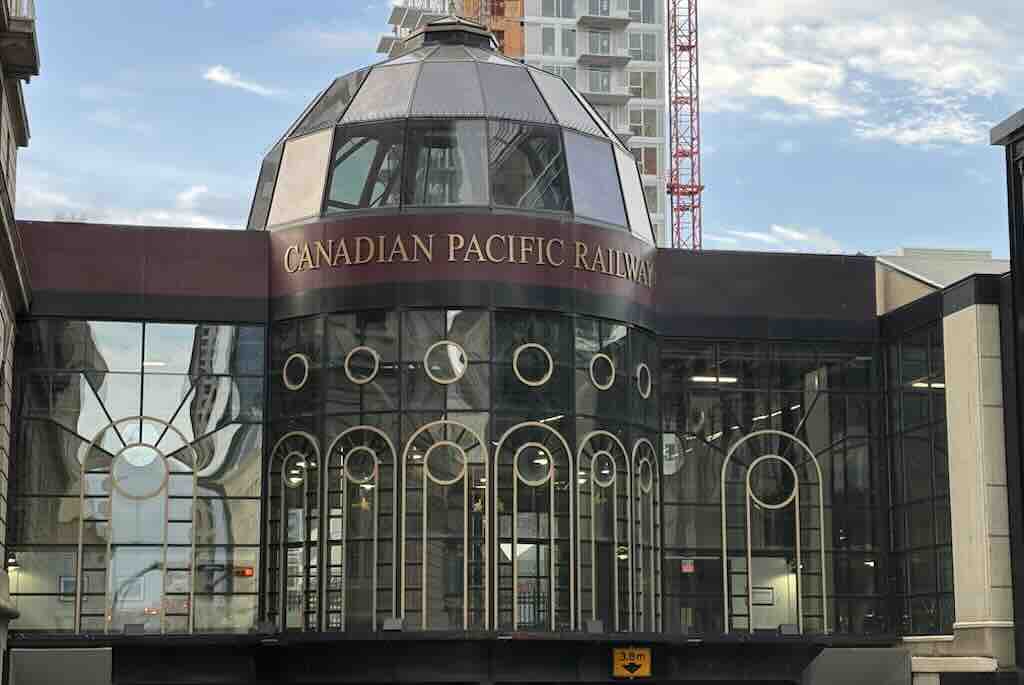
I also spotted the Royal Canadian Pacific Pavilion, a purpose-built railway reception and departure facility, opened in 2000. I understand that it’s for passengers taking luxury excursions aboard the Royal Canadian Pacific, a train of restored historic railway carriages. Technically it’s not an ordinary railway station, and it is just attached to the hotel, but is not part of its facilities.