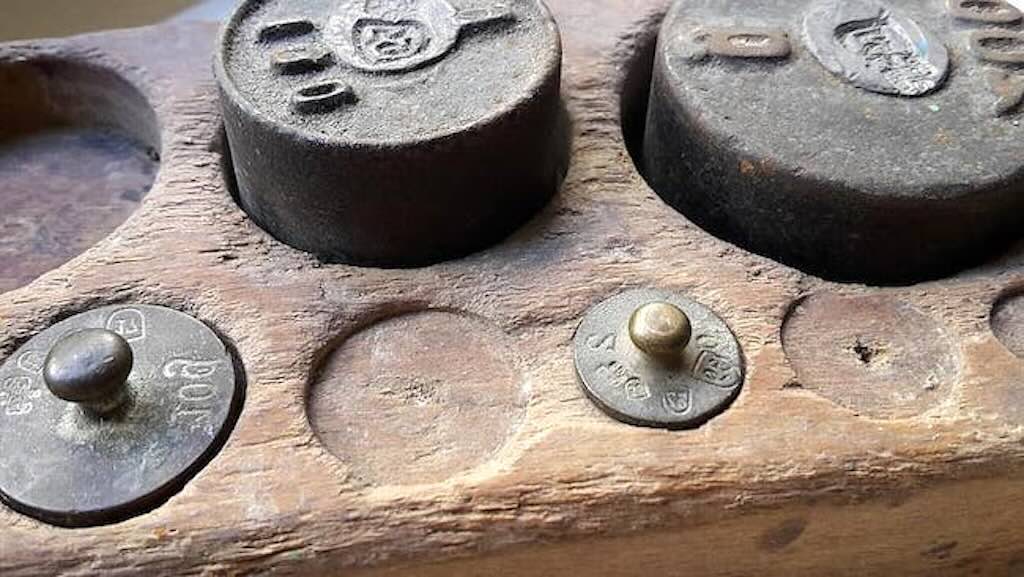
The Bible tells us not to cheat when we measure the length or weight or amount of something (Leviticus 19:35-36).
But how is that eminently sensible objective translated into everyday life?
This post is about some simple vintage weights and measures we have accumulated over time.
A grain of history
Man invented standard units for the measurement of weight, length, volume, etc., and even time.
The foot was inherited from the Egyptians by the Greeks and Romans. The Roman foot was divided into both 12 unciae (inches) and 16 digits. The introduction of the use of the yard as a unit of length came later, but its origin is not definitely known.
The grain was the earliest unit of mass and is the smallest unit in the apothecary, avoirdupois, Tower, and Troy systems. The early unit was a grain of wheat or barleycorn used to weigh the precious metals silver and gold. Larger units preserved in stone standards were used as both units of mass and of monetary currency. The pound was derived from the mina used by ancient civilisations. A smaller unit was the shekel and a larger unit was the talent. The magnitude of these units varied from place to place. The Babylonians and Sumerians had a system in which there were 60 shekels in a mina and 60 minas in a talent. The Roman talent consisted of 100 libra (pound) which was smaller in magnitude than the mina. The Troy pound used in England and the United States for monetary purposes, like the Roman pound, was divided into 12 ounces, but the Roman uncia (ounce) was smaller. The stone quarter hundredweight and ton are larger units of mass, and are still used in a Great Britain.
The early apothecary system was interesting because it mixed measures such as “dramme” and “ounce” with a “handfull”, “halfe a handfull”, and a “little handfull”, along with the intriguing “so much as shall suffice”.
Today the metric system is the international system of weights and measures based on the meter (metre) and the kilogram. The essential features of the system date from 1791, but there were earlier suggestions dating back to 1670. On May 20, 1875, an international treaty known as the International Metric Convention was signed providing for an International Bureau of Weights and Measures, thus ensuring “the international unification and improvement of the metric system”. The metric system is now either obligatory or permissible throughout the world.
In addition to the standards for meter and the kilogram, the other units of length and mass, as well as all units of area, volume, and compound units such as density are derived from these two fundamental units.
Why measure length and weight?
I guess before deciding on how to measure length and weight we need to ask why did Man need to make these measurements?
Wikipedia tells us that the earliest recorded systems of weights and measures originate in the 3rd or 4th millennium BC. Even the very earliest civilizations needed measurement for purposes of agriculture, construction and trade. Early standard units might only have applied to a single community or small region, with every area developing its own standards for lengths, areas, volumes and masses. Often such systems were closely tied to one field of use, so that volume measures used, for example, for dry grains were unrelated to those for liquids, with neither bearing any particular relationship to units of length used for measuring cloth or land.
With development of manufacturing technologies, and the growing importance of trade between communities and ultimately across the world, standardised weights and measures became critical. Several thousand years later, starting in the 18th century, modernised, simplified and uniform systems of weights and measures were developed, with the fundamental units defined by ever more precise methods in the science of metrology.
How to measure length and weight?
Measurement units are a minefield because virtually every unit of measurement used up to the mid-20th century has now been replaced, or is being replaced, by decimal or metric measurements. Standardisation of weights and measures was a long and complicated process, and it’s now difficult to identify and explain some of the old units, and how and why they were used.
As an example there was a unit of volume called a “anker” or “ancre” which was used in Germany and the Netherlands, and was about 38.8 litres. About, meant 36.2 litres in Hamburg, 38.09 in Amsterdam, 34.35 in Berlin, 37.45 in Denmark, etc. And the very often used “grain” was used to define a “livre” as 9216 grains in Spain, Swiss, Venice, but in Bologna and Dresden the livre was 7680 grains, whilst in the Netherlands it was 10,000 grains. And then there was the “livre medicale” divided into 5760 grains, except in some countries where it was defined as 6912 grains. Not surprising some form of standardisation was desirable by all, but it would still take hundreds of years.
Even identifying what were the first measurement tools and standard units is fraught with difficulty. Some weights had recognisable shapes (“canonical weights”), but some pebbles could have been a form of “unregulated” weights. Scale beams made of wood or bone and scale plates of textiles or wood, will have long disappeared. And even if one could identify some weights, we don’t know what they were used for, e.g. different goods or commodities. It’s thought that the earliest weights were certainly used for payment to temples/palaces, but what evidence is there for them being used for buying or selling? There might have been a substantial difference between the state-driven and the private economy, and who made and distributed these weight standards?
If we find a bronze or lead weight, do we know when it was used, where it came from, and how it was used? On top of that it is also difficult to know if certain products or artefacts were even weight-regulated. Did that pot have a regulated volume and was it for grain or liquids? Thousands of bronze age items have similar shapes, was that because they were weight-regulated? Clearly gold and silver items were considered valuable and were hoarded, as were intentionally created fragments, but what was the early basis for barter or exchange, and how did the concept of money evolve?
This appears to be a very academic subject, but the mathematical relationships among identifiable balance weights of different masses found on a particular archaeological site might explain how an ancient people counted and quantified their world, and evaluated and inventoried their raw materials and products. And if a particular system was found elsewhere, did that mean that they traded with each other?
The length of the arm from the elbow to the tip of the middle finger is often quoted as the first “tool” for measuring length. However the first ruler that has survived is a measuring rod made of copper alloy, dating from 2650 BC. In 1500 BC, ivory rulers were used by the Indus Valley Civilization. In Lothal a finely calibrated ruler has been dated to be 4400 years old (graduations were 1.7 mm wide).
According to Wikipedia the oldest attested evidence for the existence of weighing scales dates to the Fourth Dynasty of Egypt, with Deben (unit) balance weights from the reign of Sneferu (c. 2600 BC), though earlier usage has been proposed. Carved stones bearing marks denoting mass and the Egyptian hieroglyphic symbol for gold have been discovered, which suggests that Egyptian merchants had been using an established system of mass measurement to catalog gold shipments or gold mine yields. Although no actual scales from this era have survived, many sets of weighing stones as well as murals depicting the use of balance scales suggest widespread usage. Examples, dating 2400–1800 BC, have also been found in the Indus River valley. Uniform, polished stone cubes discovered in early settlements were probably used as mass-setting stones in balance scales.
To understand antique scales there is no better place to look than on the website of the International Society of Antique Scale Collectors.
Measurement Rulers
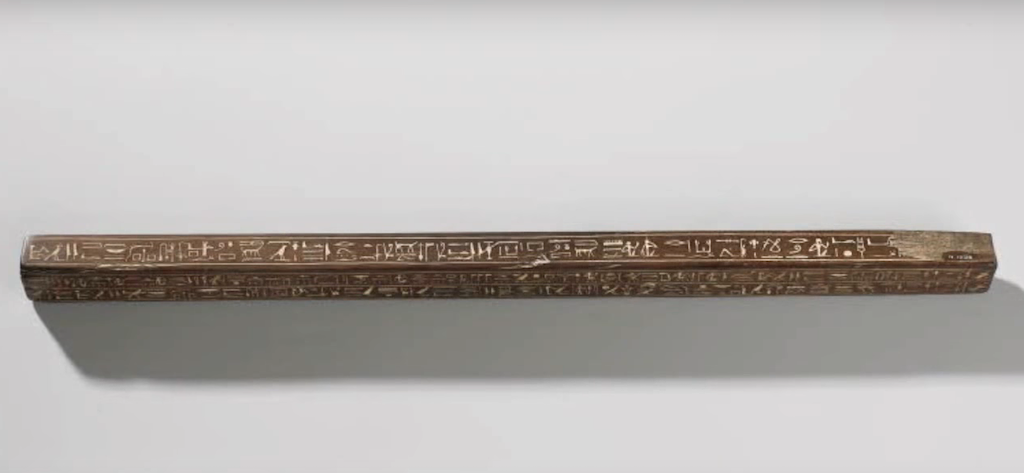
Rulers are probably the most common measuring tool in use today. Above we have a cubit rod in the Maya Treasure from the reign of Pharaohs Tutankhamun, Ay and Horemheb of the Eighteenth Dynasty.
A little bit of physics
The mass of a given body is the quantity of matter comprising it, as such it is an intrinsic property of a body. The force exerted by gravity upon any body is proportional to the mass of the body. The weight of a given body is a measure of the force of gravity acting upon that body. What is commonly called a “standard weight” is really a standard mass of metal or other material, by comparison with which the masses of other bodies may be determined through measurements of their respective weights, or by means of which the values of forces may be measured.
Today the kilogram is the most commonly used unit for both mass and weight. The force of gravity acting upon the standard 1-kilogram mass, under standard conditions, is a standard 1-kilogram force. This definition of the unit of force sets up an “absolute” unit, that is invariable, regardless of location. Ordinarily, engineering measurements are made by the “gravitational” unit defined as the actual force of gravity acting upon a 1-kilogram mass in any particular location. So this unit varies slightly, however the variation is so small that it may be neglected in all everyday work.
The actual gravitational force acting upon a given body varies with the geographical location of the body. Other conditions remaining unchanged, this force is measurably affected by changes in elevation, from sea level to a mountain top. It is also affected by latitude, for example between the north and south of a large land mass such as Europe. However, if the weight of the body is determined by the use of standard weights, either directly on an equal-arm scale, or indirectly on a scale with a weigh-beam, the observed value of the weight of the body will not be affected by changes in either the elevation or the latitude of the body (other conditions remaining unchanged) because the resulting changes in gravitational force will react equally upon the body being weighed and the standard weights being used, and the observed weight of the body in terms of the standard weights will therefore remain the same.
Measurement Scales
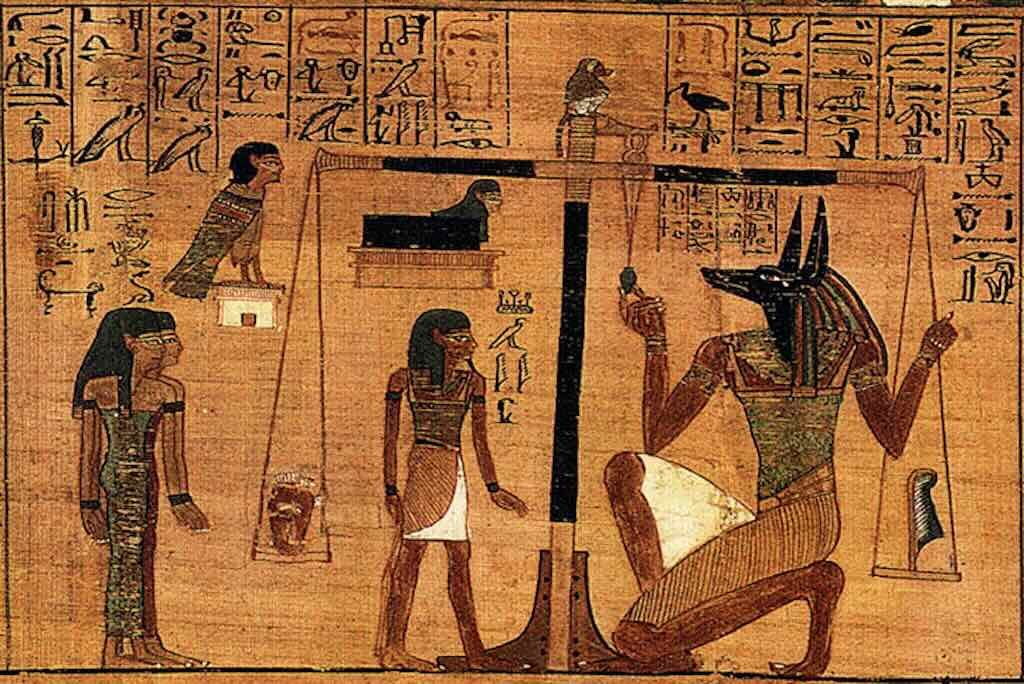
Above we have the weighing of the heart depicted in the Egyptian Book of the Dead, overseen by the jackal-headed Anubis, the god of embalming.
It is mainly iconography that tells us about the form and nature of the instruments of most ancient civilisations. For example, an Assyrian bas-relief shows a balance with equal arms, while the large Egyptian balances with a hollow wooden beam crossed by a string apparatus are well known thanks to the wall paintings of tombs. Given the nature of the materials used (stone, bronze, lead, etc.), a certain number of objects used for measuring or weighing have also been found (but can sometimes be confused with various counterweights or fishing weights).
The units of measurement of ancient Rome were generally consistent and well documented, and Pompéi and Herculanum (79 AD) have yielded a number of excellently made Roman scales (staterae). These were probably adaptations made to small equal-arm scales intended for weighing coins.
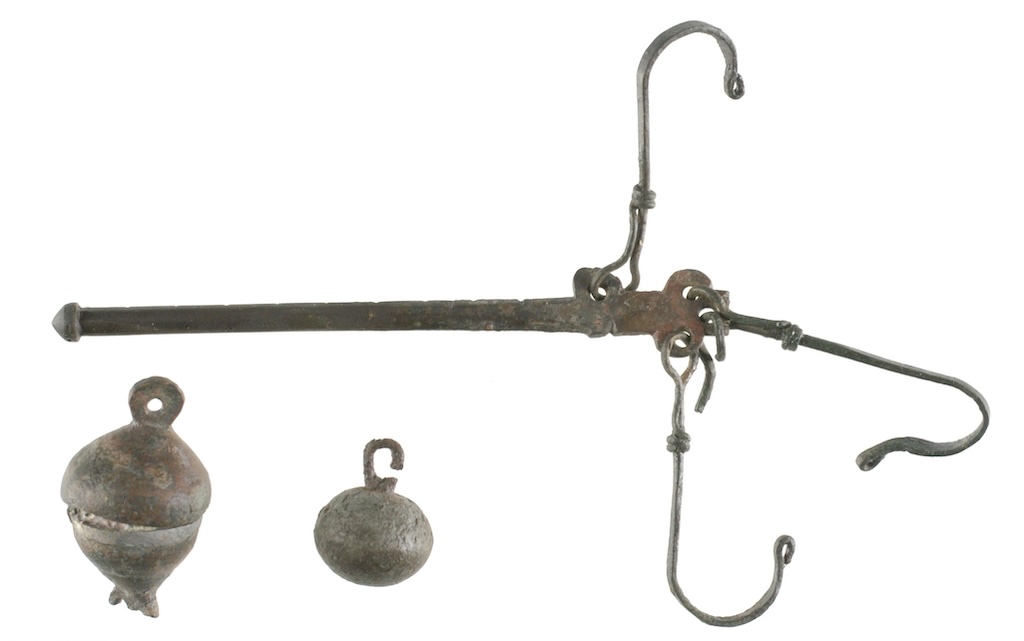
Above we have Roman steelyard balance with two bronze weights, dated to 50–200 AD. They are from the Gallo-Roman Museum, Tongeren, Belgium. In fact these “Roman” scales are often known as “steelyard” scales. Generally two or three faces of the arm are graduated with notches at equal intervals, using a specific unit system. The mass of the object is measured by sliding the steelyard weight on the arm, enabling light, medium and heavy loads to be weighed with the same device.
In some older texts the sliding weight is called a “poise”, which should not be confused with the unit of dynamic viscosity (absolute viscosity) in the centimetre–gram–second system of units.
Through to the end of the 18th century this type of scale was one of the most widespread weighing instrument used in Western Europe and around the Mediterranean.
The steelyard scale seen above has a fixed suspension point along with a fixed load point to hang the unknown weight. The counterweight is then slid along the beam until equilibrium is found, and the weight of the unknown object is then read from the calibration on the beam.
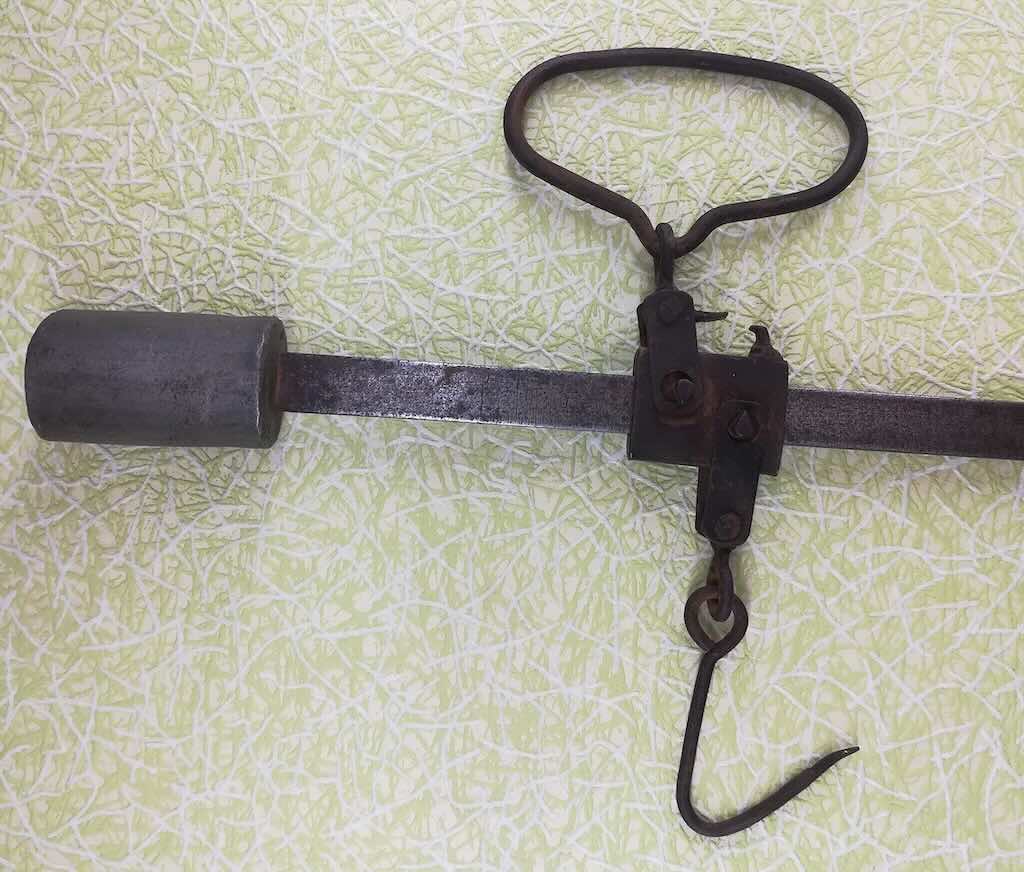
One variation of this design is the “Roman scales with sliding beam” (see above). It has a similar appearance except that they do not have a sliding weight. In this case it is the entire beam that plays the role of mobile mass. The beam is generally weighted, at one of its ends, with a fixed counterweight to give it sufficient mass without making it too long. The suspension point and the load point are integral with a sleeve in which the beam slides. Hanging, it is the entire bean with its integrated weight that slides through the hanging sleeve until an equilibrium is found. The weight was then read flush with the sleeve. This particular version appears to have been used in the countries around the Baltic Sea.
There are also two additional variations on this design. Firstly the suspension point is separated from the load point, and instead becomes a fixed fulcrum point on which the beam (with its fixed weight) is balanced. In one version the unknown weight on the hanging sleeve is moved until equilibrium is found. The second variation is more specialised. The sliding hanging point and sleeve is replaced by a fixed receptacle designed to take specific coins of different types and sizes. The beam becomes a “rocker” and the whole becomes a “Coin Counterfeit Detector” (see below).
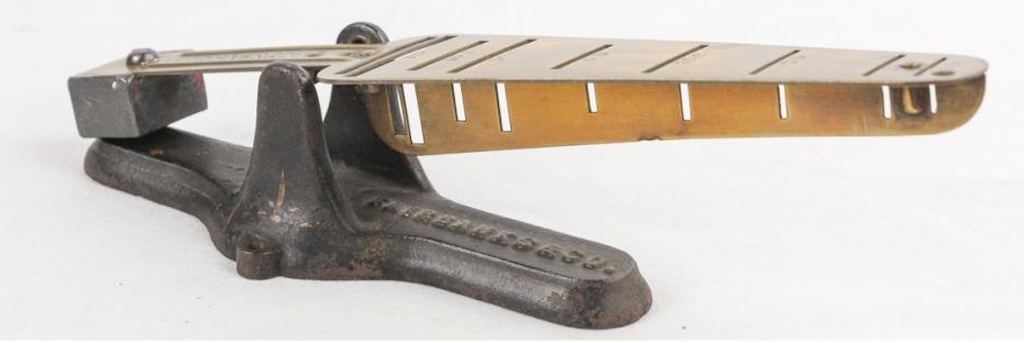
The Bismar Scales is different from the Roman scale despite a great similarity in appearance. Like the sliding beam scales, the bismars do not have a cursor weight, so the beam with unequal arms has a fixed counterweight at one of its ends and a device for suspending the load at the other. The balance being obtained by moving the suspension point. The graduation is not formed of equal steps, but narrows as it approaches hanging point, which means that the higher the load, the less accurate the reading.
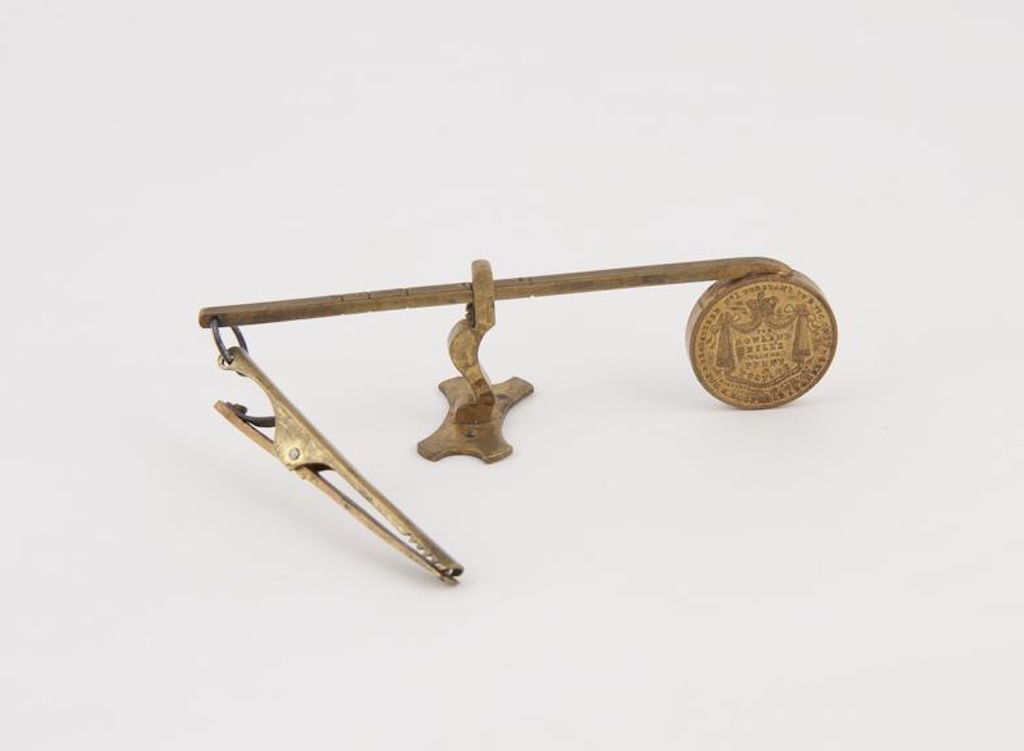
We can perhaps easily imagine a wood or a heavy cast iron Bismar Scales, but above we have scales from the London Science Museum. It is a Post Office letter balance dated to 1839.
The bismar is in fact, after calibration, the simplest weighing instrument there is. All that is needed is a stick (preferably with a greatly decreasing diameter) with a hooking device at the thinnest end and equipped with a sliding link to provide a suspension point.
In its primitive form (“weighing stick”) this type of scale was well adapted to the living conditions of nomadic peoples (notably in Tibet, northern India, Malaysia, etc.). It is considered by some specialists to be the oldest weighing instrument in the world (possibly more than 8000 years before our era).
Spring Scales
The scales shown above measure the weight of something by comparison with objects of known mass or weight. What do we do if we don’t have these standard weights? One option is to simply use coins which are minted to precise specifications, including weight. Another is to use a known quantity of water, given that 1 litre weights 1 kilogram.
Today we would use a strain gauge scale that most people have in their kitchens or bathrooms. These scales measure the force needed to counter the mass being measured rather than using physical comparison weights. In reality these “kitchen scales” don’t measure mass, and for very precise measurements they must have calibration adjustments made to compensate for gravitational differences.
However, in the kitchen we might also find a spring scale (spring balance or newton meter) consisting of a spring fixed at one end with a hook to attach an object at the other. Wikipedia tells us that it works in accordance with Hooke’s Law, which states that the force needed to extend or compress a spring by some distance scales linearly with respect to that distance. Therefore, the scale markings on the spring balance are equally spaced. The spring scale measures the extension of a spring as a function of the weight attached, but it’s also possible to have a similar looking device that actually measures the compression of the spring.
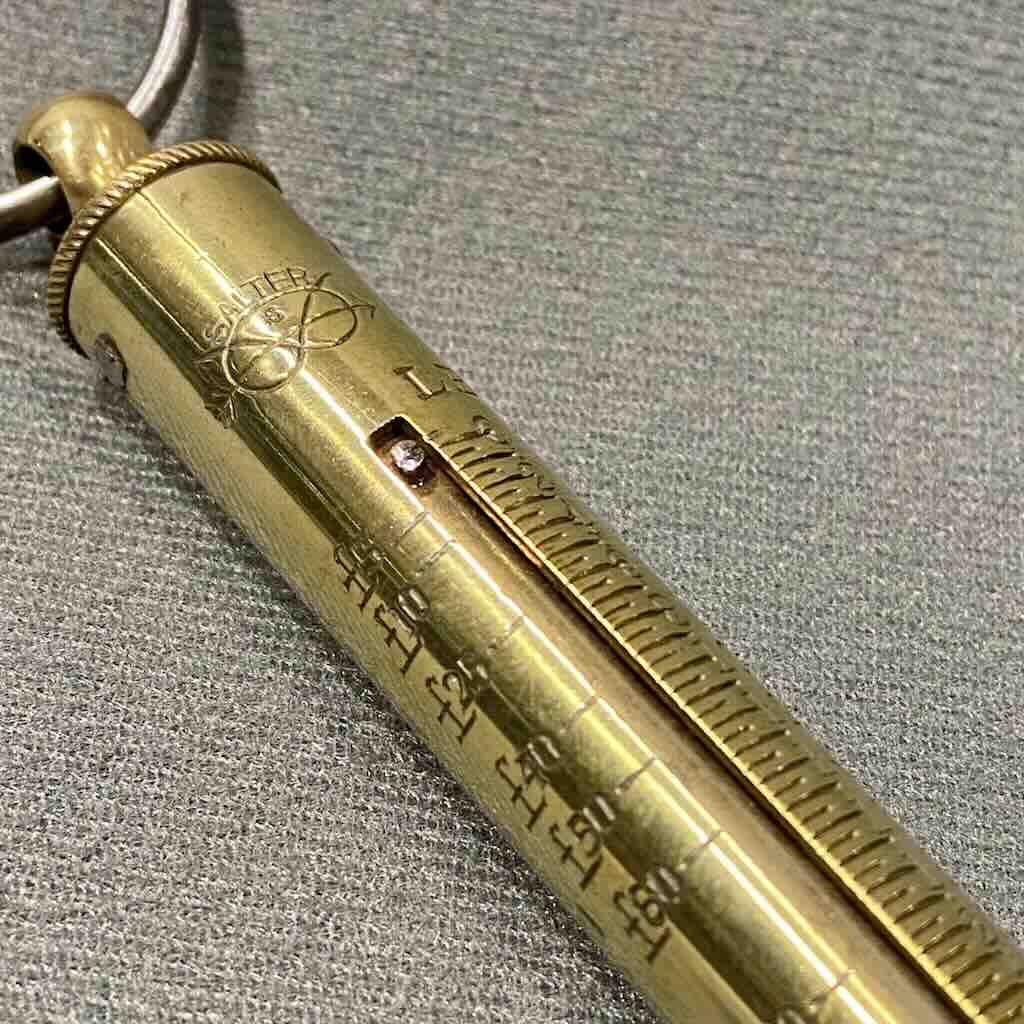
It’s worth remembering that metal springs were used in clocks and locks for well over 300 years before their use was applied to weighing. They were used for cross- bows and guns, then for coaches by about 1650. Robert Hooke wrote on the expansion of metals in 1678, and published drawings of simple spring balances in his papers. Jacob Leupold is known to have designed in 1726 a scale based on the compression of a spring. Drawings of scales based upon stretching of a spring appeared in the 1750s, and Richard Salter started offering “pocket steelyards” in around 1770. Below left we have an antique English spring balance used for weighing fishing baskets.
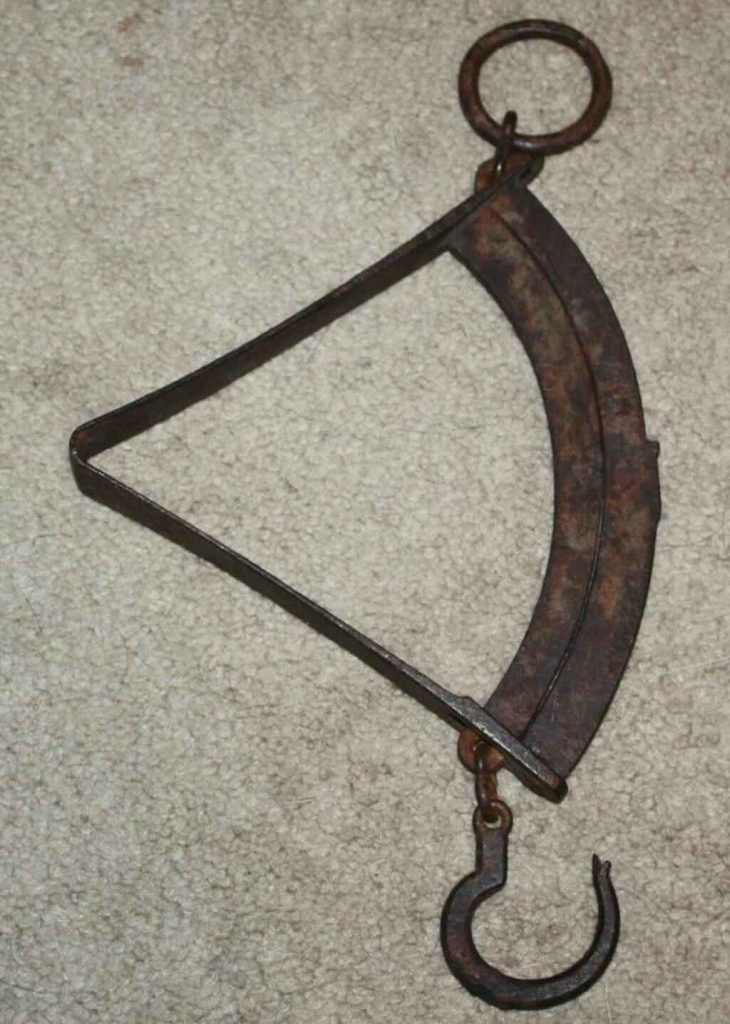
Another type of weighing tool (above right) was the sector spring balance, which is also called a “V-spring balance” or “V-spring mancur”. I’ve seen suggestions that initially they used a flat flexing “spring”. The French called them “ressort en lame” (spring blade). The basic idea was simple, one end of the flat spring was fixed and an unknown load was placed on the other end, and the defection downwards was calibrated. The main problem was that as the flat spring bent downwards, the unknown weight would fall off. The next option was to start with the flat spring pre-bent upwards, so as it was pushed down, the unknown weight would not fall off. The next step was to see how to make a more compact version, and this involved pre-bending the flat spring firstly in the shape of a “V”, then later in the shape of a “C”.
This very simple scale was made of iron without screws and was used for weighing hide or meat. The V-spring mancur is probably the first type of “mancur” scales to have been in production from around 1750. The spring mechanism is ingenious in its simplicity. A load was put onto the hook, when the spring was pulled open by the load, the indicator moved upwards by the separation of the two ends of the spring. The indicator is a crescent-shaped plate. The weight of the load is read on the indicator as it passes through a slot.
Considering this type of spring balance is comparatively recent (18-hundreds), it is surprising that so little is known about its origins, makers and peculiar name “mancur”. Yet it would appear that large numbers were made in both America and Europe during the latter half of the 19th century, and that they were used by farmers. Some elderly British farmers knew the balance under the name of “stilliard” (one example was catalogued as “Wiedemann’s stilliard”). Also, in England, it would appear that country people called it a “gypsy scale”. One suggestion is that the name is a corruption of a compound word or phrase derived from the French “main“, signifying that it was hand-held or easily portable. There is some evidence that mancurs were developed much earlier than had hitherto been supposed (possible well before 1763).
Interestingly it is said that the French used the word stilliardois, as early as 1552 (although I’ve not found this reference nor its meaning). The suggestion is that the English borrowed this word, and it became stilliard, and later steelyard. However there is also the (far more credible) suggestion that stilliard derives from “Steelyard“, a place name (Wikipedia is extensive on the subject). As such it is a mistranslation of the Germanic phrase “Stalhof”, which means “sample yard”, from ‘stal’, sample or pattern and ‘hof’, courtyard. “Steelyard” is on the north bank of the Thames, and was where the merchants of the Hanseatic League (a medieval guild of merchants) had their establishment. The name came to be used for similar places in other provincial towns. The first recorded spelling of the family name is shown to be that of John Stilliard, during the reign of Queen Elizabeth I. Surnames became necessary when governments introduced personal taxation.
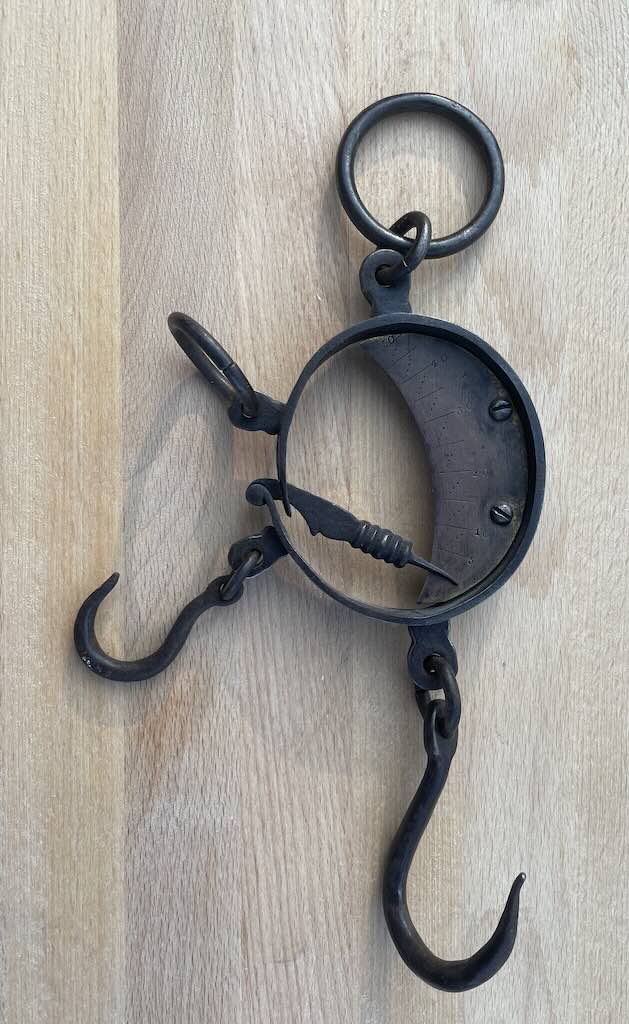
The more commonly found type of Mancur scale is the C-spring (our example is seen above). In France and Germany it was called a “crescent-moon scale” (demi-lune or mondwaage). The principle was simple, when the oval spring was pulled open by the load, the indicator was moved upwards by the interaction of the two ends of the spring. The indicator moved over a crescent-shaped brass plate marked with either one or two sets of graduations. These varied according to the capacity and units of weight, many being in kilograms.
As for the construction of the balance, although most examples appear very similar, at first sight, differences are detectable on closer examination. There are differences in spring shapes and sizes, different indicators, some of which are nicely cast, others are simply twisted from strips of metal, and so on. This is not surprising in a hand-forged product where differences in the strength of springs, and difficulties in setting the indicator with the correct leverage, must have been considerable.
The advantage of C-spring balances was the ease with which an extra load hook or suspension hook could be attached to the spring, to enable the force that opened the C to vary. If the attachments were near the ends of the C, the force needed to open the spring was not great. If the attachments were near the centre line of the C, a much greater force was needed to open the C. So one mancur could have a capacity of say 30 kilos on one side (using the hooks near the ends) and a capacity of 300 kilos on the other side (using the hooks near the centre line).
The most common Mancur balance had an oval spring about l00 mm high (4 ins), and had two suspension rings and two load hooks. However, some examples had only one ring and hook.Surprisingly, Mancur balances were still being made in the mid 2Oth century, and new ones were being offered for sale in Austria as late as 1970. They were said to nave be used in England by farmers for weighing pigs, sheep and bales of hay, and in America for weighing animal skins, which led to the name “hide-scales”.
Roberval Balance
Known as the Roberval balance, this device uses plates placed on the weighing platform. The mechanism was invented by the French mathematician Gilles Personne de Roberval. The example shown below comes from the Rennes radiology department and was used to weigh the barium used for taking digestive x-rays.
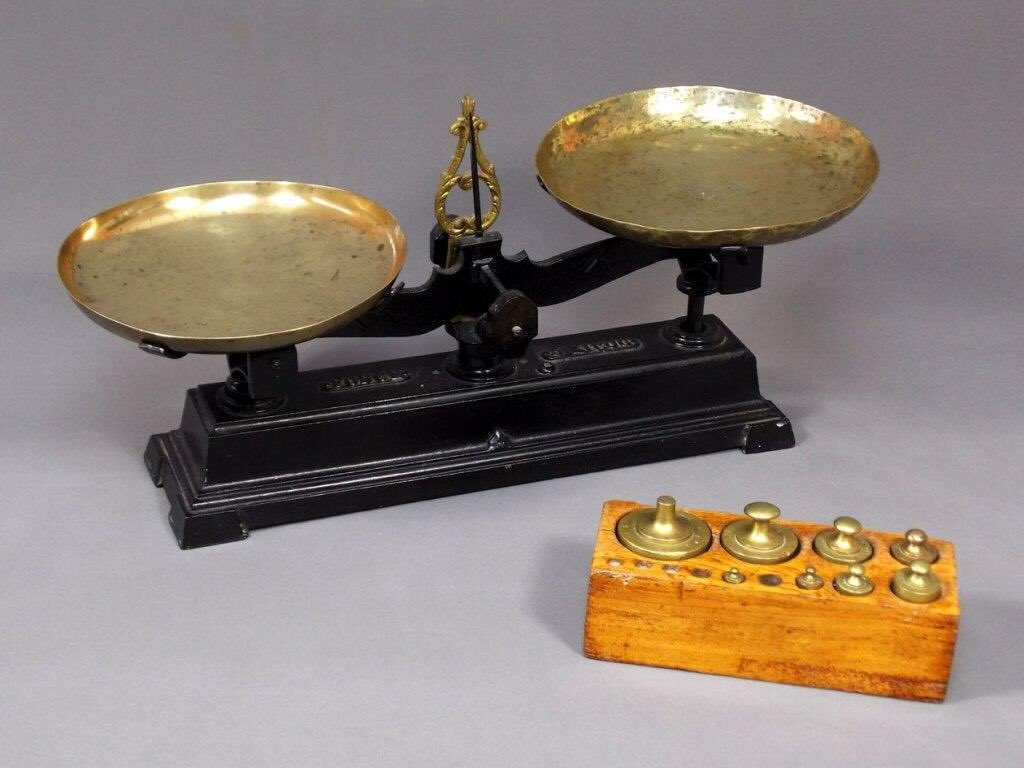
Originally this type of measurement scales consisted of a hinged parallelogram, each horizontal member being “fulcrumed” at the middle, and each vertical member having a bar rigidly attached at a right angle to it and projecting outwardly. With this device in equilibrium, equal weights could be hung from any points along the projecting bars without disturbing the equilibrium of the device.
It was not long before the Roberval principle was applied to scales for commercial weighing. The adaptation of this principle to an equal-arm weighing device was accomplished by replacing the projecting bars of the original device with pans mounted above the vertical members of the parallelogram, thus providing the first example of “stabilised pans” with the load placed above the weighing mechanism.
The essentially parts are the main lever correspond to the upper horizontal bar, the support for the main-lever fulcrum corresponds to the central vertical member attached to the base, and the stabilising bar hidden inside the frame, which in the commercial scale is relatively light as compared with the upper bar.
Despite a persistent and still widespread legend, it would appear that no material or documentary evidence has been discovered to date that could support the hypothesis of the invention by Gilles Personne de Roberval (1602-1675) of the Roberval balance as we know it. This eminent mathematician only presented in 1669 to his colleagues at the Royal Academy of Sciences an experimental scientific apparatus, built by himself, in order to highlight a “static enigma”, a discovery whose application effectively allowed much later the construction of a weighing instrument with basins placed above the beam. The origin of this brilliant idea is not known with certainty, but it seems to be attributed to the London mechanic John Medhurst, whose achievements are cited as early as 1818 and who already offered half a dozen models in a catalogue in 1828. In France, the first official trace known to date of an “English balance”, as they were called at the time, is the catalogue of the Exhibition of French Industrial Products of 1819 at the Louvre, an event where the “Chemin balance” was rewarded for two balances produced in 1818 (or perhaps even a few months before).
The first admission was obtained by the Lyon manufacturer Joseph Béranger on December 5, 1840, followed closely by another pronounced in favour of the Société des Constructions Mécaniques de Strasbourg on January 6, 1842. This was a period of technical trial and error with regard to the realisation of the connection between the counter-beam and the bottom of the rods, the definitive solution only appearing on the model which was the subject of the third admission pronounced on February 22, 1853 in favour of the Parisian manufacturer Wimmerlin. In a little less than a century (between 1840 and 1930), 18 admissions concerned models of Roberval balances but this instrument, much criticized by the verifiers for its lack of precision and accuracy, would not really succeed in establishing itself until the end of the 19th century.
Naturally to be fully functional the Roberval balance needed a set of standard counter weights, which are shown later on this page.
Our Steelyard balance
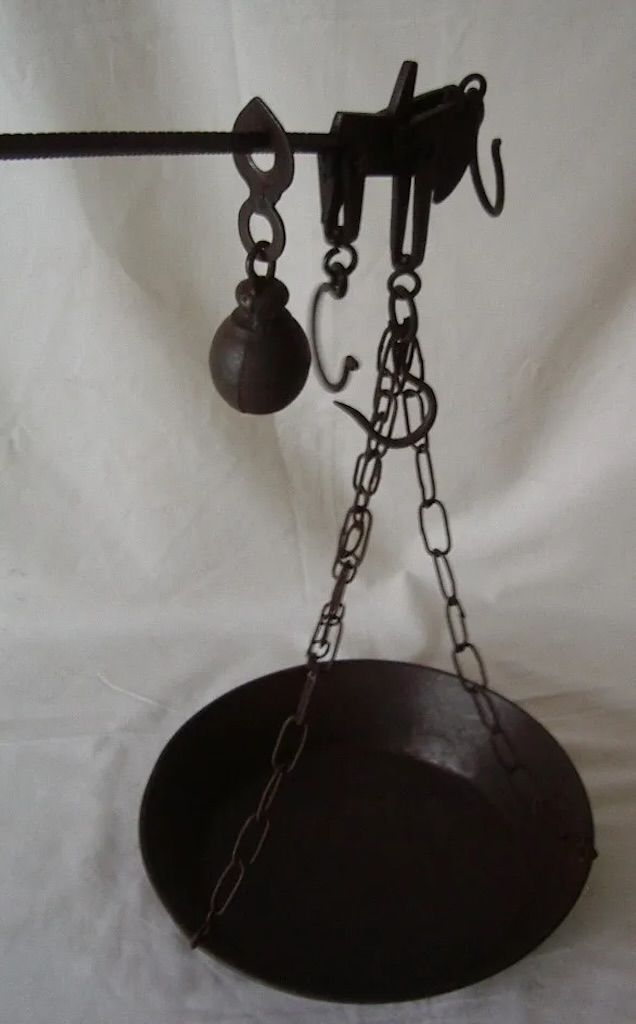
We bought our steelyard balance some 20-odd years ago in a market in Val d’Aosta. We paid a price which did not reflect its age but just its decorative value when hung is our rustic sky apartment (40€ if I remember correctly).
The above example is not our steelyard, but one that looked very similar, and inspired us to take a closer look at what we had purchased (it dates from the late 1800s). I had not examined our steelyard in detail and was convinced that it was a hybrid, an older balancing arm coupled with a more recent tray, added to make it easier to sell as a decorative item. We will see below that I was wrong.
What was important was to look at the steelyard as being bought in Italy, and therefore probably of Italian origin. We might think of it as a “steelyard scale in solid iron with a graduated square section rod, and wrought iron hooks”. In Italian this would be “bilancia stadera in ferro massiccio con asta graduata a sezione quadrata, e ganci in ferro battuto“.
With this definition we would learn that “sull’asta e sul peso presenza di bollatura e marchio dell’artigiano produttore incusso“. Which meant that on the rod and on the weight there should have been engraved a stamp and the mark of the artisan who made it.
Below is a short description taken from a Italian text.
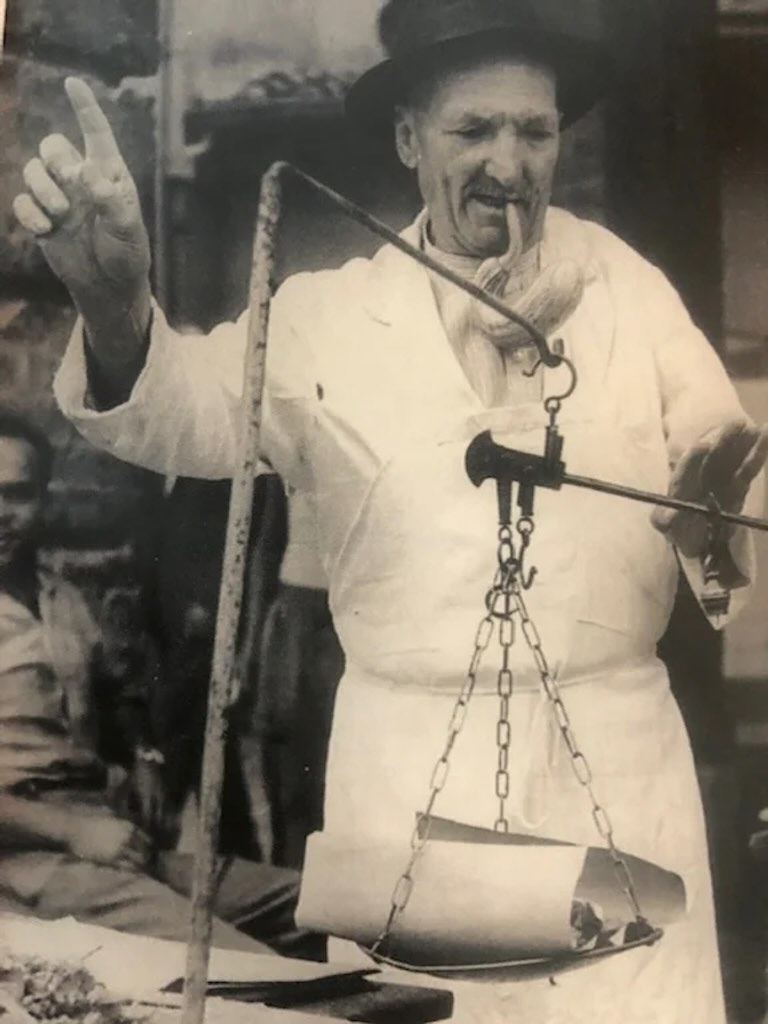
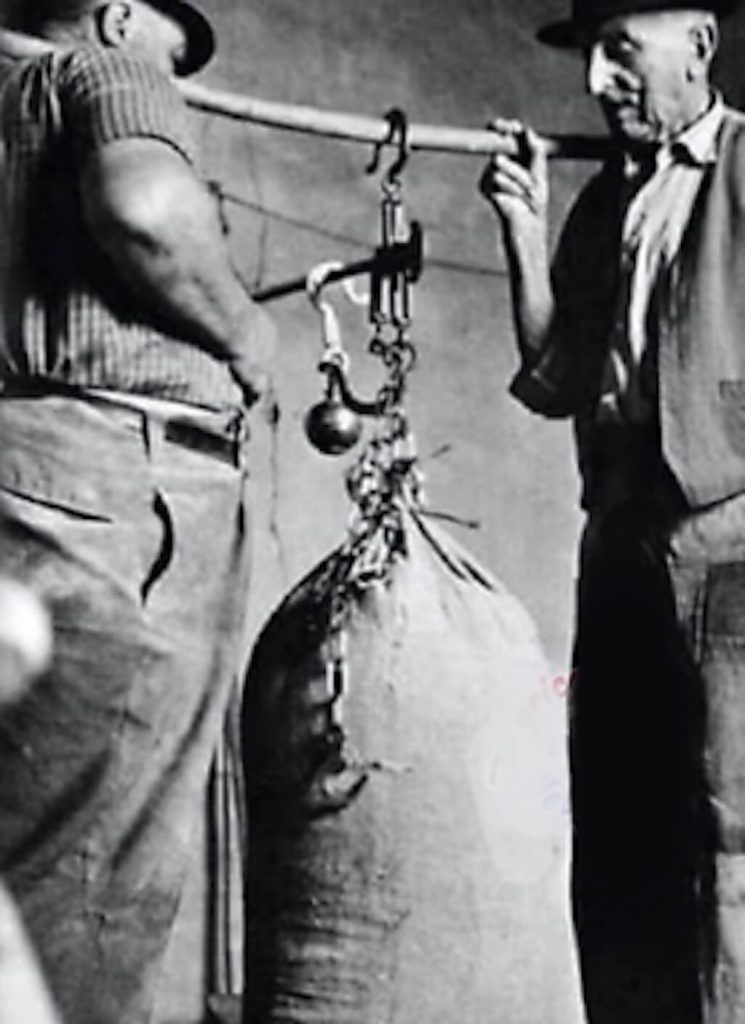
This was just called it a scale (bilancia). With a sheet metal plate, light, easy to handle, easily transportable and quite cheap, it was a very common tool used by farmers, greengrocers and poulterers (contadini, ortolani, pollivendoli). The above photos date from the 1950s.
It was lifted with a finger of the left hand inserted into one of the hooks and with the right hand the weight was slid until the rod was in a horizontal position, the notch where it stopped indicated the weight of the object. If it was loose goods (fruit, beans etc.) they were placed in the plate. Chickens, rabbits or in any case larger objects were weighed by hanging them from the hook in the centre of the chains.
If they weighed more than 5 kg, the rod had to be turned upside down and the hook underneath used to lift it, in that case the capacity generally reached 10 kg, on that side of the rod the numbering of the notches was obviously different too.
The one we called “stadiera” was different only for its larger size and the absence of the plate, the operation was identical, the capacity reached 200 kg. It was lifted by two people with a pole passed through one of the hooks. It was the one used to weigh the pig after killing it. Even if they had personally raised it for their own family and not intended to be sold, no one gave up knowing its weight.
To make it clear how much this type of scale has been used over the centuries, here is a text from 1521.
“We establish and order that every craftsman who holds weights and measures with which he sells or buys goods must have the correct weights and measures stamped with the bull of the municipality of Perugia. The stamper cannot stamp with other stamps, except with these, weights, scales, canes and steps under penalty of one hundred soldi. And since some out of little conscience or greed have the audacity to tamper with these stamps by increasing or decreasing the weight or removing the seals, we order that no quantity of lead or tin can be added to any scale or weight under penalty of five lire“.
On the Internet there are 100s if not 1000s of examples of “bilancia stadera“, some more sophisticated, others incomplete.
What I quickly realised was that our steelyard was not one of the sophisticated designs, but it was remarkably complete. In fact it became evident that ours was a “single unit”, and neither the counterweight nor the chains and tray could be detached. All the connections, etc. were solid, so it became evident that it was truly a measuring instrument that had been used as such (and was not just a decorative item). There was one minor repair on the tray, but the original iron hook attachment was still present. In fact, the chains, the hooks, the counterweight all looked perfectly original.
There were no visible stamps suggesting that our steelyard had been “certified” for use.
Amazingly cleaning away the rust and dirt revealed a multitude of marks and stamps, shown below.
Firstly on the arm itself, on two sides there are the numbers “0”, “1”, “2”, and “3”. With the intermediate markings, this suggests that the scales can weight between 0 and 3.8 kg, in steps of 20 gms. On the other two sides of the arm there is the figures “5” and “10”, suggesting that this alternative configuration can measure weights between 4 and 13 kg, in steps of 100 gms.
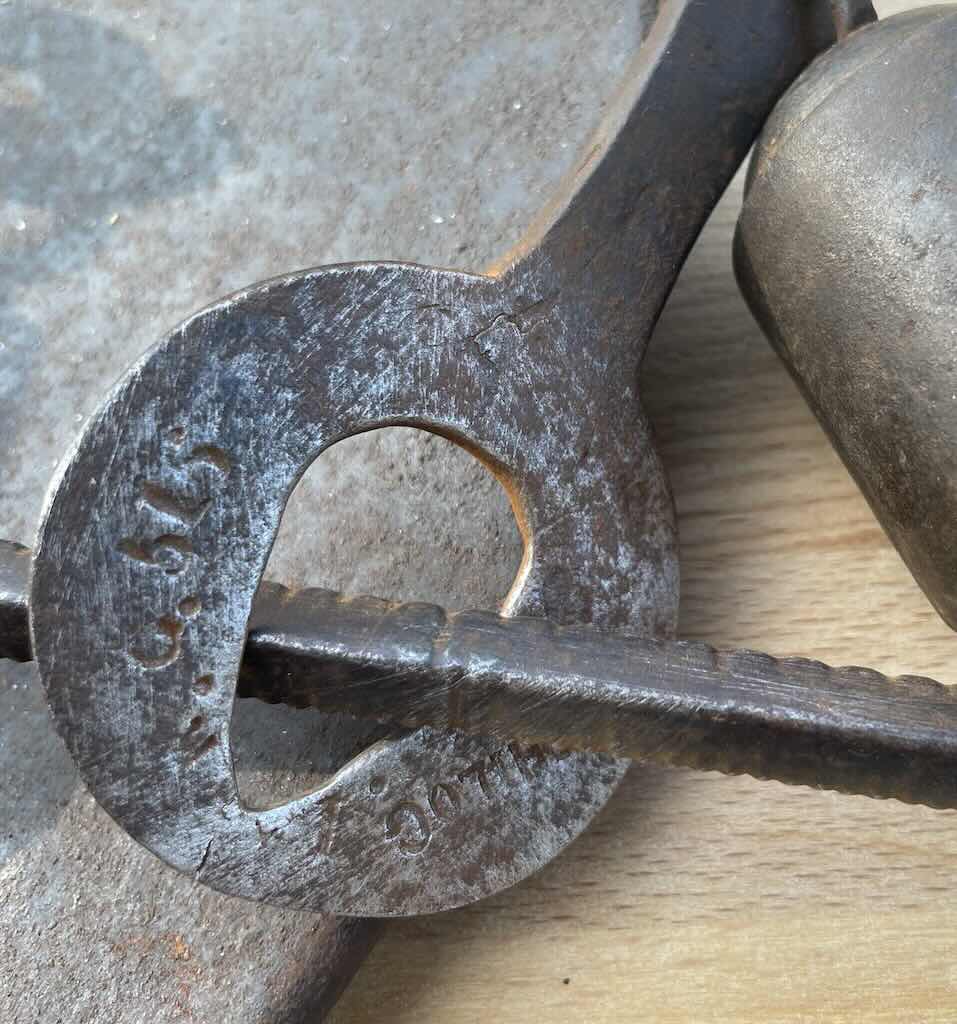
Above we can just make out “P. CHILOG” and “R.G. 516” on the counterweight attachment to the arm.
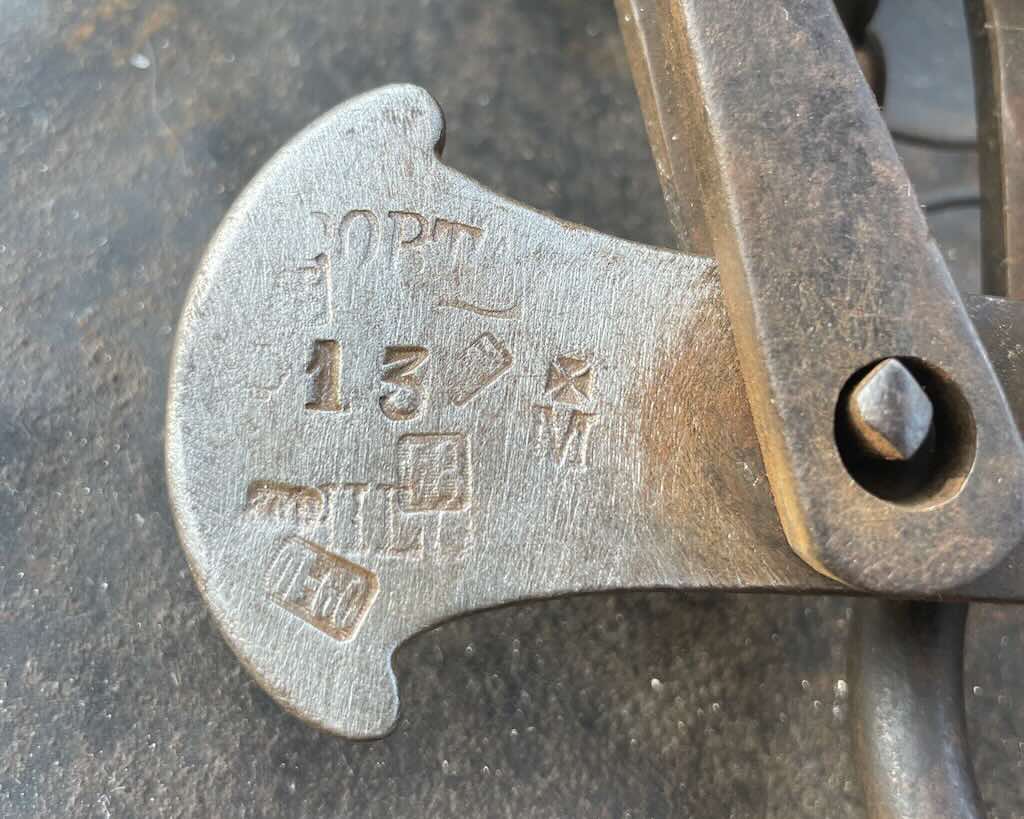
Above on the “front” of the arm we can see the letters *-ORT”, “?ILO”, the number “13”, a makers mark with an “M”, and a few stamps included an “84” and a “09-10”.
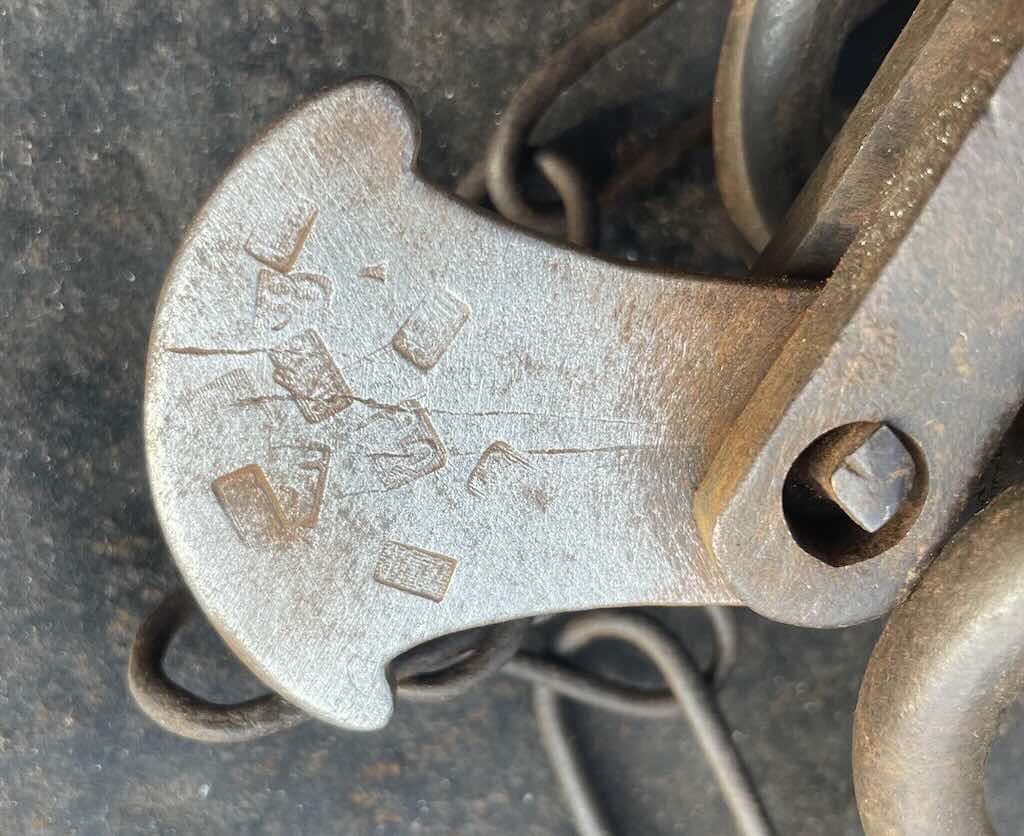
On the “back” is a messy collection of at least 10 stamps, but it’s possible to see twice the number “96” and another number with an “8”.
timbri di certificazione impressi sul peso e sull’ asta di una stadere
https://www.museodellabilancia.it/annuncio.php?idarg=79&ida=45
Our Roberval scales
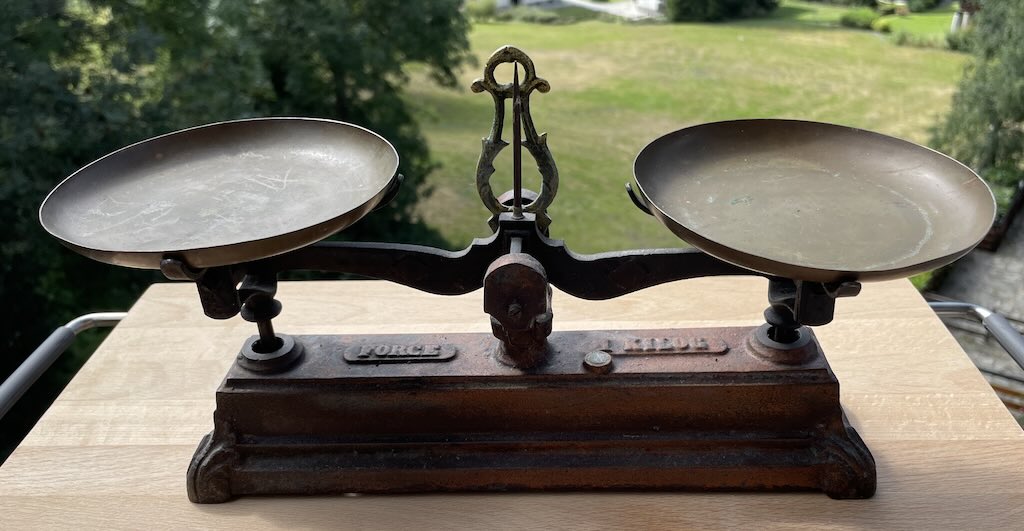
The only information on our Roberval scales is the words “FORCE” and 1 KILOG” in the cast-iron base, and marks on the front side of the upper horizontal bar. On each side of the bar there is a small raised horizontal diamond shape. In the diamond on the left is stamped a crown with a small cross, sitting above the initials “H.C” (H.C couronné) or possibly “H.G”. On the right diamond there is a small circular indent in the diamond.
In this description there is a mention that initials placed under a crown referred to the manufacturer, and that these were listed in the register of balance manufacturers. Also there is a mention that there would be the imprint of the “primary verification” (vérification primitive) punch of the Service des poids et measures present on the other part of the beam.
There are some samplers available of the “Bulletin de la Société métrique de France“, and the occasional complete version can be found for the years 1985, 2000, 2001, and 2015 (partial).
What do we learn from these occasional examples? Firstly, each manufacturer of weights and measures uses a MARQUE (“MARK”), which was reserved for them, and which was intended to be stamped on the objects of their manufacture. This rule concerned, in particular, the “balanciers“, manufacturers of scales and weights.
The registered marks were quite varied. Some were just combinations of letters, e.g. BC (with or without dots B.C. and spaces B C, and some combinations could be superimposed). Others were letters sitting under a crown (couronné), star (étoilé), laurels (lauré), a small sun (soleil), diamond (losange), or letters set around an anchor (ancre) or set between two crossed hammers (marteaux).
However collectors have noted that many weighing objects, from all periods, do not bear any mark. However, for centuries, most manufactures of a certain importance have regularly practiced this marking, and moreover, it has been, in principle, obligatory in France since the beginning of the 19th century. These marks are a valuable indication for it is often possible to identify the maker, which can tell much about the region and the period of manufacture of the object. The lists of marks, accompanied by details on those who used them, are thus very useful documents for all those who want to know more about old weights and scales.
Several authors have already published tables or lists of marks, however they collected old marks, created, in general, before the end of the first third of the 19th century (before ca. 1840). The problem will be to create a list for later manufacturers.
The list that was circulated in 1985 was quite limited, both on place of origin (only Paris) and dates (up to ca. 1918). One thing was that “couronné“, those manufacturers using letters topped by a crown, used a wide variety of crown designs.
In this list (published in 1985) we find a HG couronné for Couillard (Paris), but the crown does not look the same.
In 2001 a new list appeared, again limited to Paris (so still only for about half of the French manufacturers), and only for those manufacturers active in the period 1902-1946. It was made clear that some older lists had been lost, and there was little hope to find them again.
Again it’s worth noting that the format of the letters could vary, so our “H.C” could be “HC”, “H.C.” or “H C” (remembering the C might possible be a poorly stamped G).
In this list we find a HC (ou TG couronné) for Vouillard, 11 rue Beaussire, and a HG for Gérard H, Montreuil-s-Bois, 85 rue des Groseillers.
Again we did not find H.C couronné, but remembering the lists are only for Paris and for specific periods when specific manufacturers were active.
Don’t be so impatient! Here you go: From International Exhibition, 1862. The Illustrated Record of the International Exhibition of the Industrial Arts and Manufactures, and the Fine Arts, of All Nations, in 1862 by Taliaferro Preston Shaffner, William Owen, and Rev William Owen: “MANCUR’S COMPOUND SPRING SCALE.This exceedingly novel contrivance… They were exhibited by the proprietor, Mr. E. Mancur.” The exhibition was in Paris, if that helps, but Mancur is presumably not a French name. At any rate, you now know it’s from the surname of the inventor; I haven’t been able to track down any further details about him, but at least you know more than you did.
In the British Annual Army List for 1865 there is mention of a “James Mancor, Major, retired full pay 48 Foot“. He enlisted 5 July 1844, was promoted to Lieutenant 20 July 1847, to Captain on 27 Dec. 1852, to Major 23 November 1860, and Lieutenant Colonel 23 July 1861. In the same list there is also mention of a Captain Andrew Mancor who served in the early years of the 1800s.
In The Engineer Vol. VL, from Jan. to June 1883, there is mention under “Applications for Letter Patents” the mention of “Horner and Mancor, Feeding Bottles, 428” and “Bottles, Feeding Horne and Mancor, 428”
In The Engineer Feb. 29 1884 page 174 there was a list “The Patent Journal” condensed from the Journal of the Commissioners of Patents. Under “Applications for Letters Patent” for the 20th Feb. 1884 there is the entry “3613. Checking Apparatus, A. Horne, Walton, and J.Mancor, Kirkdale“.