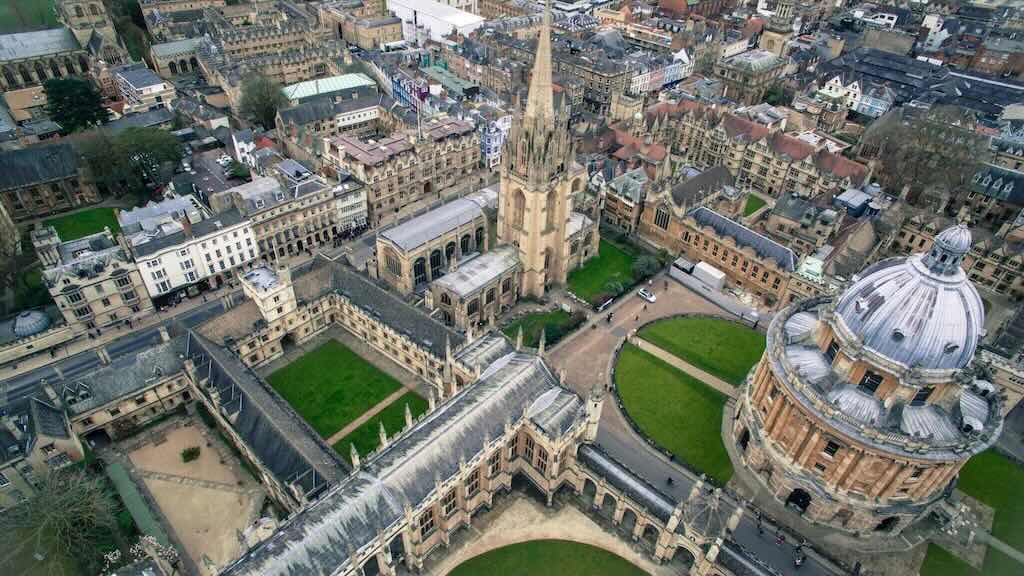
In September 2025 I happened to chat with someone who had attended a summer school course in Cambridge, England. This gave me the idea to look for summer school options for 2026.
I had a vague idea what that might entail, but I discovered a plethora of options. And to summarise, I decided to commit to a series of adult courses in Oxford, during one month in the summer of 2026.
The Web is awash with courses, and I was surprised at the variety on offer, and the way they were designed for different audiences and goals:-
- Academic enrichment programs — Intensive courses in subjects like science, economics, literature, law, or politics, mainly for high school, undergraduate, or postgraduate students wanting university-level study experience.
- University credit programs — Short-term courses that offer transferable academic credit, aimed at university students accelerating degrees or exploring electives internationally.
- Pre-college / youth programs — Designed for teenagers (typically 14–18), combining academic learning, campus life, and cultural activities to prepare students for university.
- Professional and executive programs — Focused on business, leadership, finance, AI, sustainability, or policy, intended for working professionals, managers, or entrepreneurs seeking career development.
- Research and laboratory schools — Hands-on scientific or technical training for advanced undergraduates, graduate students, and early-career researchers.
- Language immersion schools — Intensive language and cultural learning programs for international students, travelers, diplomats, or professionals.
- Arts and creative academies — Courses in music, film, theatre, design, architecture, writing, or visual arts, aimed at aspiring creatives and portfolio-building students.
- Sports and performance camps — Training-focused programs for athletes, dancers, musicians, or performers, often for younger participants seeking elite coaching.
- Innovation and entrepreneurship bootcamps — Startup-oriented programs teaching product development, coding, venture creation, or innovation skills for students and young founders.
- Cultural and global studies programs — Interdisciplinary courses combining travel, history, politics, sustainability, or international relations for globally minded students.
- Online and hybrid summer schools — Remote or blended programs offering flexible access for international participants unable to travel.
Summer schools vary enormously in quality, prestige, and purpose, so understanding who runs them, where they take place, and how they are accredited is essential.
Who Offers Summer Schools
- Universities
The most academically recognised programs are run directly by universities. These often provide formal certificates, academic credit, or access to university faculty and facilities. - Private academies and education companies
Many commercial organisations run summer schools in famous university cities. These may rent classrooms or student accommodation from universities but are not academically affiliated with them. They are often focused on enrichment, language learning, or university preparation. - NGOs and international organisations
Bodies such as United Nations-linked institutes, policy think tanks, or cultural foundations run programs on diplomacy, sustainability, development, or leadership. - Research institutes and specialist schools
Technical institutes, laboratories, conservatories, and business schools may offer intensive research or professional training programs.
Languages Used
- English dominates globally, especially in Europe and North America, and international programs targeting foreign students.
- French, German, Spanish, Chinese, Japanese, and Arabic are common in regional or language-immersion programs.
- Some programs are bilingual or designed specifically for international students with varying language levels.
- Elite academic summer schools increasingly market themselves as “international,” so English is often used even in non-English-speaking countries.
Typical Locations
Summer schools cluster in:-
- Major university cities — Oxford, Cambridge, Boston, Singapore, Paris, Berlin, Toronto.
- Tourist and cultural centres — Florence, Barcelona, Seoul, Tokyo.
- Research hubs — Silicon Valley, Zurich, Geneva.
- Residential campuses — where students live in dormitories and experience campus life.
Some programs use prestigious locations mainly for branding. For example a course may be held in Oxford but not directly connected to the University of Oxford. This distinction matters greatly for academic credibility.
Duration
Programs typically range from:-
- 1–2 weeks — introductory or cultural programs.
- 3–6 weeks — standard academic summer schools.
- 6–12 weeks — university-credit or research-intensive programs.
- Weekend or executive intensives — for professionals.
How to Assess Academic Validity
For me, my first question was whether the program was officially operated by a recognised institution, or simply using a famous location or brand association.
Given the enormous variety of courses on offer, I decided for practical reasons to initially focus on Oxford.
I live abroad, but have family near that city. I thought that going to Oxford, there would be fewer variables and unknowns in my first foray into the world of summer schools. As it turned out, committing to four consecutive one-week courses, meant that I would return to the UK for one entire month, longer than I had ever spent in the UK since leaving in late 1974.
I also had the idea (for later) to consider diverse courses (e.g. humanities) in different cultural environments (e.g. Paris, Kyoto, Beijing,…).
First important checks included:-
- Who issues the certificate?
A certificate from “University of Oxford Department for Continuing Education” is very different from one issued by a private company “based in Oxford”. - Who teaches the course?
University faculty, visiting academics, graduate students, or commercial tutors? - Does it provide accredited credit?
This was not an important issue for me. But I understand that many people will look for ECTS (Europe), university credits, or recognised continuing education certification. - Is the university formally named as organiser?
Phrases like “Hosted in Oxford” (may not be affiliated), or “In partnership with…” (imply partial affiliation), or “Run by…” or “Official program of…” (suggest a formal link and a stronger legitimacy). - Admissions standards
Selective admissions, prerequisites, and transcript requirements often indicate higher academic seriousness. For me, not having admission requirements was key, and this meant often looking at adult-education or lifelong-learning options. - Research output or assessment
Essays, exams, lab work, or published projects usually signal stronger academic rigour than purely attendance-based certificates.
My Personal Requirements
I’m retired, so I was more interested in summer school options that were less about qualifications and more about intellectual stimulation, cultural immersion, and structured exploration in a new environment. In practice, this was a different category of programs from the student-focused ones.
The most suitable type of programs for me were:-
- Liberal arts and lifelong learning programs — Broad, discussion-based courses in history, philosophy, politics, literature, science, music, or current affairs, designed for intellectually curious adults rather than degree seekers.
- Language and cultural immersion schools — Combining language learning with local culture, excursions, food, and history. Popular in Italy, Spain, France, and Japan.
- University continuing education programs — Many universities offer short residential courses for adults with no formal admission pressure. These often attract internationally minded retirees and professionals.
- Creative and practical academies — Writing, painting, photography, cooking, architecture, archaeology, music, or wine studies, where the experience and environment matter as much as the syllabus.
- Field-study and travel-learning programs — Learning integrated with travel, e.g. archaeology in Greece, ecology in Costa Rica, history in Rome, diplomacy in Geneva, etc.
- Professional-to-personal transition courses — Leadership, psychology, sustainability, AI for non-specialists, or philosophy-oriented programs aimed at adults rethinking their next phase in life.
First I looked at the place (e.g. Oxford), then the subject(s), then for small groups. Ideally I wanted courses where the participants were there voluntarily out of curiosity, and the location itself was part of the learning experience.
Picking My Subjects
Firstly, I avoided all the “Oxford-looking” summer schools (all paying to be top of any Google search).
I targeted “Summer Schools in Oxford” as part of “Oxford Lifelong Learning“, in the Department for Continuing Education. I found…
Undergraduate level
The Oxford University Summer School for Adults (OUSSA) programme offers accredited week-long courses at Rewley House in central Oxford. Credit earned from OUSSA is transferable towards our flexible and part-time Undergraduate Certificate of Higher Education.
Courses cover a wide range of subjects including literature, archaeology, architectural history, creative writing, history of art, philosophy, biological sciences, theology, psychology and more.
- Oxford University Summer School for Adults, Rewley House
There was a list of weeks, starting 11 July and closing 22 August, 2026. And then for each week a list of possible courses. Initially my focus was on what I did not want to do, e.g. Pioneer Women in Egyptology, Aristotle’s ‘Politics’, The River Thames, Jane Austen’s Sense and Sensibility, etc.
It was only in the second week I discovered “130 Years of Discovery: Nuclear and Particle Physics from Becquerel to Gianotti“.
In the third week “Smaller Than the Atom: A Primer on All Things Quantum“.
In the fourth week “Exploring the Cosmos: Technology, Theory, and Discovery”
In fifth week “Understanding Space and Time“.
This “package” of four consecutive weeks held together very well, and I booked all four in late 2025.
It was only in early March 2026 that I was informed that “Exploring the Cosmos” was cancelled. There were only two people enrolled.
I was offered a refund, or I could enrol on another course that week. I certainly did not want Life and Death in 17th-Century England, Ancient Religion and the Senses, Diversity and Justice in the Modern World, Environmental Ethics and the Climate Crisis, Myth-Making and Folk Horror in the British Isles, The Brontës, The Psychology of Family, Three Great World Religions, or What Makes Life Meaningful?
So I was left with a choice of one, “The Architectural Secrets of Oxford’s Classical Buildings“.
This was slightly irritating, since I had already started the recommended reading.
On the other hand, I like architecture, and the course involved field trips to look at Oxford’s classical buildings.
Course Timetable
The weekly course starts on the Saturday, with registration from 14:00, an orientation meeting at 16:30, and dinner 18:00-20:00. The seminars are 09:00-10:30 and 11:00-12:30 (with tea break). Afternoon tutorials, etc. run from 13:30 to 18:00. Lunch is 12:30 to 13:15, and dinner 18:00-19:00.
Course Enrolment
In the enrolment confirmation I was informed that participants were required to complete preparatory reading and submit a pre-course assignment of 1,500 words. The assignment was designed to give the tutor an indication of my existing knowledge of the course subject. The completed assignment was to be submitted no later than the 8 June 2026.
There was mention of a web portal “canvas” were I could download:-
- The course syllabus, which included the pre-course assignment question(s).
- The Declaration of Authorship form or the Assignment Cover Sheet form.
- The Guidelines for producing coursework and submitting assignments.
Accomodation
I could see that the courses were held at Rewley House, which provided accommodation. But even in late 2025, the message was that accommodation was not available.
Each course included lunch and dinner, but I had to find my own accommodation.
Oxford is very expensive, particularly during the summer months. I finally booked an Airbnb (my first), about a 25-30 minute walk from Rewley House.
The exercise would do me good. And the idea of taking in the atmosphere of Oxford every morning, and walking back through centuries of history in the evenings, sounded poetic. After booking I did wonder how practical and safe that choice was.
Joining Notes 2026
In late January 2026 I received “Joining Notes” which included a mix of general blah-blah, and useful information. On 1 May 2026 I again received the same “Joining Notes”. There was no version number, so I didn’t bother reading them again.
There was information on immigration and visa requirements, and the need for accident, medical and property insurance, etc. It was recommended that all participants purchase travel insurance to cover the programme fees, travel costs, and any other expenses incurred.
Then there were a series of “warnings”:-
- Use ATM machine located inside banks, shops, etc.
- Small businesses are extremely reluctant to accept £50 notes.
- Carry only enough cash to meet day-to-day expenses.
- Special care should be taken of your passport and travel tickets.
- Do not leave luggage unattended in waiting rooms, at airports, on railway platforms, on luggage racks or anywhere else.
- When travelling, valuables such as cameras, laptops and phones should be carried with you at all times and a note kept of the serial numbers. Once you are in Oxford, they should never be left on view in your room, even for a short time.
- Carry your wallet in an inside pocket, never in a back trouser pocket. If you take off your jacket, do not leave your wallet in it.
- Never leave your handbag even for a short period. Make sure it is closed, with items such as purses pushed to the bottom.
English weather is unpredictable. Even in summer, a raincoat is often necessary, and you are advised to bring warm clothing as well as summer clothes.
Casual dress is acceptable for attending lectures and seminars, participating in excursions and social events, and at meal times, except for the opening and closing receptions and formal dinners when an appropriate standard of dress is required (i.e. jackets and trousers with shirts and ties, dresses, or blouses and skirts). Every year at the closing dinner there is a mixture of dress styles: some people dress up, some are smart casual and some are dressed down. We encourage people to dress up but nothing special is required.
Many Oxford streets are now closed to traffic and parking is severely limited. Please note that there are no parking facilities for summer school students at University of Oxford, Oxford Lifelong Learning. We strongly recommend that students do not travel to Oxford by car.
Data Security Incident Affecting Canvas
On 12 May 2026 I was informed “about a data security incident involving Instructure, the third-party supplier of Canvas, which has impacted universities around the world”.
It was believed this may have included usernames, email addresses, messages exchanged within Canvas, course titles and course enrolment data.
I was further informed that there was no indication that the University’s authentication systems or accounts have been compromised in any way.
There was a second attack, and again I was informed that there was no evidence that passwords, dates of birth, or financial information were involved in these incidents, nor that any data was extracted. In addition no core learning data (course content, submissions or credentials) had been compromised.