I had decided to follow an Oxford University Summer School (2026) on the subject “The Architectural Secrets of Oxford’s Classical Buildings”.
One of the recommended reading was “Classical Architecture” by James Stevens Curl. Subtitled “An Introduction to its Vocabulary and Essentials, with a Select Glossary of Terms”.
The blurb tells us that the book is well-illustrated, and “describes the fundamental principles of Classical Architecture in a series of precise chapters”. It claims to be for “all who want to look at buildings old and new with an informed eye”.
What the reviewers wrote?
This book has generally been regarded as the architectural historian’s handbook, and an introductory texts in schools of architecture, conservation, and architectural history.
Reviewers generally found the book focussed on architectural history, with rigorous terminology, but less concerned with contemporary design practice.
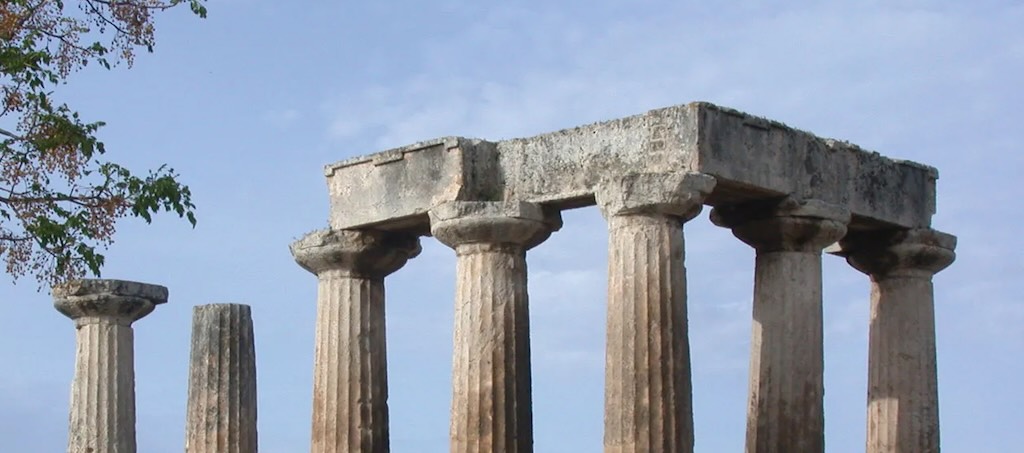
The feature most often praised was the precision of the architectural vocabulary, and coupled with a very fine glossary. It does just define terms such as entasis, mutule or scotia, it also explains how they function architecturally, and how they evolved through history.
Reviewers frequently commented that the glossary alone justified owning the book.
One point of criticism was that the book is best suited to those learning, but is less useful as a manual for the practicing architect. It explains what classical architecture is, but not how to design it. The author concentrates more on terminology, historical development and stylistic evolution.
Several reviewers noted that beginners could initially find the sheer number of technical terms intimidating. Curl does not avoid specialised architectural language, which I think is a good thing, because readers learn the proper vocabulary from the beginning.
My opinion
Where Robert Adam concentrates on explaining how classical architecture is composed, Curl spends considerably more time explaining how it developed.
I appreciated that he treated classical architecture as a tradition extending over almost 2,500 years, following its development through well defined stages:-
- Ancient Greece
- Hellenistic architecture
- Rome
- Early Christian architecture
- Byzantine influence
- Romanesque
- Renaissance
- Baroque
- Georgian
- Neoclassical
- 20th-century classicism.
I also like that he did not present isolated “styles”, but tried to show their historical continuity. I thought it was one of the book’s greatest strengths.
My guess is that it is a very good introduction. And I like the fact that it had concise chapters, with numerous illustrations, and clear explanations.
Another thing I found valuable was that it did not assume previous architectural knowledge, which made it surprisingly approachable for beginners like me.
Although not as visually analytical as Robert Adam’s drawings, I liked Curl’s illustration.s which were closely integrated with the text.