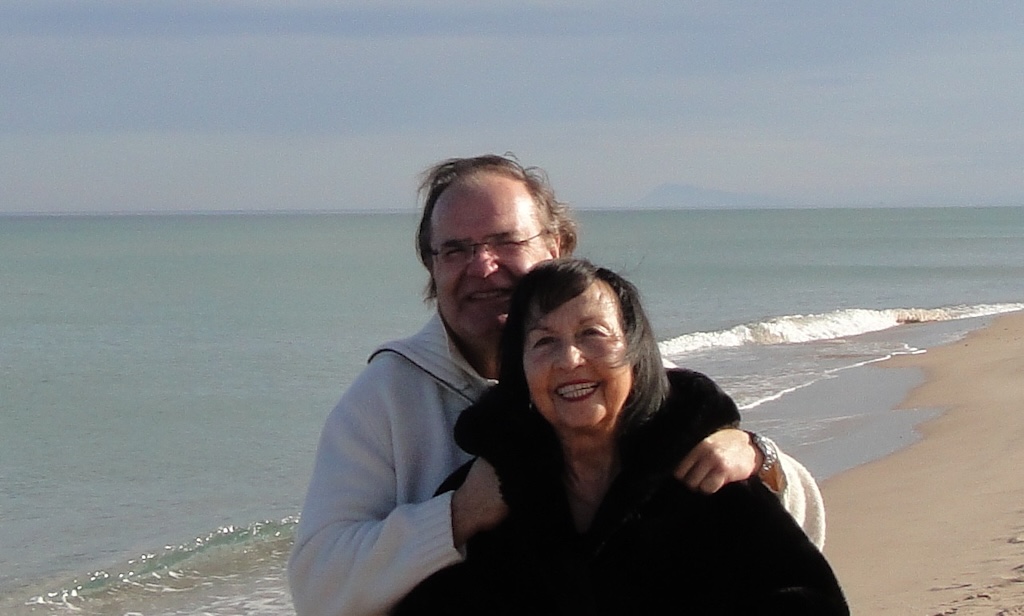
My wife and I first visited the Parador of El Saler in November 2010, in November 2013, November 2015, and now (alone) in March 2026. In our past visits we played golf in 2010 and 2013, but not in 2015.
I have an “Amigos” card, and I booked a standard room, with a special prepaid demi-pension package (dinner-breakfast).
What is a Parador?
Paradores, is a Spanish state-owned chain of luxury hotels that are usually located in historic buildings or in nature areas with a special appeal.
The very first parador was inaugurated in 1928, and as of 2026, it operates 98 paradores in Spain and one in Portugal.
The Route to el Saler
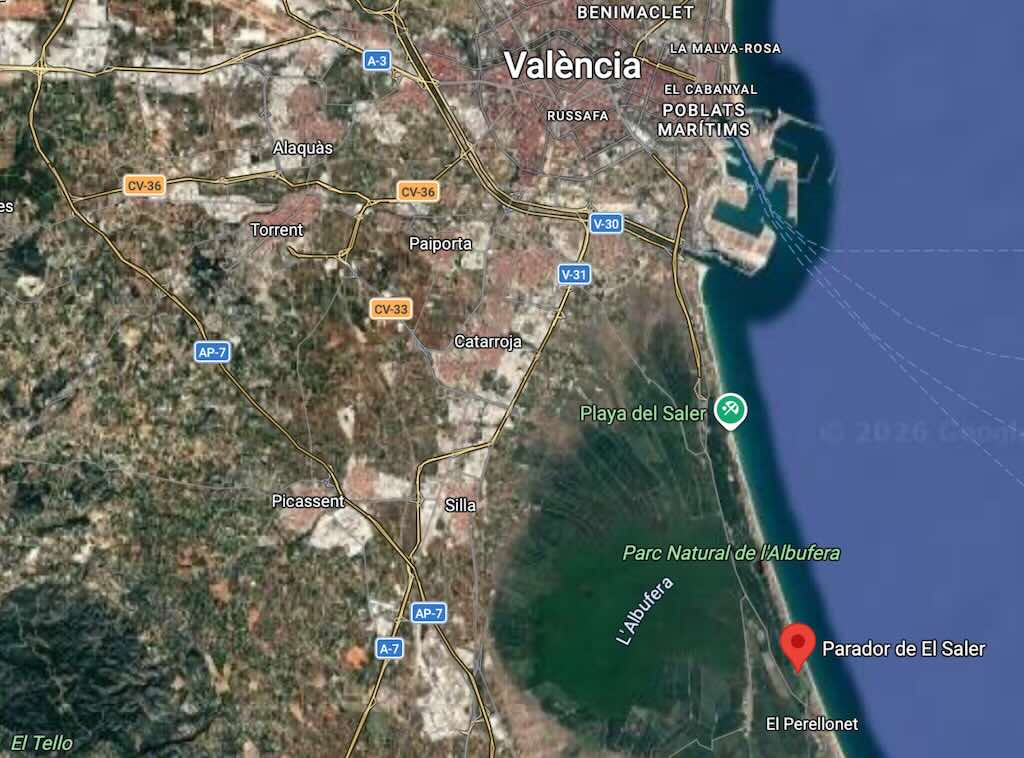
Getting to the Parador El Saler is not totally painless. Coming from the north, you have to leave the toll motorway AP-7, and join the V-30, which takes you through the centre of Valencia, right down to the port area. There you take the CV-500 coast road running south. It’s a simple straight road, now with a lot of tourist traffic. The exit for the Parador is easy to see, and the guard checked that I had a reservation. The entrance and parking are the same as used by the golf club.
Parador El Saler
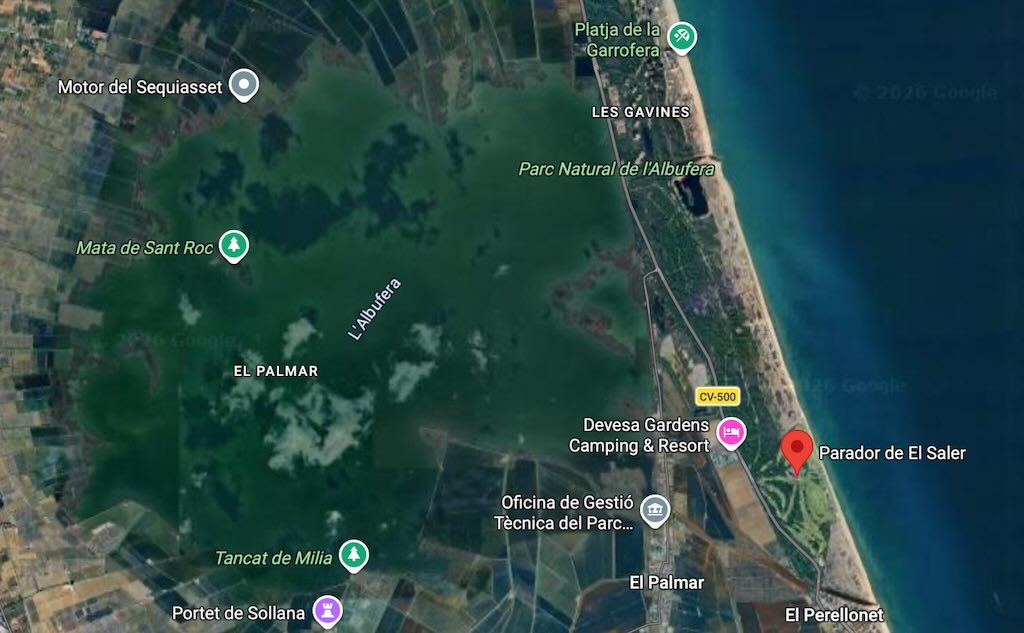
The area called El Saler has a rich and complex history, and one that is not evident during a short visit. The name “El Saler” comes from salt extraction (salinas).
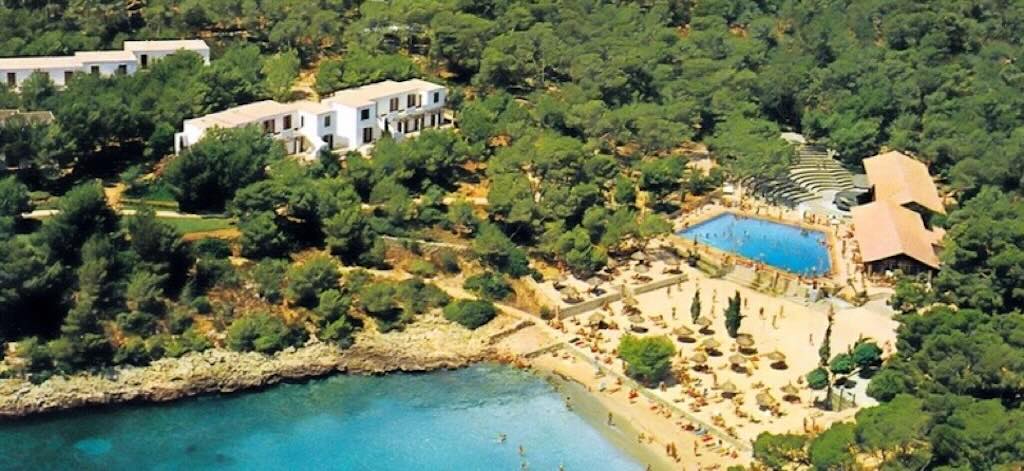
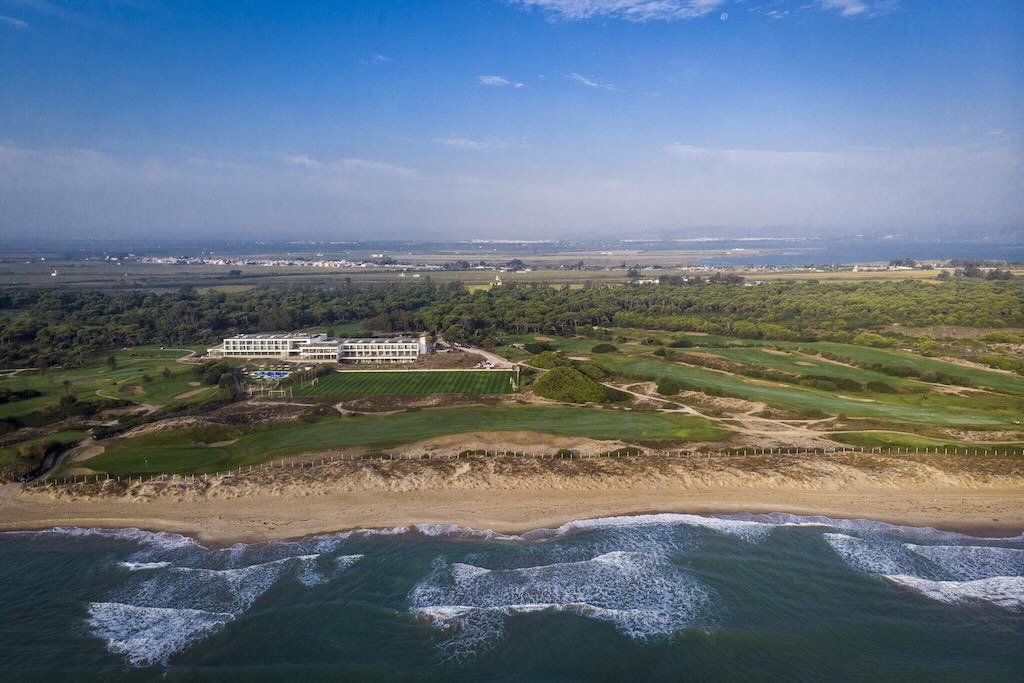
The Parador de El Saler is located in a very specific and fragile geographical strip, the Dehesa del Saler, a narrow coastal barrier between the Mediterranean Sea and the inland lagoon of the Albufera Natural Park. It sits exactly on the boundary between dunes and a pine forest (seaward side), and wetlands and a lake (inland side), and the area is one of the most ecologically sensitive transition zones in Spain.
Originally, this was an open marine gulf between the Turia and Júcar rivers. Over thousands of years sediment deposition and coastal currents created a sand barrier with dunes stabilised with vegetation. This closed the bay, forming a lagoon (Albufera) of ~30,000 hectares during Roman era (today the lagoon covers ~2,800 hectares).
The area was royal property under James I of Aragon (13th century), and was used for salt production and hunting (royal hunting ground). Settlement was minimal, with small barraca huts used by fishermen and forest-guards.
Originally a saltwater lagoon connected to the sea, from the 17th century the irrigation from rivers (Turia, Júcar) and the expansion of rice cultivation gradually converted it into a freshwater lake. From the 18th century onward rice cultivation dominated the surrounding landscape.
Today the lake acts as a water regulator, receiving agricultural runoff and provides the flood irrigation cycles for the rice fields.
Tradition has it that the paella originated in the rural areas around the Albufera Natural Park and the villages such as El Palmar and surrounding rice-growing zones. Paella ingredients were not luxury items but what was available locally, e.g. rice, water from irrigation channels, olive oil, rabbit, chicken, freshwater snails (common in the marshes), green beans (ferraura) and garrofó (local lima beans). History tells us that “paella” comes from the Valencian word for the a wide, shallow pan (from Latin patella). And it was cooked as a single-dish meal over an open fire by farm workers in the fields.
It’s worth remembering that the original “paella valenciana” was not a seafood paella, was not a mixed meat/seafood paella, and did not contain chorizos.
The room
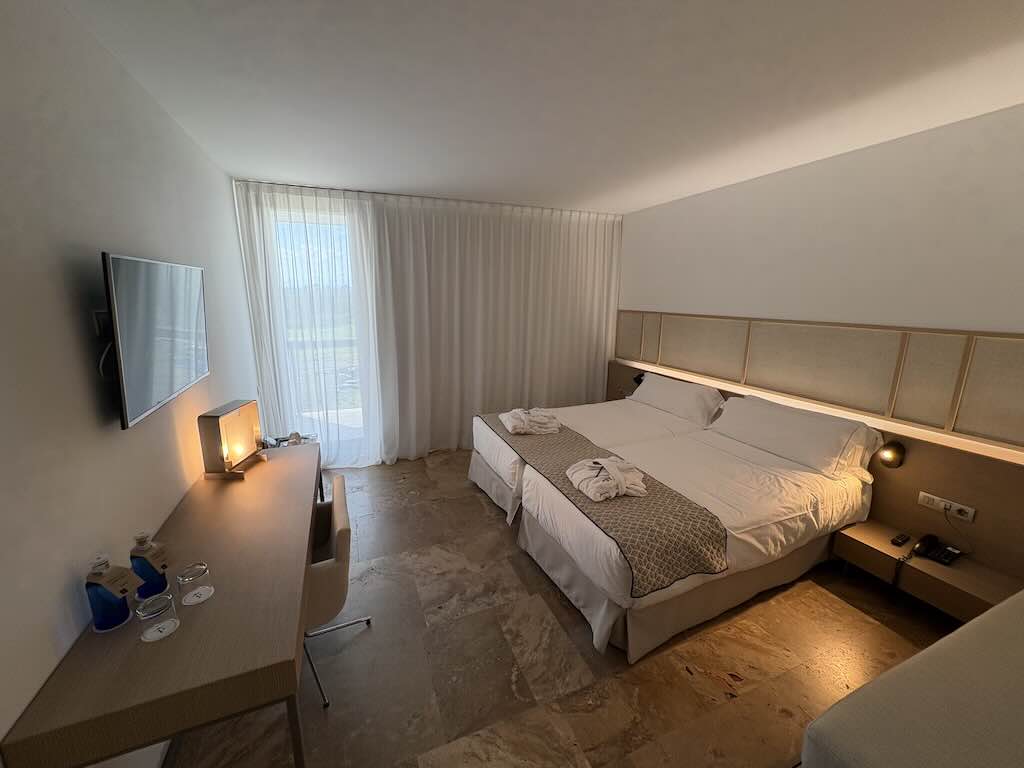
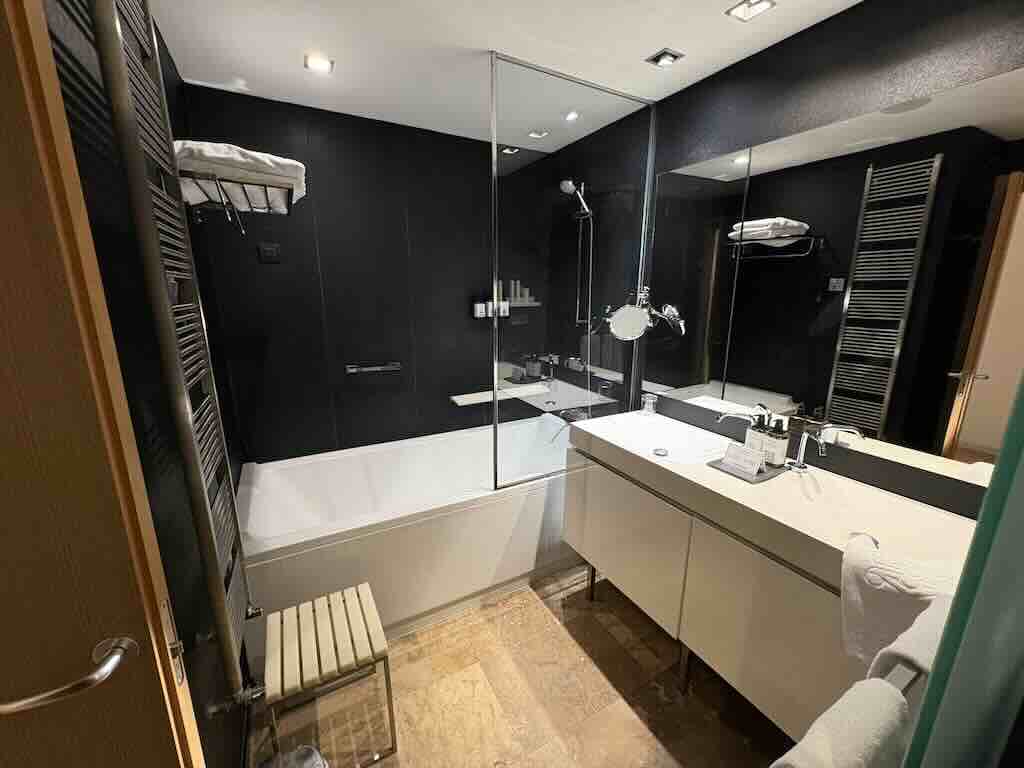
Check in was fine, and I had a room with a view of the parking. It was large, well equipped, the bed was comfortable, towels good, etc. I didn’t like the bath, I prefer a walk-in shower. But the complementary bottled water was a nice gesture.
My more general comment, was that, here and there, the hotel is beginning to show its age. Nothing precise, just little things that needed a bit of “loving care”, and maybe a refresh.
The Restaurant
The restaurant had quite an extensive menu, and I had booked a demi-pension, which included an evening 3-course meal.
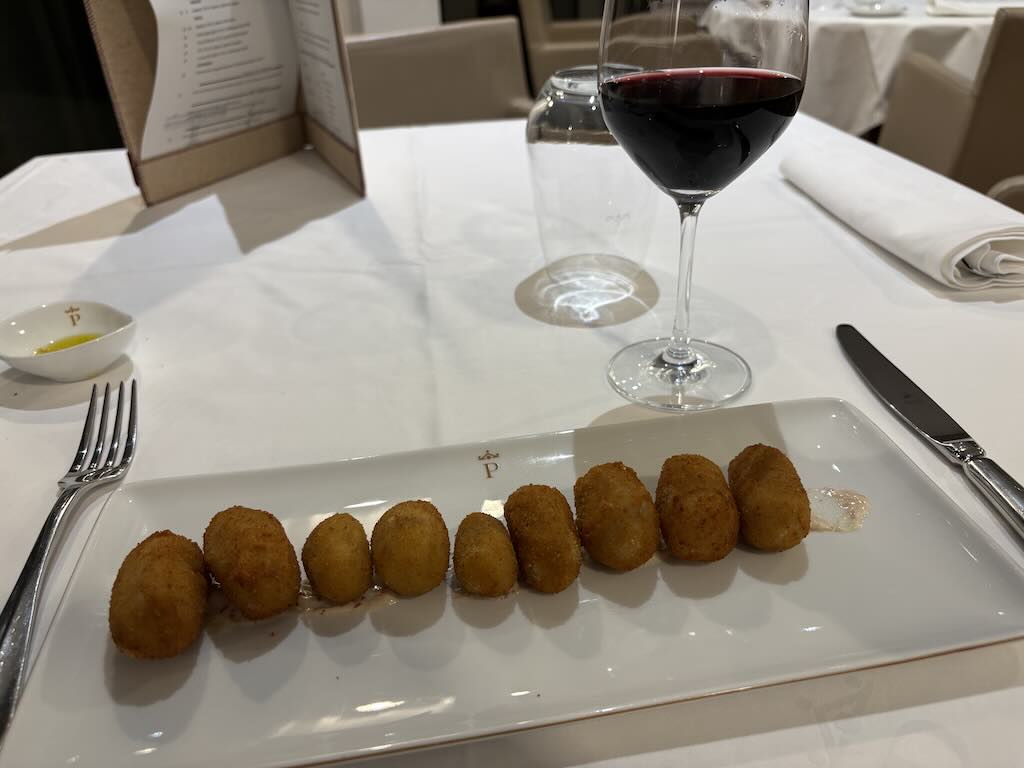
My starter was Croquetas de jamón ibérico (Iberian ham croquettes), and they were outstanding.
Croquetas are a staple of Spanish cuisine consisting of small, breaded and deep-fried cylinders made from a thick béchamel-based mixture enriched with finely chopped ingredients such as jamón (cured ham), chicken, fish, or cheese. The base is prepared by cooking flour in fat (traditionally butter or olive oil), gradually adding milk to form a dense paste, then incorporating the filling. Once cooled and firm, the mixture is shaped, coated in egg and breadcrumbs, and fried until golden. Their origin lies in French croquettes of the 18th–19th centuries, introduced into Spain and adapted into a softer, creamier interior texture that is now characteristic. In Spain they are typically served as tapas and valued for their contrast between a crisp exterior and a smooth, almost flowing centre.
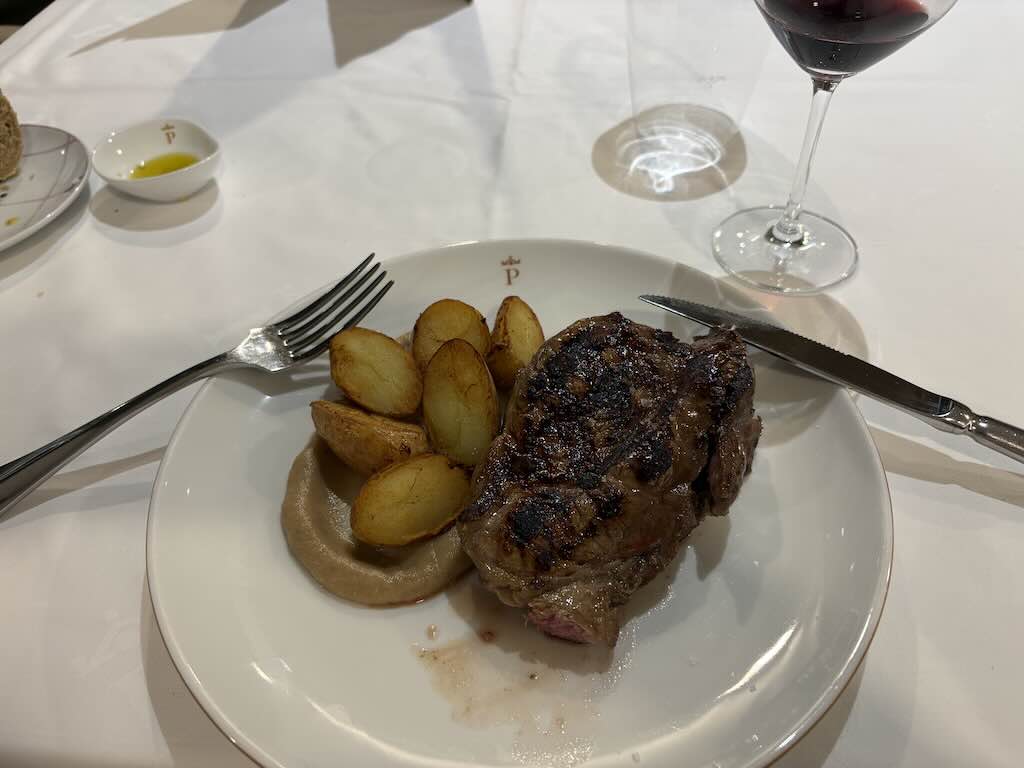
My main dish was Lomo de ternera “Selección Paradores” (300 gr.) a la parrilla, con cremoso de coliflor ahumada y patatas baby (Grilled “Paradores Selection” beef sirloin (300 gr.) with creamy smoked cauliflower and baby potatoes). It was not fantastic, but it was very good.
The reality is that “Selección Paradores” (300 gr.) should mean a 300 g portion of premium, house-selected Spanish beef (typically a grilling cut like entrecôte), sourced through Paradores’ curated supply network, with origin and breed varying by location and season. It would be even better if it meant Ternera IGP Carne de Ávila (protected origin beef), selected older cattle (“buey”) or premium beef lines, e.g. supplied by the brand such as Valles del Esla, using Parda de Montaña (Pardo Alpina or Brown Swiss) breed animals raised 48+ months, pasture-fed, then finished on cereals. But who knows, and in any case it was very tasty and well prepared.
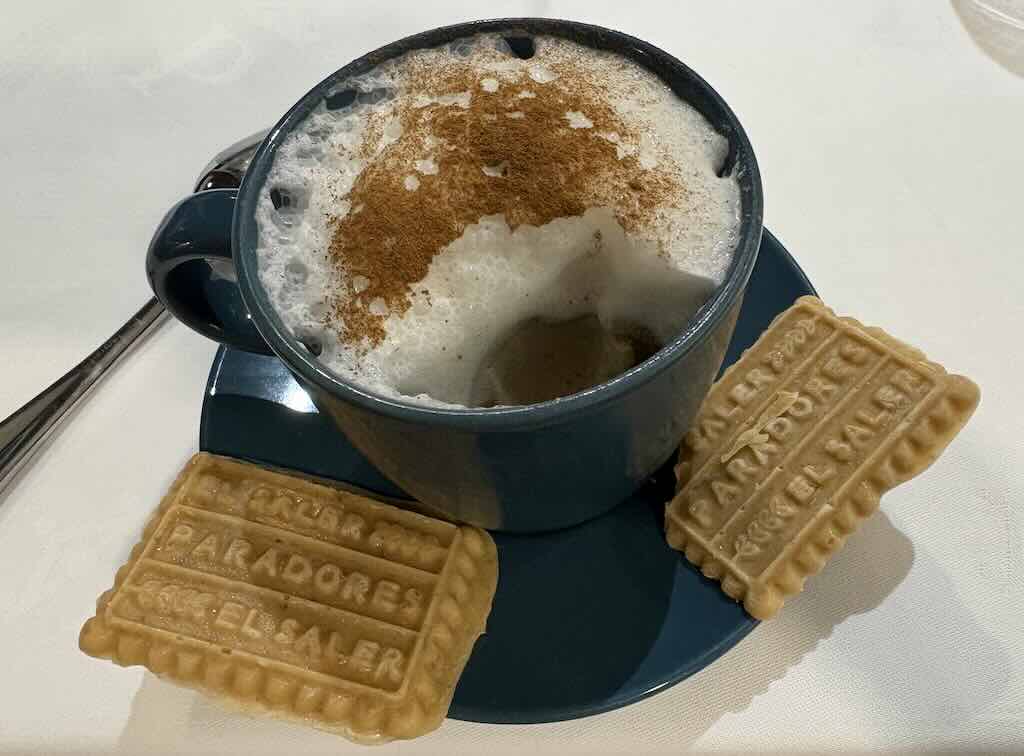
Dessert was Leche con galletas (Milk with cookies) which was a revisit of a childhood favourite. Frankly, the waitress “sold” me on it, and it was fantastic.
In the cup it was very restrained tiramisu inspired, a spoonable, cohesive milk cream forming the body, with a stable foam on top dusted with coffee, and a soft, milk-rich biscuit element that tasted a bit like condensed milk. Fantastic.
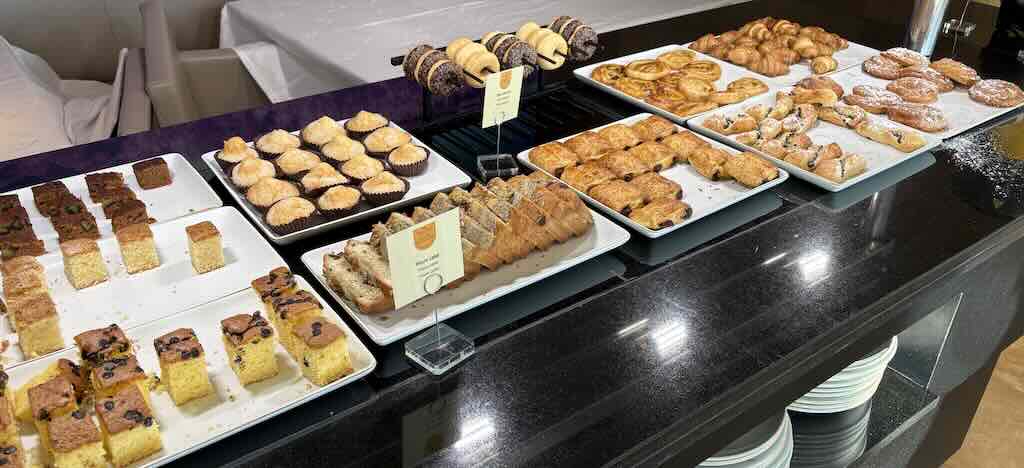
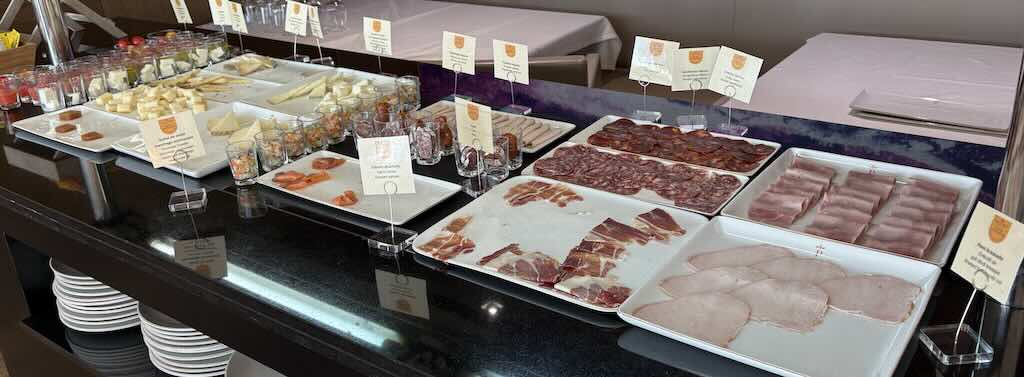
Breakfast
The El Saler Golf
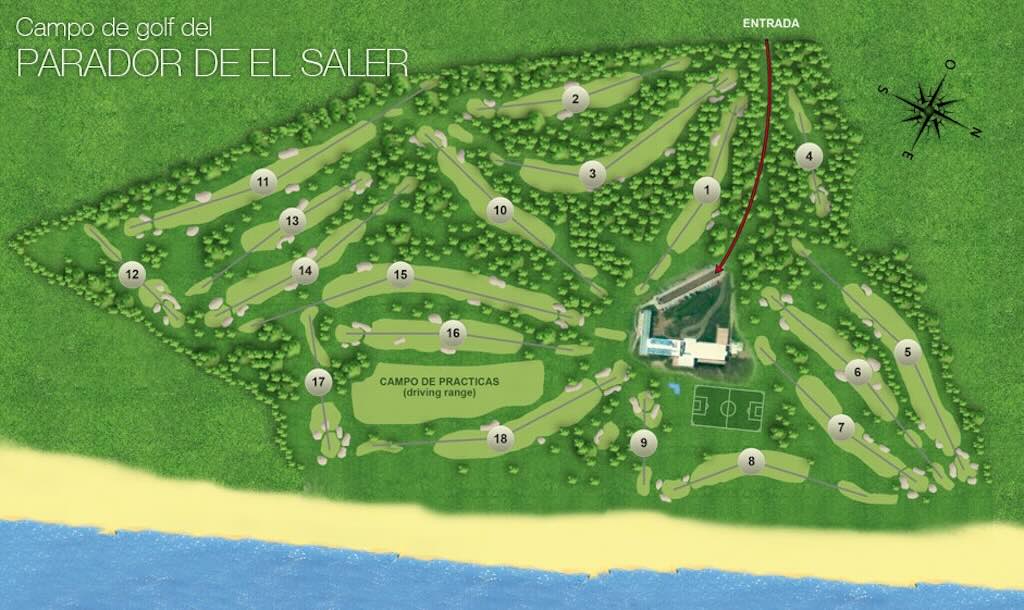
The golf course at the Parador de El Saler is a championship 18-hole layout designed in 1968 by the Spanish architect Javier Arana. Set within the Albufera Natural Park on a narrow coastal strip between the Mediterranean Sea and the lagoon, the course combines links-style holes across sand dunes with parkland sections through pine forest.
It measures around 6,300 metres (par 72), and has hosted major tournaments including multiple editions of the Spanish Open and the Seve Trophy. There was a notably long playoff at El Saler occurred during the 2013 Open de España, when Raphaël Jacquelin defeated Maximilian Kieffer and Felipe Aguilar after a marathon sudden-death playoff lasting nine holes. The contest extended over more than two hours, making it one of the longest playoffs in European Tour history, matched only by a similar-length playoff at the 1989 Dutch Open. This unusually prolonged finish took place on the closing hole, repeatedly replayed under increasing pressure, and has since become one of the defining competitive moments associated with the El Saler course.
Today El Saler is not currently on the regular rotation of top-tier tours, probably because of the logistic constraints imposed by being inside a protected natural park.
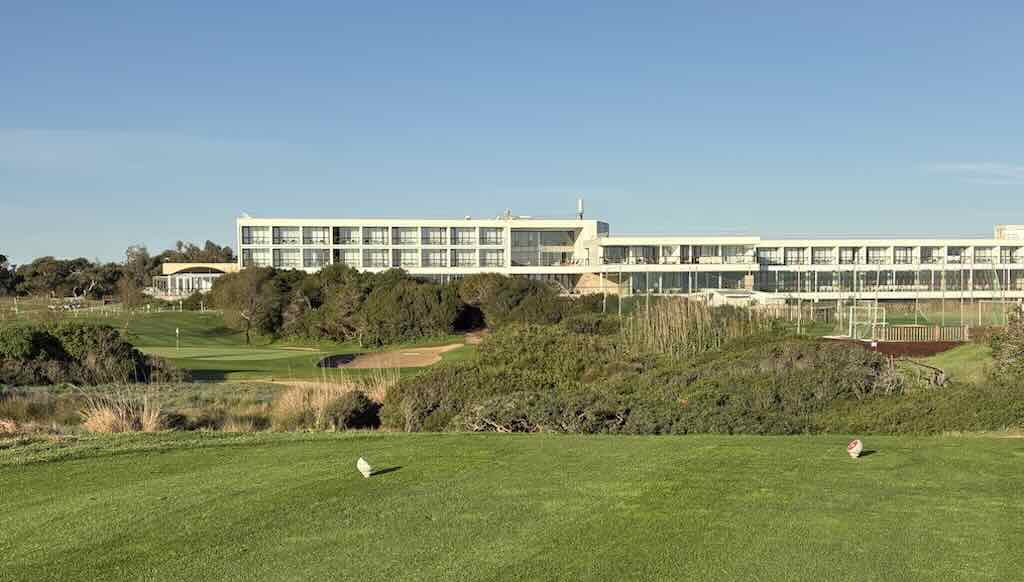
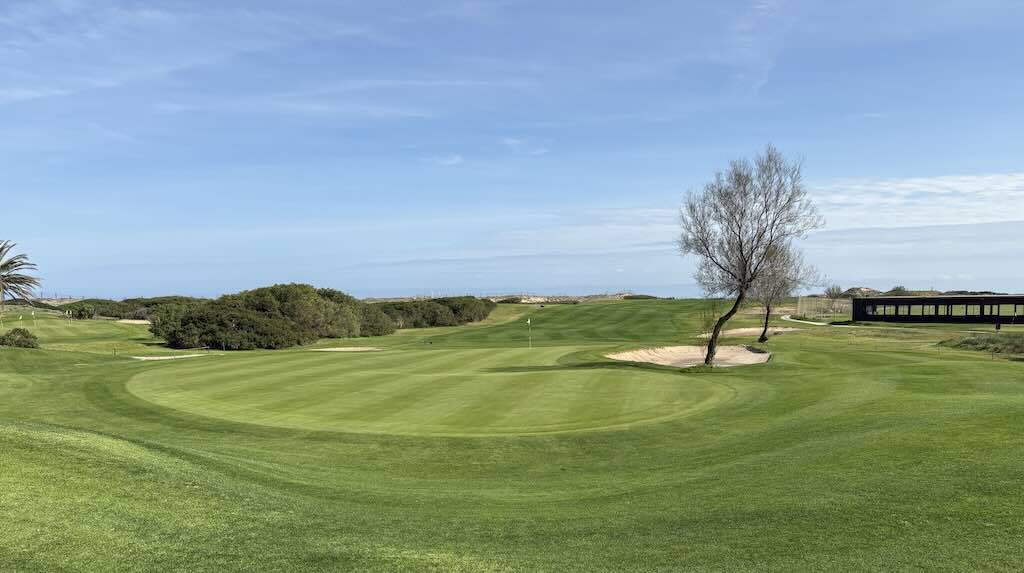
Above we can see the hotel at the back of the par-3 9th hole. And below we have the green of the 18th hole. I must admit the course looked in good condition, and popular judging by the people I saw on the course, and the cars in the parking.
Conclusion
The beach in front of Parador de El Saler and El Saler Golf Course forms part of the long, continuous coastline of the Parque Natural de la Albufera. It’s a wide, sandy Mediterranean beach backed by a protected system of dunes and pine forest, with strictly controlled development to preserve the natural environment. This stretch remains relatively undeveloped and less crowded, with no dense seafront construction, reflecting its status within a protected natural park.
It was nice to go back, and it brought back some good memories, but somehow it did not “click” with me this time. There are better hotels in the region.