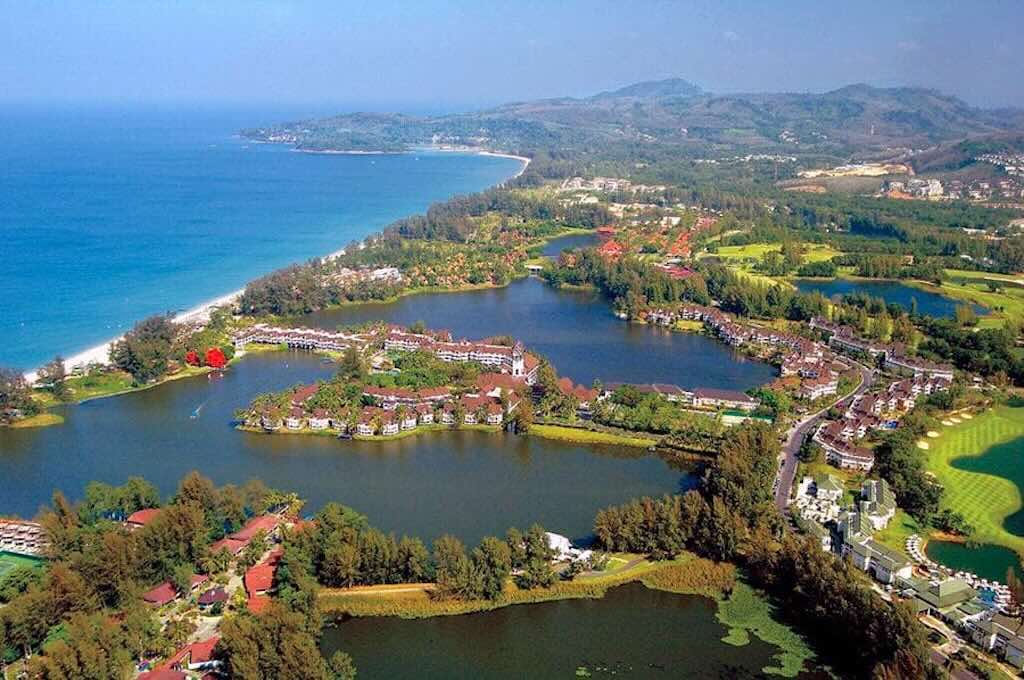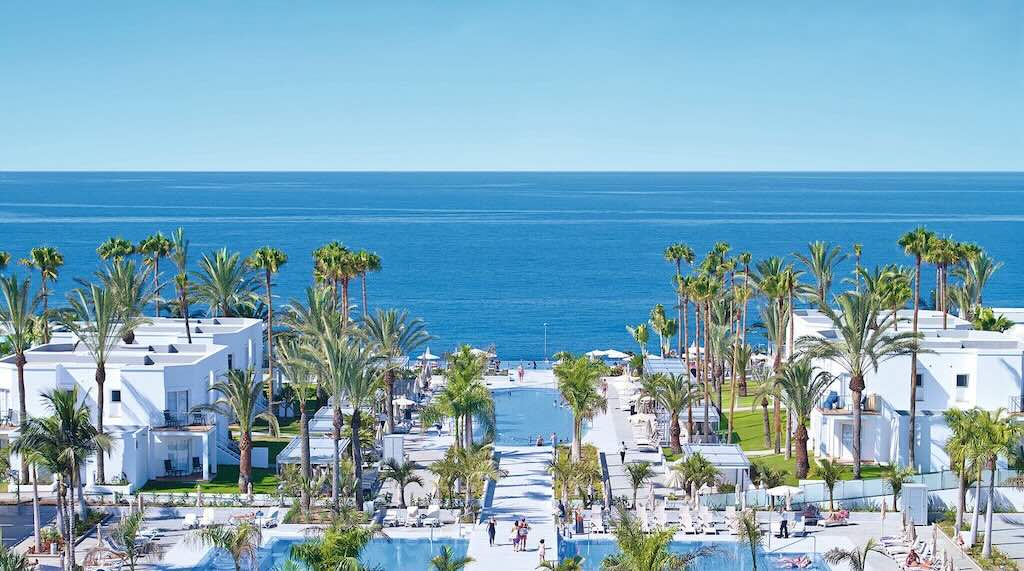
This a review of my stay in Hotel Riu Palace Meloneras, in the Gran Canaria. I took a “last minute” Luxair package from 4-12 January 2026.
Where are the Canary Islands?
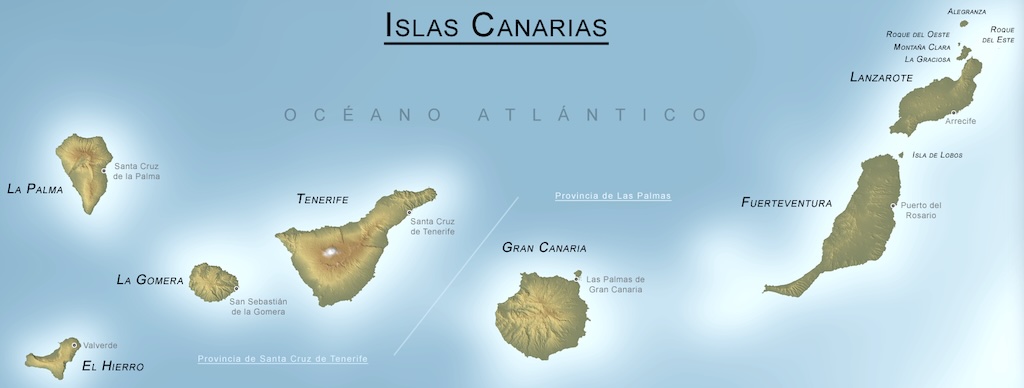
Wikipedia tells us that the Canary Islands (Islas Canarias) are a Spanish archipelago located in the Atlantic Ocean off the northwest coast of Africa, forming part of the Macaronesia biogeographical region along with the Azores and Madeira and Cape Verde.
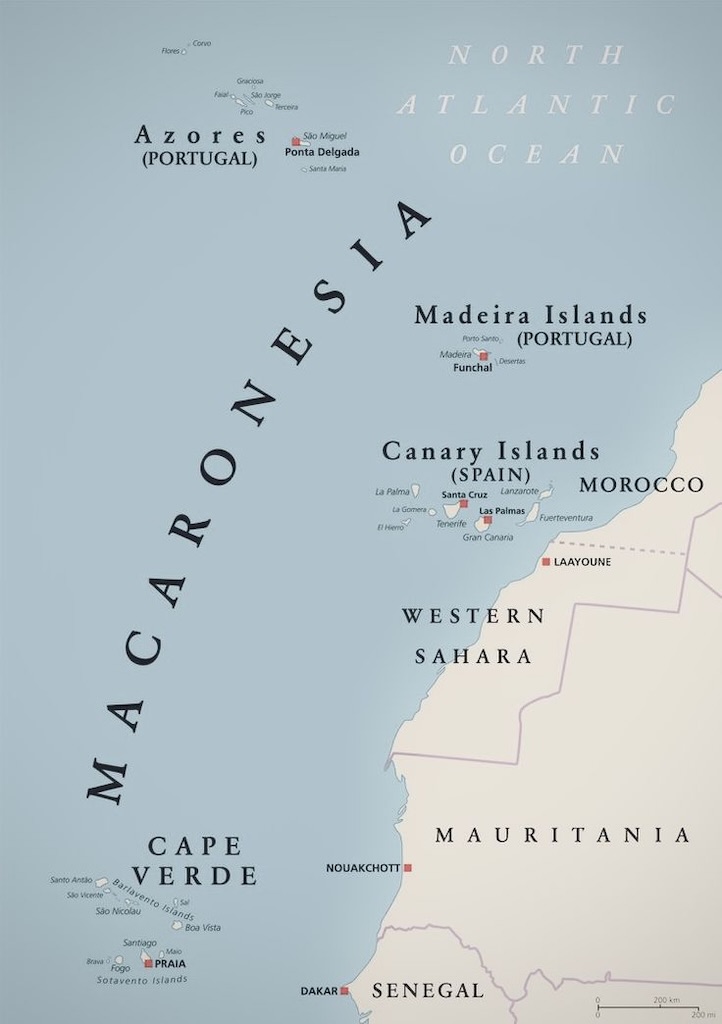
The Canarias archipelago consists of seven main islands and several smaller islets, all volcanic in origin. The main islands are Tenerife, Fuerteventura, Gran Canaria, Lanzarote, La Palma, La Gomera, and El Hierro (La Graciosa is also inhabited but depends on Lanzarote). The total population of the Canary Islands archipelago is about 2.26 million residents as of 2025. Tenerife is the most populous island. with ~970,000 inhabitants.
The Canary Islands are an autonomous community of Spain, and their culture reflects a blend of indigenous Guanche heritage and Spanish influences.
A direct flight from London or Luxembourg to Gran Canaria takes about 4 h 30 min.
Canary Islands and London share the same clock time (both Coordinated Universal Time + 1), whilst Luxembourg time is 1 hour ahead.
The climate is subtropical, generally warm and moderated by the sea and trade winds, with distinct microclimates across the islands. The islands have a rich natural biodiversity, including endemic plant species like the dragon tree (Dracaena draco) and the Canary Island pine (Pinus canariensis).
What is Gran Canaria?
Gran Canaria is the third-largest island in the archipelago by area (approximately 1,560 square-kilometres) and the second most populous with ~874,300 inhabitants.
Las Palmas de Gran Canaria, the island’s capital, is also the largest city in the Canary Islands and one of their two joint capitals (alongside Santa Cruz de Tenerife).
The island has a volcanic origin and supports a range of climates and ecosystems within a relatively small area. It is often described as a “continent in miniature”.
The Canary Islands are one of Europe’s most visited sun-and-sea tourist regions. In 2024, the archipelago recorded more than 15.2 million international tourist arrivals, a record high and roughly seven times its resident population (≈2.2 million).
For 2023, the Canary Islands had about 83.2 million foreign overnight stays, making them the most visited EU region for foreign tourist nights, ahead of the Balearic Islands (≈61.7 million). Gran Canaria ranks second in total tourist arrivals among the islands, with more than 5.8 million visitors annually.
Aeropuerto de Gran Canaria
The airport is in the Bay of Gando, on the east side of the island. It’s about 19 km south of Las Palmas and 25 km from the main southern tourist areas. It has two long (3.1 km) parallel runways, and given its isolation can operate 24/7.
The airport originally opened in 1930 when a military aerodrome was converted to a civil airport. It has a single terminal building divided into zones for inter-island, Schengen, and non-Schengen flights.
The airport is not well rated by tourists (only 3-stars), but I didn’t see any real problems on arrival. All Luxair passengers were routed to buses for the different hotels. As a “last minute” I was not on their list, but they knew I was coming.
Being a major tourist destination, the airport must work quite efficiently, but when something goes wrong it probably produces a messy knock-on.
For the return trip, check-in, security, etc. was fine. We had a delay of about 30-40 minutes, and I must admit the food-drink options were not that good. But boarding was fine.
Maspalomas
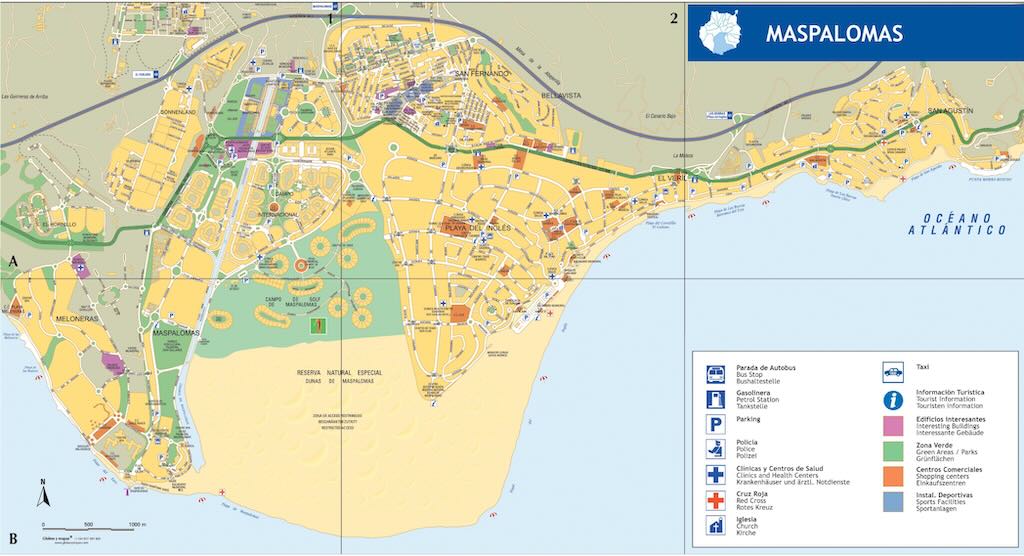
Maspalomas is a major tourist destination in the south of Gran Canaria, part of the municipality of San Bartolomé de Tirajana. With its beaches, dunes, and resort infrastructure, it absorbs about half the islands tourists (2.3 million annually).
There are nearly 900 places to stay, with hundreds of hotel options, and with at least 9 hotel properties tied to major brands like Riu and Lopesan. According to the publicity the resort is known for its beach tourism, golf, nightlife, shopping, casinos, and specialised markets such as LGBTQ+ tourism. I didn’t see much of the offering, except the shopping.
Maspalomas can be dived into more or less six zones:-
- Maspalomas (Campo Internacional/Oasis area) is a family-oriented, mid to upper-mid market area with golf, bungalow resorts, dunes access.
- Playa del Inglés is mass-market to mid-market, more for singles, nightlife, and LGBTQ+, with a very large stock of aparthotel (1960s–1980s), but it has a long beachfront.
- San Agustín is mid-range older resort area, popular with Scandinavian repeat visitors (long-stay and winter). Also was/is known for its clinic/health tourism.
- San Fernando is for local residential and service workers.
- Sonnenland has a lower to mid-market residential/tourist mix, with many weekly rentals. Despite the name it has no direct beach access, so for those looking for cheaper long stays.
- Meloneras is the upper-mid to luxury market, with its modern 4/5-star beachfront hotels (e.g. Lopesan, Riu). There is a seafront promenade with higher-end dining/retail options.
Meloneras
My hotel was the Riu Palace Meloneras. Booking gave it 9.0 (Superb) from 488 reviews, and a 9.6 for location, and TripAdvisor gave it a 4.7 from 3,441 reviews (look it up, there are over 3,000 photos of the hotel).
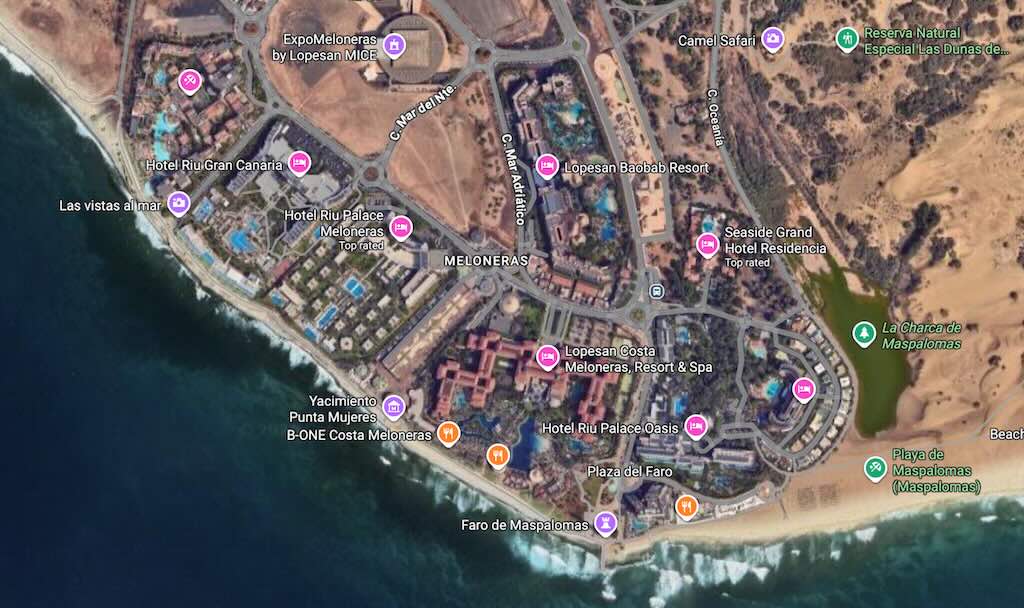
Above we can see the very compact Meloneras region, with three Riu hotels and three Lopesan resorts, the promenade, the playa, and the Faro (lighthouse system of the town).
Lopesan owns the up-market Costa Meloneras Resort & Spa (opened 2000 with around 1,100 rooms), the “quiet-luxury” Villa del Conde Resort & Thalasso (opened 2004 with 560 rooms), and the African-themed family and couples Baobab Resort (opened 2009 with 680 rooms). They are all part of Lopesan Hotel Group, controlled by Eustasio López González (majority shareholder with 51%).
Riu owns the Gran Canaria is an all-inclusive family 4-star hotel (built 2000 with 640 rooms, the 5-star flagship Palace (built 1996 with 515 rooms), and the luxury eco-certified resort Palace Oasis (built 1968 with 415 rooms). Since 2021 Riu Hotels S.A. is 100% owned by the Riu family.
I booked the Riu Palace, half-pension, for the period 4-12 January 2026 (8 nights). Firstly, this is the most expensive of the hotels on that part of the coast. Secondly, the period remains expensive, although below prices for the Christmas/New Year weeks. Thirdly, single “last minute” discounts are relatively poor compared to that offered for couples. Finally, Luxair Tours is not a low-cost option, but is very convenient for me (e.g. direct flight, living near airport, etc.). My guess is this “last minute”, for a booking on 31 Dec. 2025, was perhaps discounted at around 5%. Had I waited two-weeks (late January 2026), the list price would have dropped by 20%.
Riu Palace Meloneras
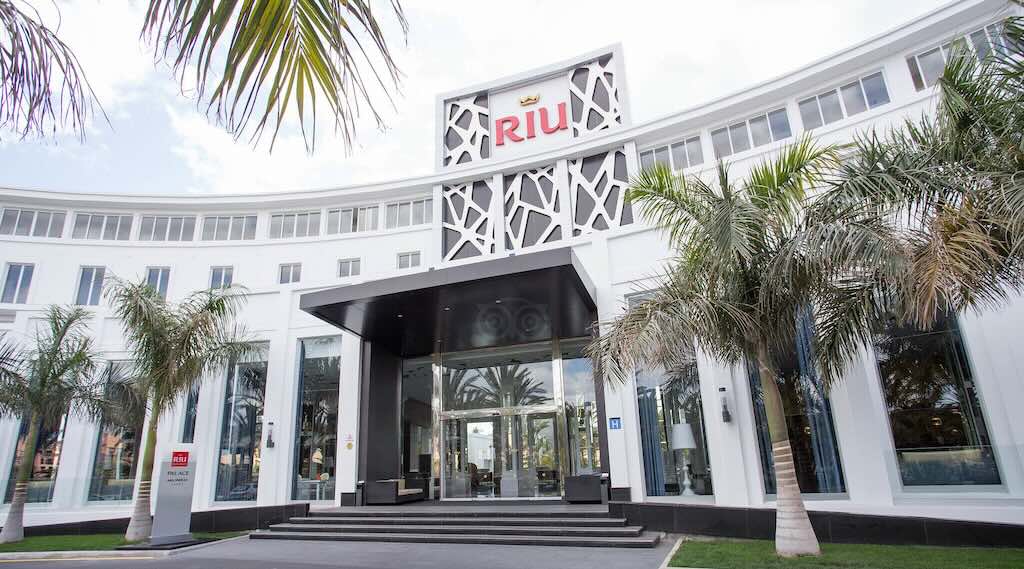
Obviously included in the package, we had a coach that dropped guests at Villa del Conde, Gran Canaria and the Palace.
I arrived at the hotel a little before midday, checked-in, but then had to wait until the room was free. We were all accommodated in the bar area and offered a drink (two beers and some nuts, etc.). Finally, around 14:00 I received my keycard.
I could immediately see that it was a very up-market elegant hotel, and the staff were friendly and efficient. I had all the necessary information for my return trip to the airport (it was confirmed by the hotel 48 hours before leaving). Check-out was also very easy and efficient. But again, I had to wait between check-out (12:00) and the return trip to the airport (14:45), and there were no sockets in the entrance area to charge a iPhone, etc.
I’ve read that occupancy on the island rarely drops below 80%, and in the restaurant they mentioned that they were servicing for 800 people daily, which with 515 rooms, would be an room occupancy just over 80% (counting 5% singles).
The main language of the tourists in the hotel was certainly German, followed by a smattering of English, French, Italian, Dutch, Spanish and Scandinavian.
The Bedroom
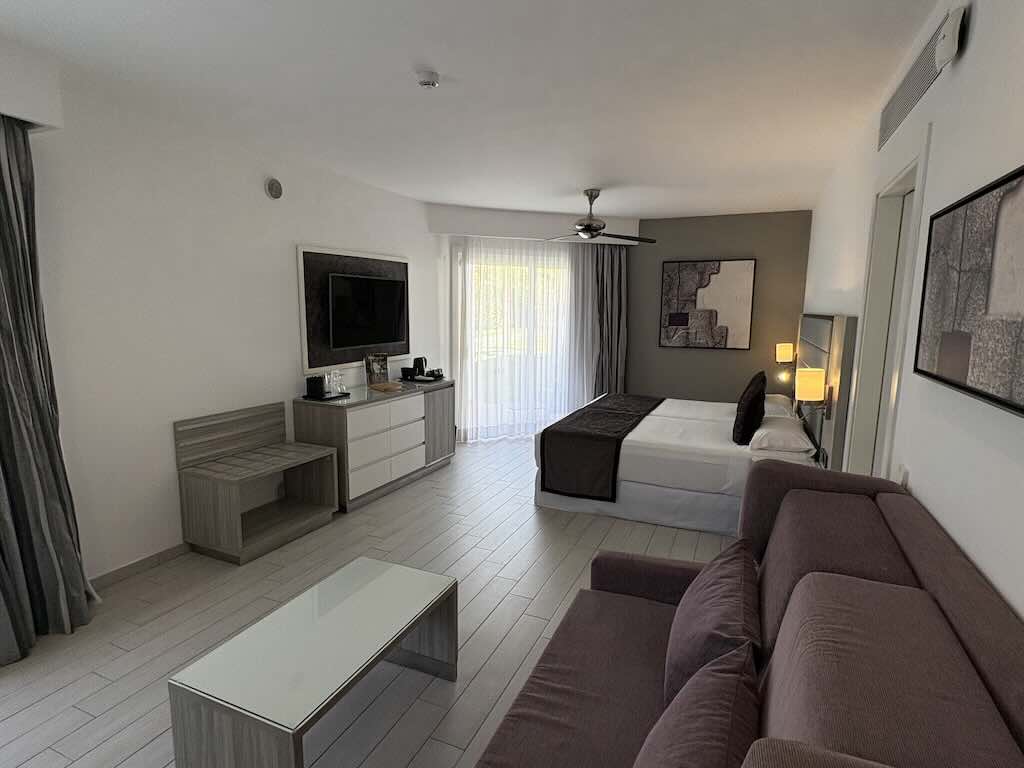
It’s difficult to explain, but some rooms are in larger blocks, but my room was in one of a series of small buildings set in the gardens. Each had four “superior” rooms on the ground floor, and four on the upper floor.
Anyone reading this should check about access, since there was only stair access to the upper floors.
The entrance was not particularly attractive, but the room presented well. Except for the fact that the room felt uncomfortably cold, and a little damp. As you can see it is clearly designed as a family room, with quite a substantial divan-bed.
It was very clean and neat, and was a decent, spacious resort hotel room.
A few negatives:-
- The main negative was the rooms location. It was in the north angle of the block, and received almost no sunlight (except late afternoon on one exterior wall). Whilst the room registered a temperature of between 19.4-20.4 °C it always felt cold, and all the surfaces felt cold. I added a blanket to my bed, to keep warm during the night. It’s possible that rooms exposed to sunlight during the day were warmer, but I certainly could not recommend north facing rooms for a January holiday. Although in summer it might be the perfect cool room.
- There was/is clearly a security problem. The smaller window was screwed closed, and there was a large bolt added to the sliding French windows. But overall it felt safe.
- This was also the only room of the four in the block that did not get any sun on its terrace. And for several there was a cold north wind blowing, which did not help (it snowed in Luxembourg during that week).
- No Nespresso coffee machine.
- There was no desk and chair option.
- The Spa was not worth the walk. It was a steam room and two smallish Jacuzzis.
A particular positive was a decent sized wall safe and the wi-fi worked well. I did not try the powder-coffee/tea option, nor the TV, nor the minibar drinks.
However, I must stress that the room was very clean, and that my particular cleaning lady was fantastic. I left her a nice thank you at the end of my stay.
The Bathroom
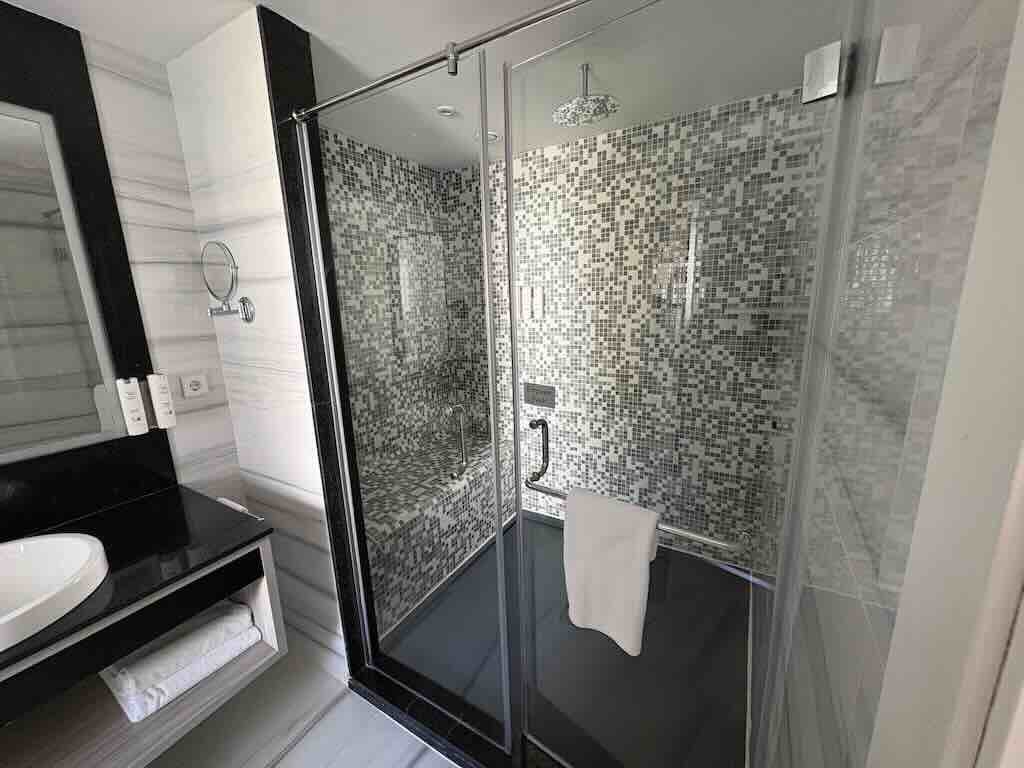
If the bedroom was a little bland, the bathroom made up for it. It was large, had a separate space for WC and bidet, and double hand-basins, etc. But it was the massive walk-in shower that stole the day. There is nothing better than a comfortable walk-in shower with lots of hot water.
Not much to say – just great.
The Pools
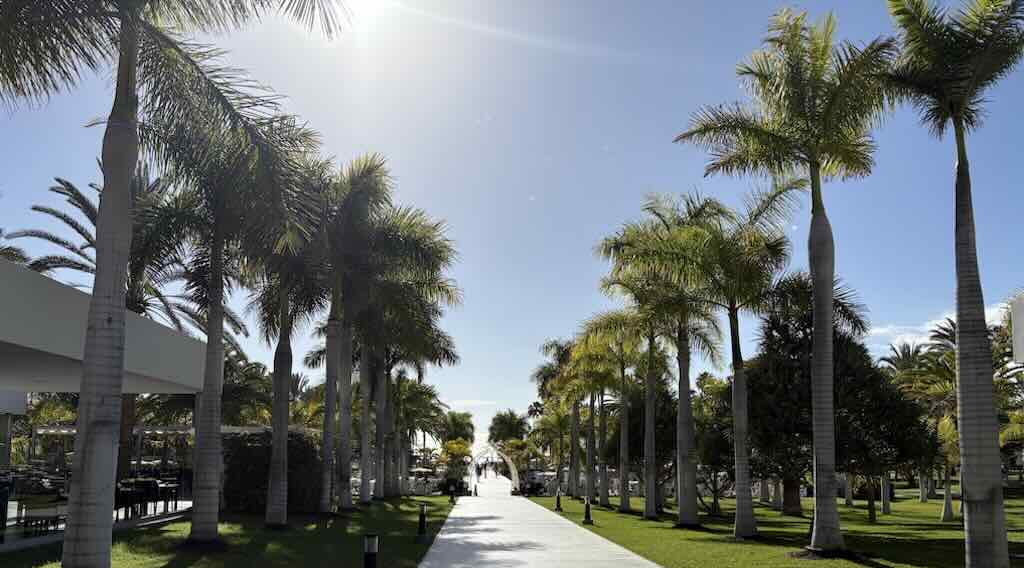
Here we are walking out of the hotel main building down to the coast.
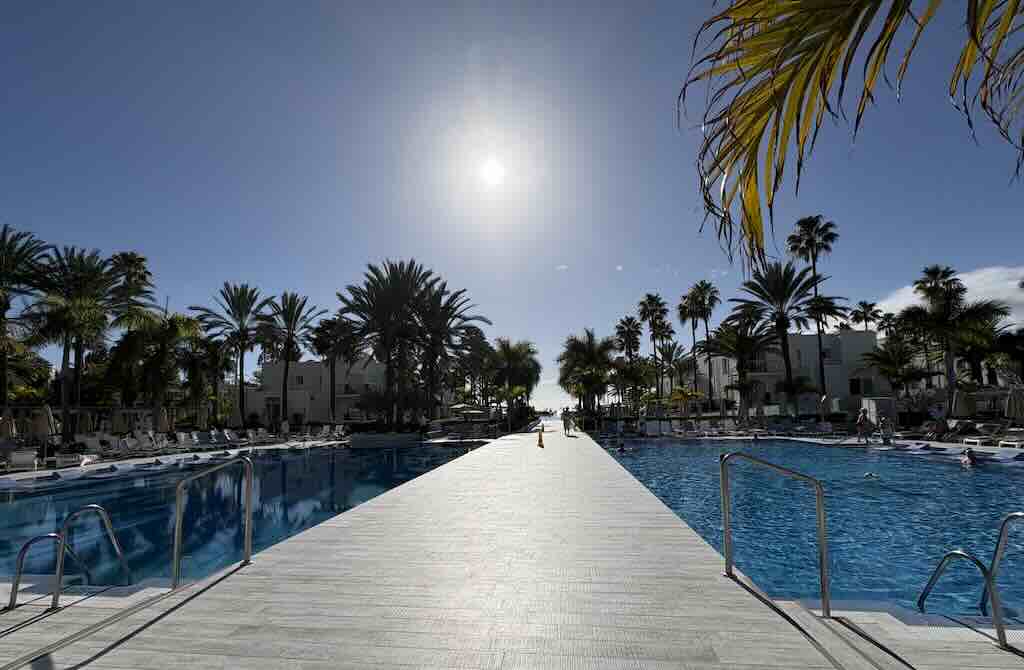
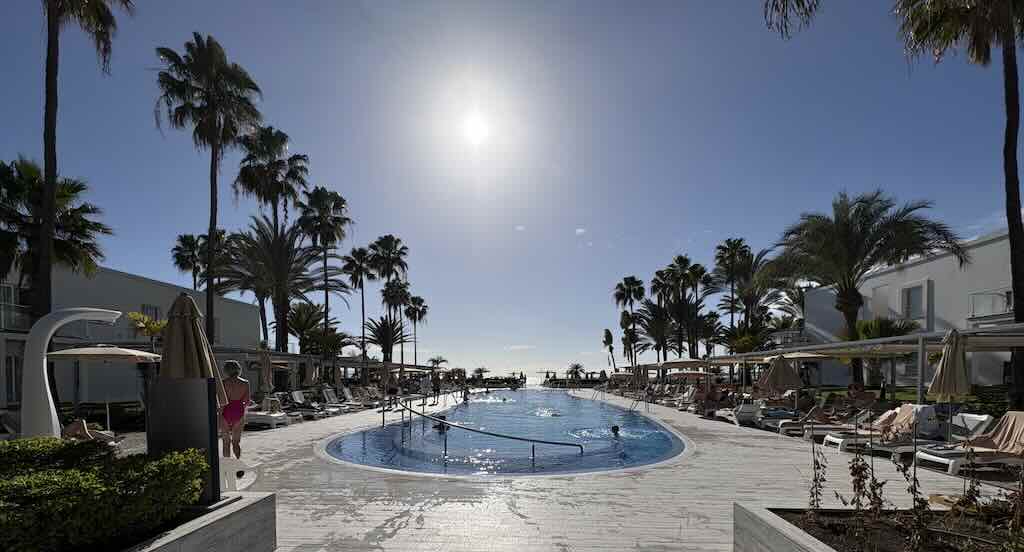
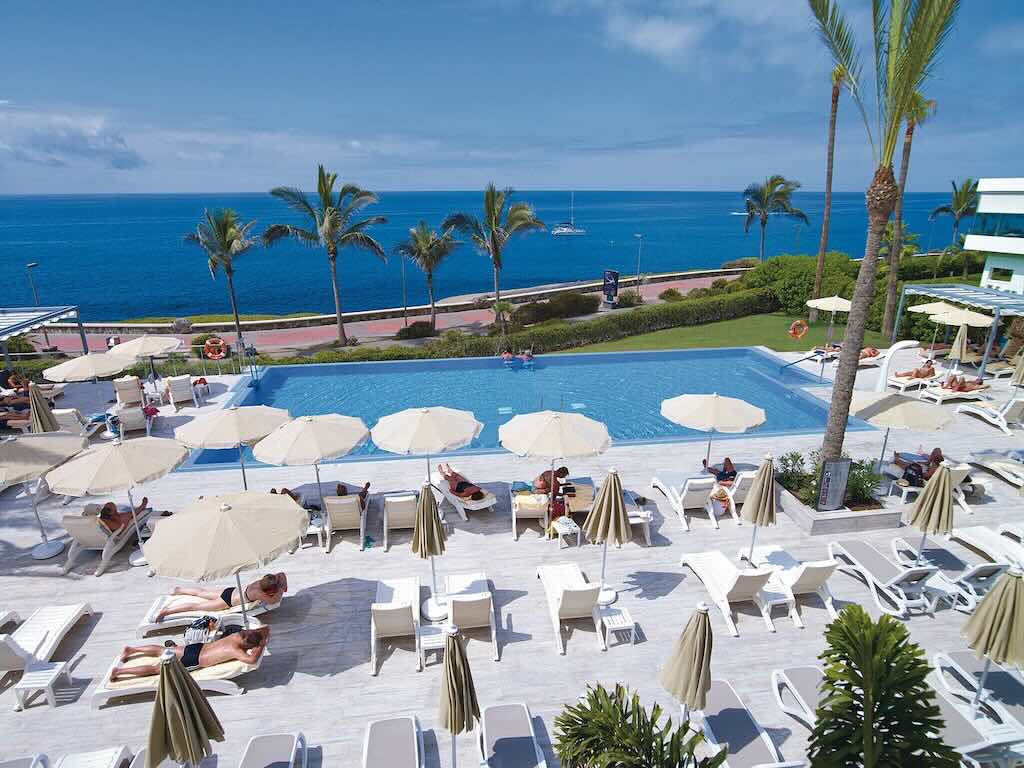
Below we see the infinity pool. Behind there is the coast line with its promenade.
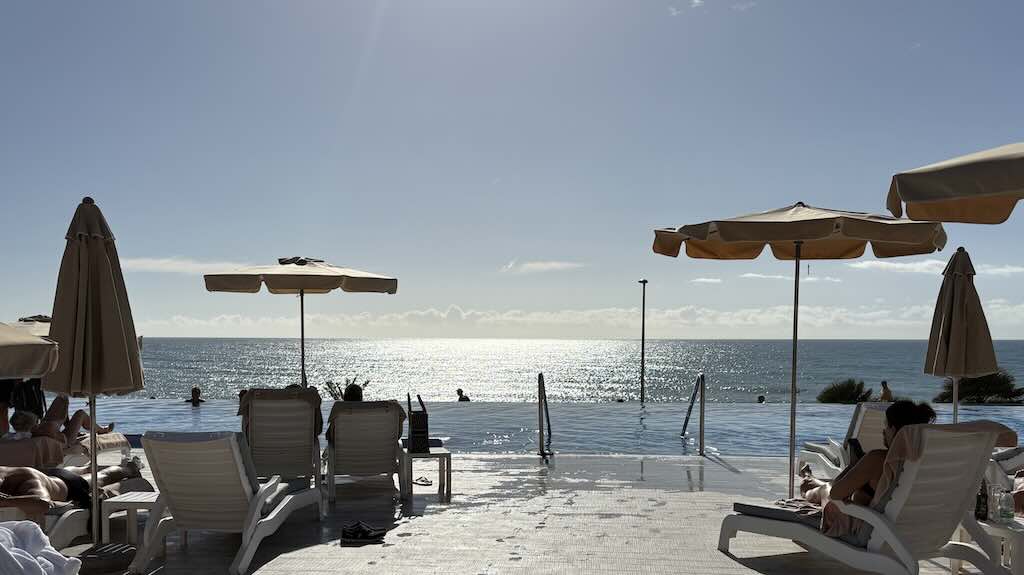
There were plenty of seating options, but always pool-side loungers (tables and chairs were at the bars). Every morning you would find towels reserving prime seating, but it was always possible to find a decent place at the big pool. I suspect loungers were at a premium at the infinity pool.
I was also impressed by the staff and staffing. There were always plenty of staff looking after the pool, or running to pool bar. They were both efficient and friendly, and appeared to enjoy their jobs.
I spoke with the person who checked the water in the pools. They took samples four times daily in each pool, checking for bacteria, chlorine, pH, clarity and temperature. He told me staff were well treated, because the pool of employees in winter on the island was limited, and a bad hotel reputation travelled fast. There were always vacancies for island residents. If you were not happy, you just moved to another hotel.
Breakfast
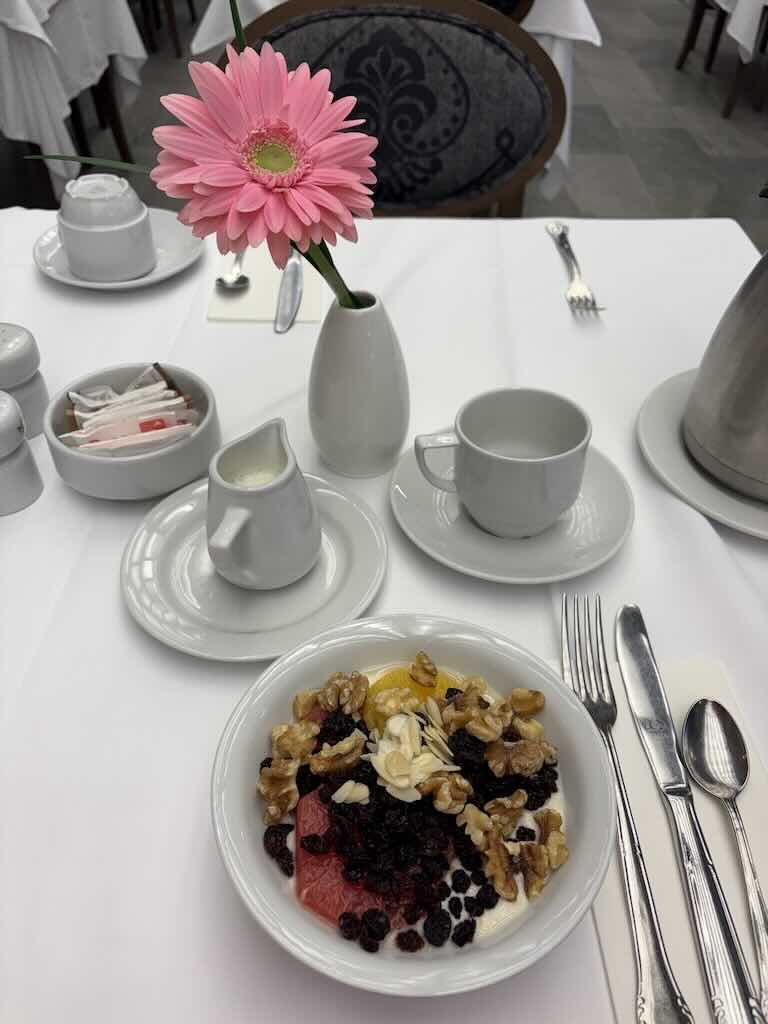
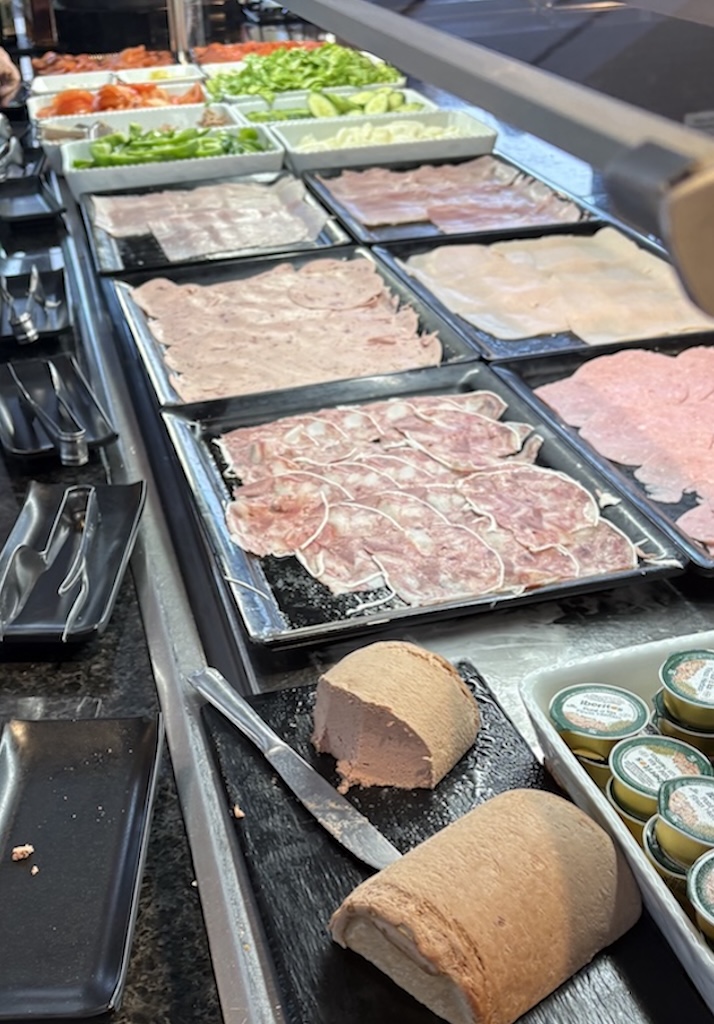
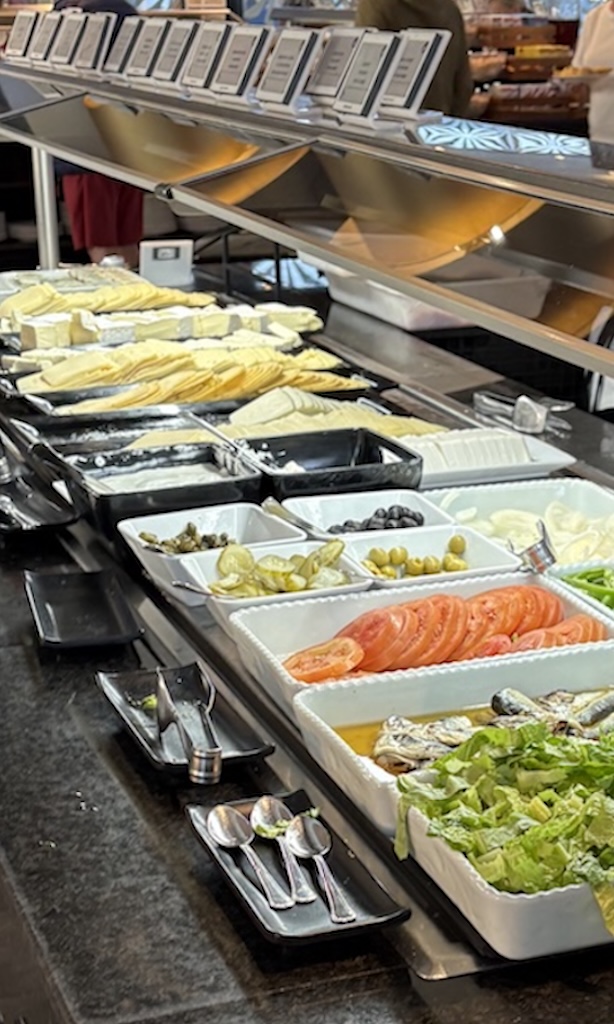
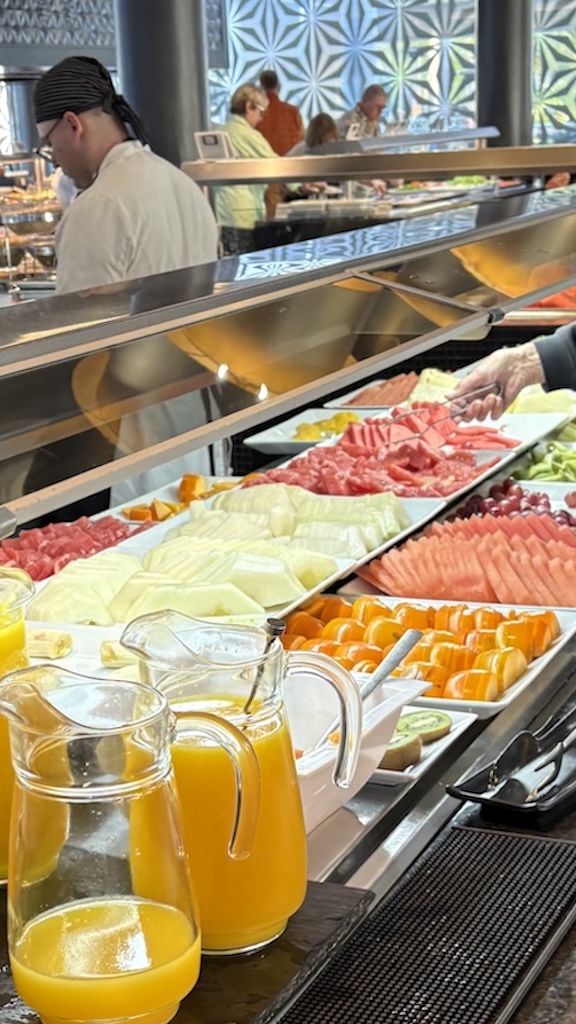
Both the buffet breakfast and dinner are served in a large, partly closed, partly open dinning area, served by a closed area with 6 service stations and 16 service areas, each with its speciality. Both breakfast and dinner are presented on white tablecloths and with a full service. You just order coffee or tea in a pot, with warm milk and go the buffet standards. Staff are dressed differently for breakfast and dinner, and service is friendly, yet rapid and efficient.
I had my “usual”, musli, yogurt, fresh fruit, and a few nuts and raisons, with orange juice. Followed by a pot of coffee and warm milk, and a few pastries.
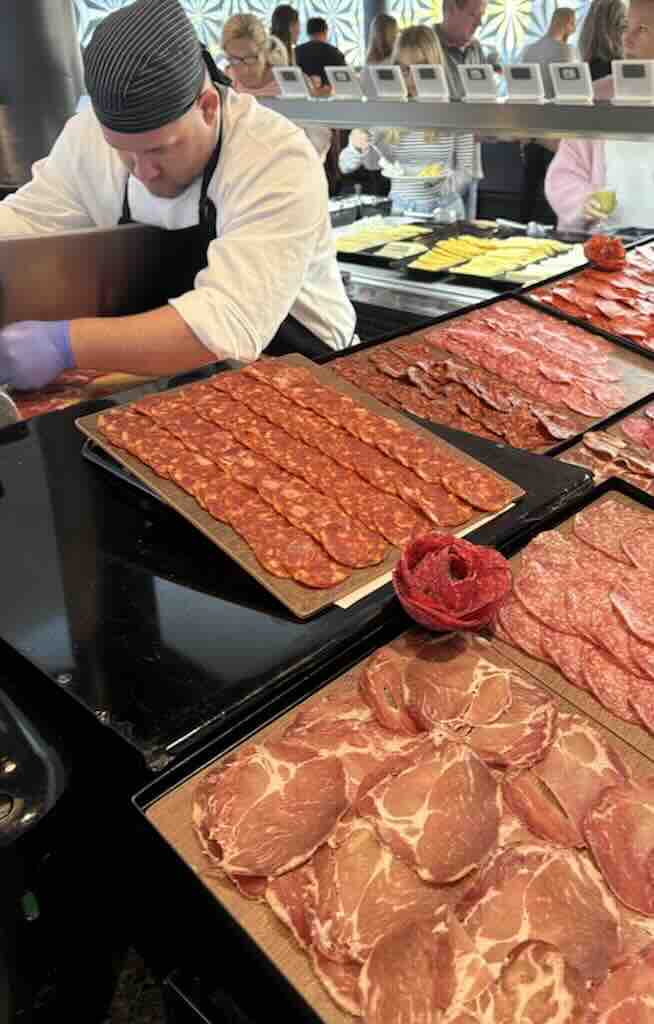
Dinner
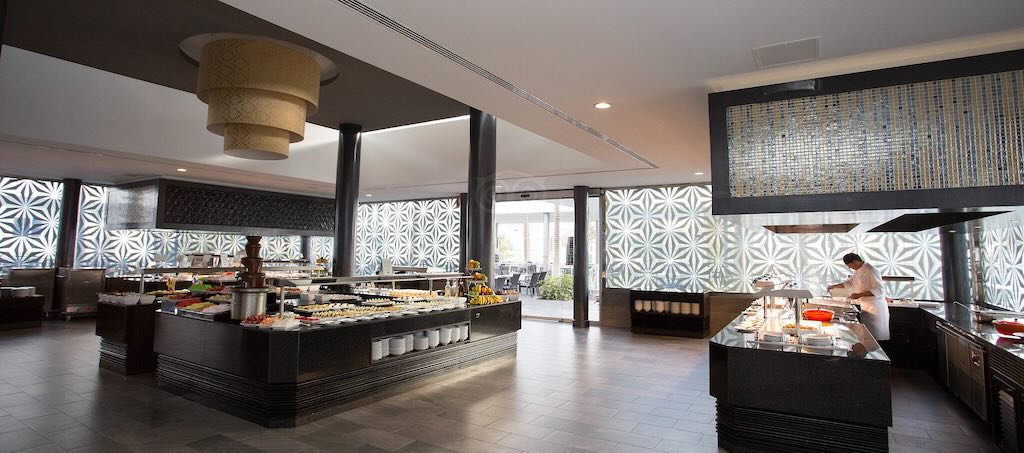
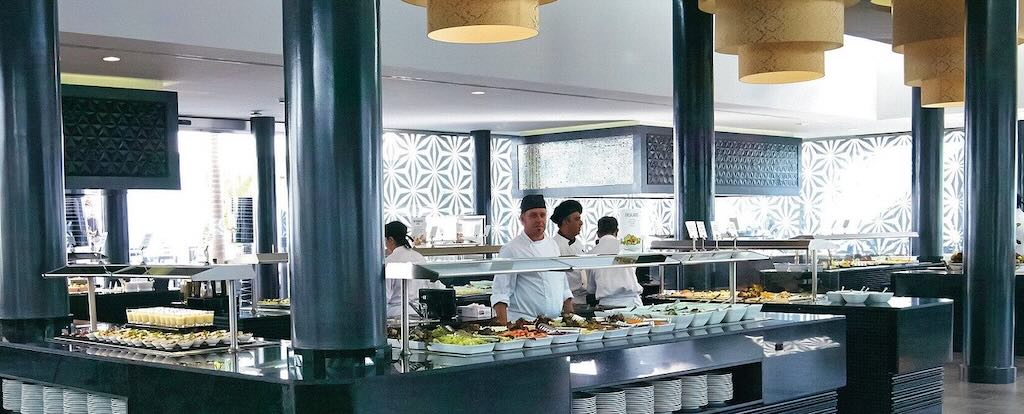
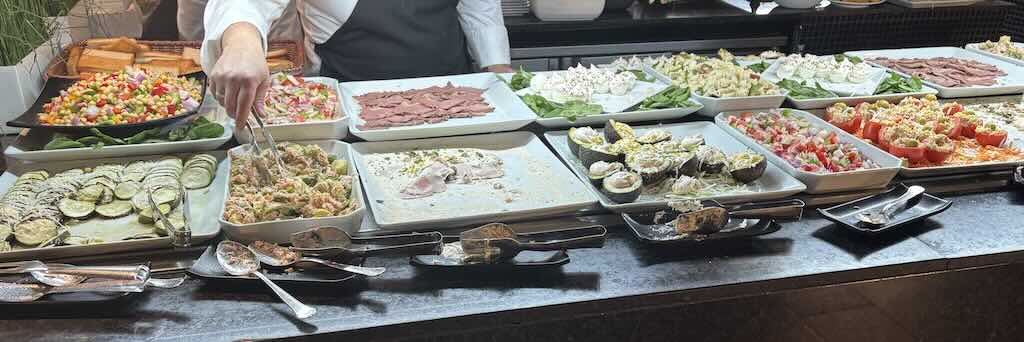
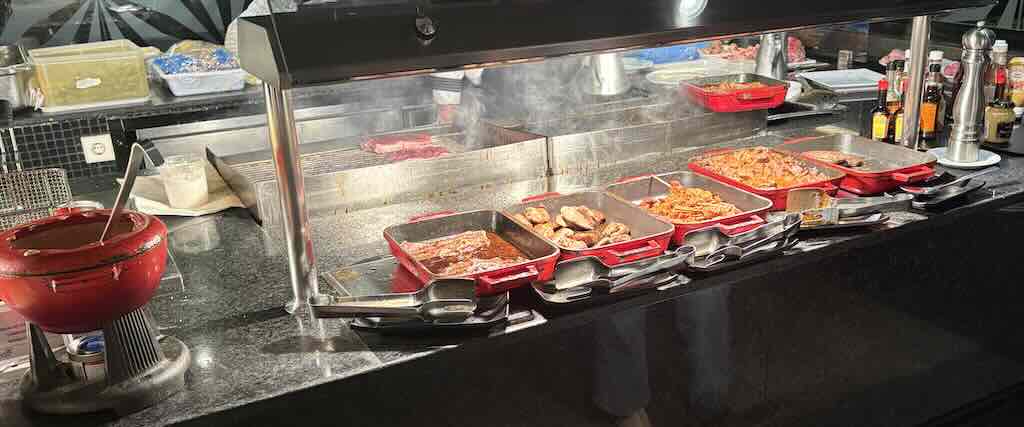
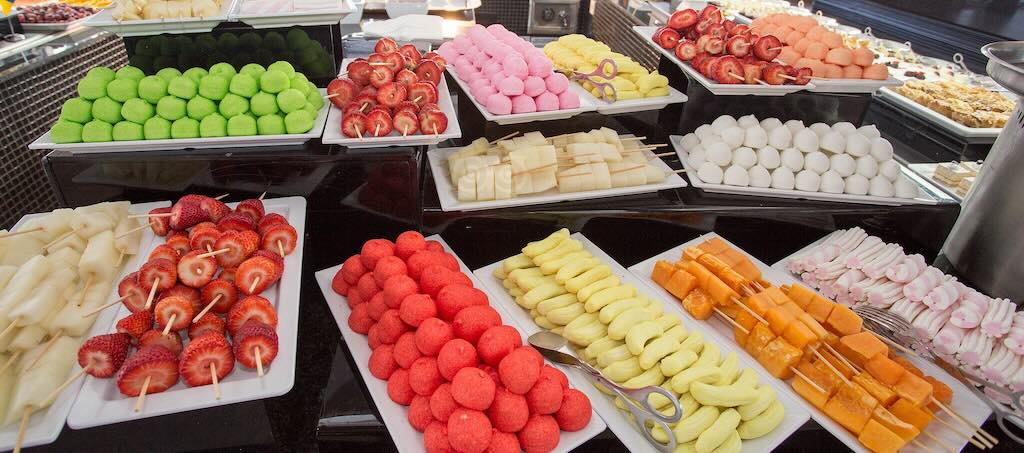
This hotel has a justified reputation for its food. There were two table service restaurants also included in the half-board formula (only for pre-reservations).
The Coast and Promenade
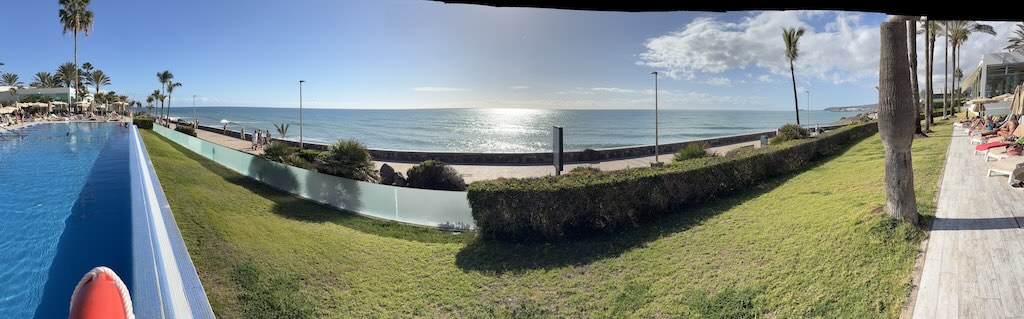
Above we can see the promenade just beyond the hedge of the hotel. It runs from the Faro de Maspalomas (the lighthouse) to Playa de Meloneras. It’s a bit over 2 km, and a bit longer if you push on to the edge of the golf course.
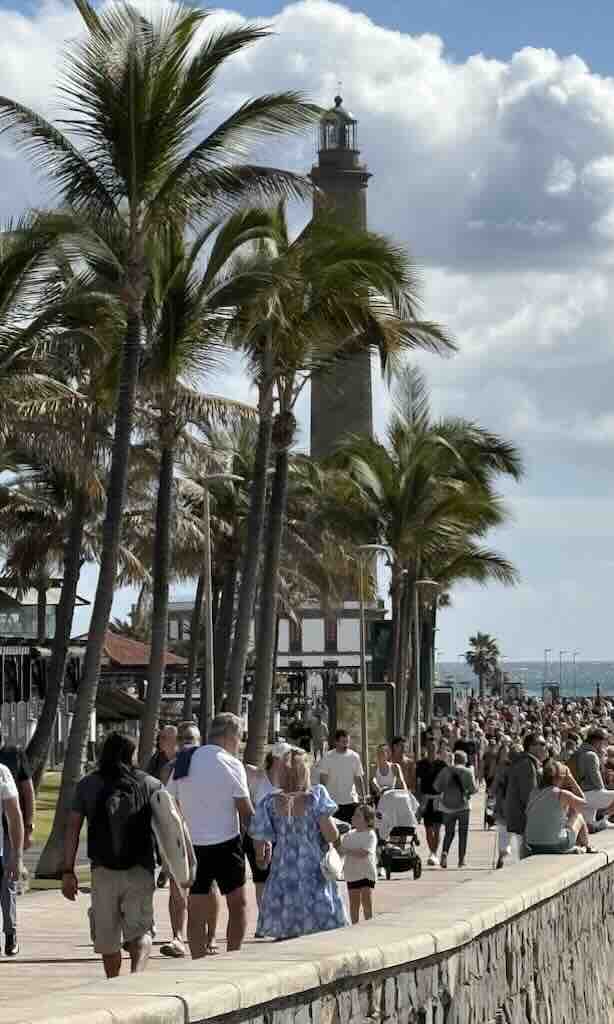
Faro de Maspalomas (the lighthouse)
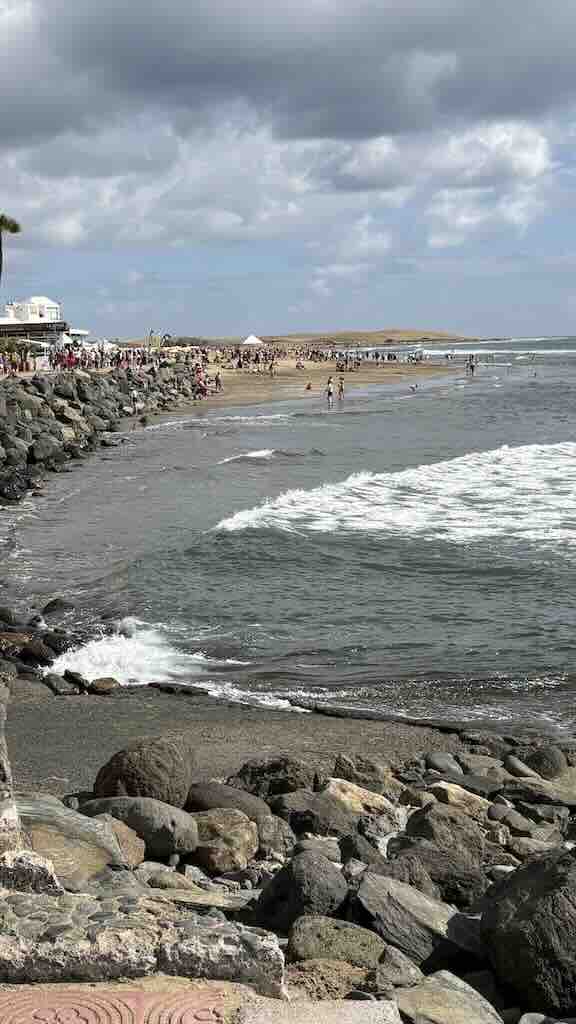
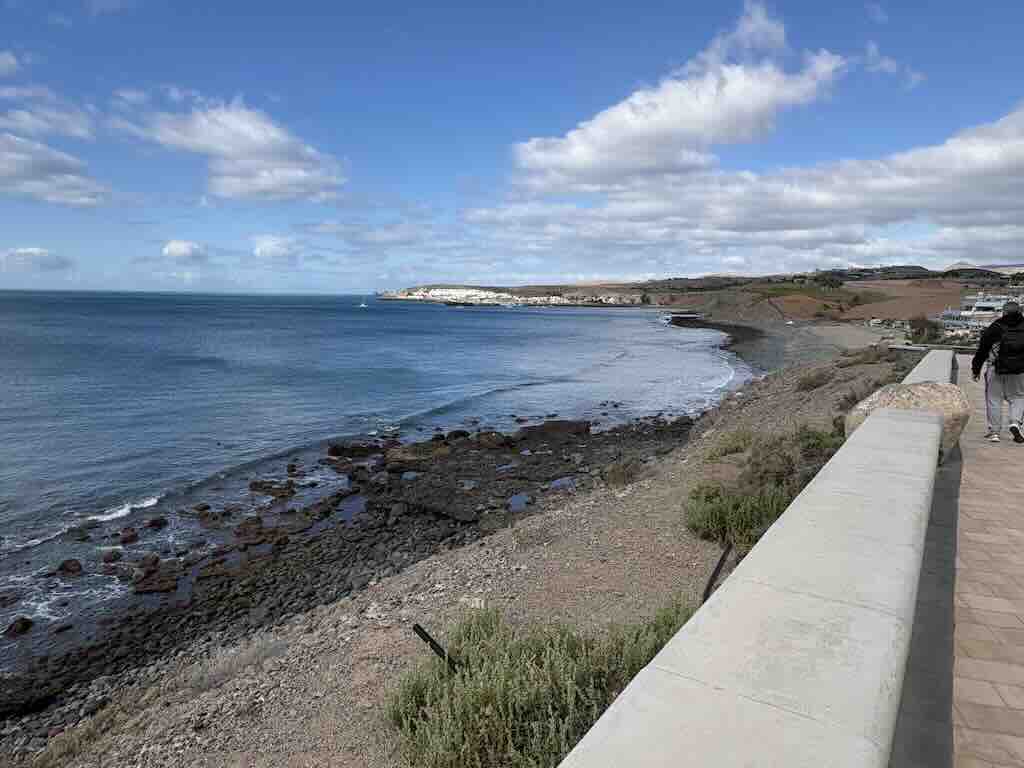
Above we have the promenade that continued to the Playa de Meloneras, and the Meloneras Golf Club. Any just beyond that the white area is the Puerto Deportivo Pasito Blanco.
Gran Canaria is the exposed summit of a large shield volcano that built up from the seafloor over the last 14–15 million years. And the dark, blocky rocks along the shore are basalts and lava flows highly resistant to weathering. Waves erode these slowly, creating rough rocky shelves instead of sandy beaches.
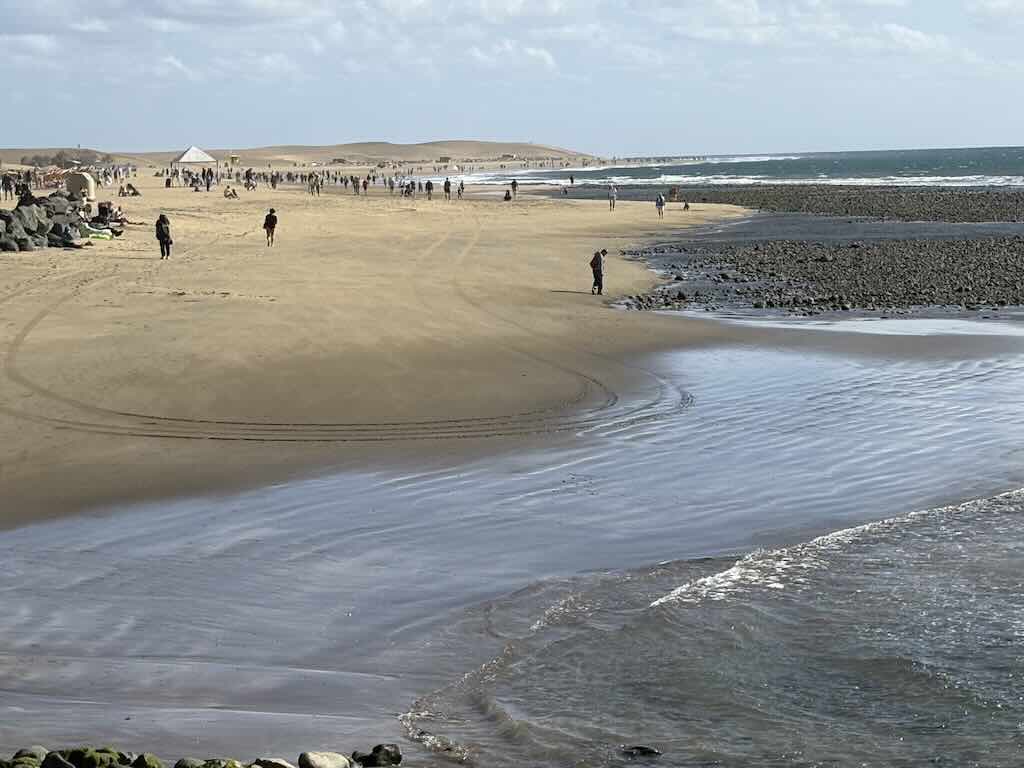
On the south side of Gran Canaria there are some sandy beaches. In part these have been formed by Saharan continental shelf sediment. This is material originally derived from Saharan land sources (wind-blown dust, eroded rocks) that has accumulated on the shallow seabed along the African coast. Over time currents and storms mobilised these shelf sediments and move them westward toward the Canaries. These sands are chemically and visually different from local dark volcanic sands, because they come from continental and marine sources, not lava.
The marine sources means calcareous marine microfauna (foraminifera), which are broken shells of tiny single-celled marine organisms whose skeletons are made of calcium carbonate. These microscopic skeleton fragments are white to pale cream, and they give the southern beaches their lighter, more golden colour.
Below we can see Playa de Maspalomas, a light-coloured sandy beach on the south coast of Gran Canaria, approximately 3 km long, directly adjacent to the Maspalomas Dunes Special Nature Reserve. The sand is mainly biogenic carbonate (broken shells and foraminifera) rather than volcanic. The area includes a wide dune field, a brackish coastal lagoon (La Charca), and a historic 19th-century lighthouse at its western end.
I was very surprised by the shopping options, which mixed well organised supermarkets, with both low-cost and high-end boutiques.
Conclusion
I decided to go for a week’s relax and sun. The hotel was excellent, but a bit expensive (I should have waited a couple of weeks more). The weather was variable, but I did have three full days of sun. However, the room was too cold for me.
I did relax, perhaps a bit too much. I guess there were some sights worth visiting, but alone, I didn’t have the motivation to try.
I have come to realise that this type of relaxing, do-nothing, holiday is not for me. If the room was warmer and the sun always present, then maybe, with a few good books, I might try this type of holiday again one day.
I left the hotel relaxed, but that’s normal after being bored for a week.